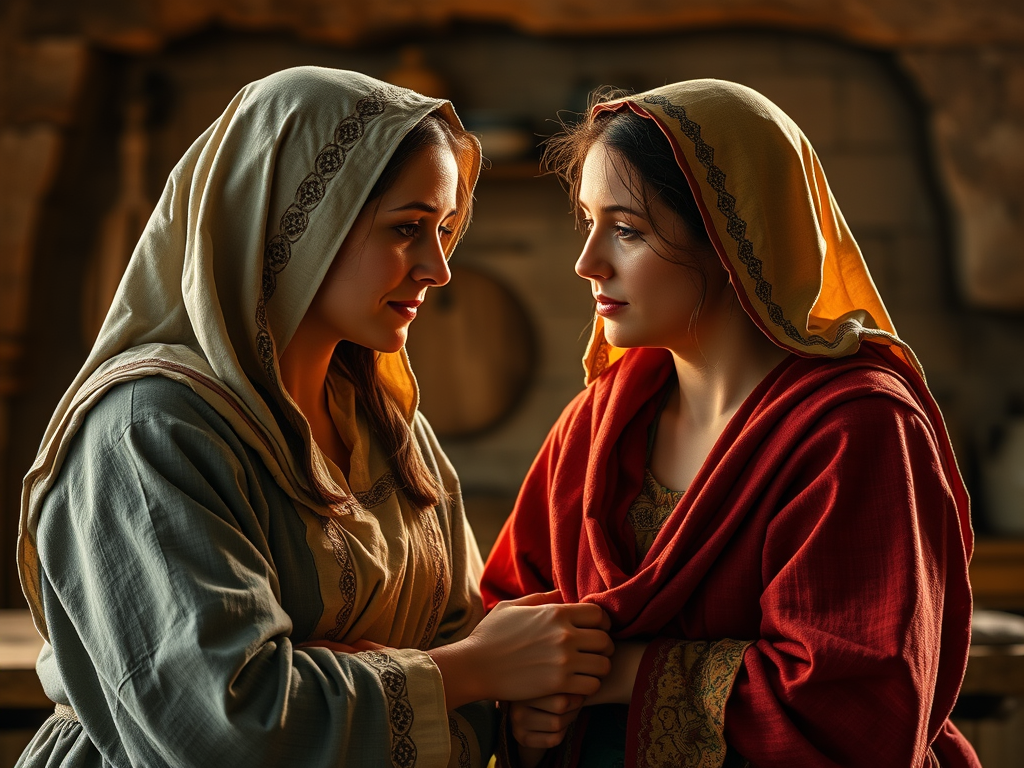
Sermon for Sunday 17th August 2025

* Jeremiah 23:23-29 and Psalm 82 * Hebrews 11:29-12:2 * Luke 12:49-56

In today’s Epistle lesson, the writer of the Letter to the Hebrews encourages us to persevere in our life of faith, no matter what difficulties we face. “Since we are surrounded by so great a cloud of witnesses, let us also lay aside every weight that clings so closely, and let us run with perseverance the race that is set before us.”

The writer says, you have begun a good thing in becoming Christians. I want you to finish strong in what has been started in you.

Most of my academic training for the priesthood was done at the campus of the benedictine Community of the Resurrection in Mirfield, Yorkshire. One of the elderly monks there, had all his life enjoyed running and in his seventies at the time, still regularly took part in marathons, raising funds for various charities. I remember in one particular talk he gave to us ordinands he told us about his joy in running.  “I like to run. I’m not fast, but I enjoy running. Participating in marathons has given me an experience I have enjoyed about running. In marathons, the best runners in the world and normal mortals like myself get to compete in the very same race. I think that’s something special. I will never find myself on the same tennis court with Serena Williams. If I were ever to kick a football, none of the Gunners (He was an Arsenal fan) would be there to receive it. But, when I ran the London marathon, I (and thousands of other runners) lined up at the same starting line as runners who held the best marathon times in the world. We ran the same course. We passed the same cheering crowds.”
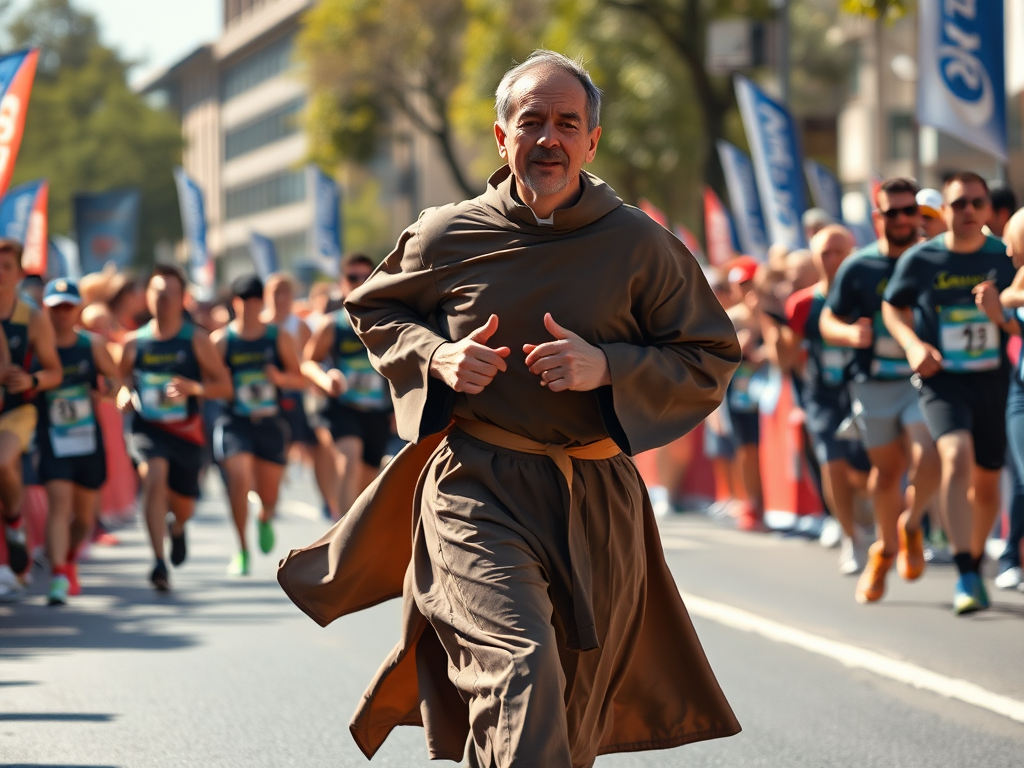
“But I suppose it’s the finishing that really makes the difference.  The elite runners were crossing the finish line when I was only about a third of a way through the course.  They had about three hours to enjoy refreshments and rest, while I still had about thirteen miles of one foot in front of the other to reach my goal, and was wondering if I would really make it. But the beauty of the event is that for many of us, just finishing the race is the accomplishment, the goal.”

Very few have to run a marathon and participation is usually just for fun.

But today the author of the letter to the Hebrews asks us a related question: Will we finish the race that is our life with faith? Will we persevere? Or will we run off course, or give up?

And the race is hard.

In today’s gospel, Jesus tells us, if we follow him, if we stand up for what is right, we will experience conflict.

The writer of Hebrews, like a good sports coach, gives four pieces of advice about how to finish the race.

To finish the race: recall who surrounds us. Remove those things that weigh down on us. Rely on strength within us. Remember who goes before us.

Recall who surrounds us: “Therefore, since we are surrounded by so great a cloud of witnesses.” The epistle writer wants us to picture ourselves as athletes in an arena. As we strive toward our goal, to finish with faith, in peace and holiness, we run surrounded by people. The people in the stands are people who have demonstrated faith — faith that persevered, people who by the grace of God overcame great obstacles, and finished the race. These are people of the Bible, the men and women of the Church throughout the ages, people known personally by you and by me whose witness encourages us.

They are witnesses, not just spectators. There is a huge difference. A spectator watches you go through something. A witness is someone who has gone through something herself, and the root meaning of the word witness, from which we get the word “martyr,” is someone who may have given his life going through it. We have witnesses cheering us on, not just spectators, people who have gone through what we struggle with, people whose testimonies of the strength God gave them can, in turn, give us strength and courage. We have witnesses rooting for us, weeping with us when we stumble, calling to us when we wander, urging us to finish the race.

Our sports coach tells us also to remove what weighs down on us. Have you ever seen Olympic athletes running a race wearing winter parkas, or with weights tied to their ankles, or carrying a backpack full of bricks? “Let us lay aside every weight and the sin that clings so closely,” says our coach.

What attitudes and actions, what past behaviour and present entanglements weigh us down? What weights of sin and brokenness do we carry that cause us to stumble rather than sprint? We can put those weights down. God is ready to take them from us. God is ready to forgive and heal whatever we have allowed to get between us and God, whatever has come between us and other people, whatever wrongs we do to ourselves.

Our coach also tells us to rely on the strength within us. We are told to “run with perseverance the race that is set before us.” When the going gets tough, when the road is difficult, when the miles drag on, obstacles come up around every bend, when every stretch of the road seems like another steep hill to climb, we can rely on spiritual resources within us — spiritual resources we develop in training: in gathering with other Christians, in hearing and reading God’s word, in participating in the sacramental life of the church.

The word “perseverance” can also be translated as “patient endurance.” Endurance is one thing – we can endure and whinge and complain all at the same time. Patient endurance looks like praying without ceasing for ourselves and others. It looks like encouraging others even in the midst of difficulty. It looks like saying something kind, or saying nothing at all when something unkind comes more readily to mind. It looks like giving of ourselves generously, even when we’re not sure what’s ahead of us and our inclination may be to think of ourselves first.

Most importantly of all, remember who goes before us.  We can look “to Jesus the pioneer and perfecter of our faith, who for the sake of the joy that was set before him endured the cross, disregarding its shame, and has taken his seat at the right hand of the throne of God.”

We can and will finish the race strong in faith if we look to Jesus, if we keep our eyes focused on him, not being distracted by other things along the way that can cause us to lose our direction or our footing, causing us to stumble. Jesus has gone before us, He has shown us the way that leads to victory.  If we keep our eyes on Jesus and follow him, we will not only make a good beginning in faith we too will finish and win the race.

In the race of our life, we have people cheering us on. We have someone willing to take on our burdens. We can train for patient endurance. We have a guide who leads us and will not leave us. 

I pray each one of us keeps on running until the prize is ours and we hear God say to us, “Well done!” and we too become a member of that great cloud of witnesses.

Amen.

Reflection for the 80th Anniversary of the allied Victory Over Japan

Gathering together as we do this morning, to pay our respects to those who have given the ultimate sacrifice in the pursuit of freedom, justice and peace, even 80 years on, continues to be central to our life as a nation. The hundreds of thousands of names on war memorials across our country each remember someone’s child, someone’s sibling, someone’s parent, someone’s friend. And it’s often when we learn their individual stories that the great sacrifice made becomes more real to us, most of whom were not even born at the time of the second world war.

And so, this morning, as we consider the allied victory over Japan,  I want to tell you about Eric Cordingly, a minister who joined up as a padre during the second world war, and was taken captive in Singapore in February 1942.

In a letter written to his wife from Changi, on 16 August 1945, just one day after the Japanese announced their surrender he writes: “Last Friday we first heard through a secret radio we have maintained that Japan might topple and since then we have lived on the edge of a precipice wondering whether negotiations would go through. . . No British troops have arrived. We wait and wonder with such impatience.

“We are still living in the gaol here in Singapore and have been for 15 months. Food is just impossible, rice and coarse green vegetables — but, Mary, I am very fit, very thin and at present have no energy but a few weeks of proper feeding and I’ll be terrific. I am wearing a patched pair of khaki shorts and wooden clogs and that has been our only dress for over two years.

“At 4 o’clock I go to give my final talk on Confirmation to a group of 30 officers I’ve prepared. I wonder how long it will be before we see the Union Jack flying instead of the hateful Japanese flag.”

 His letters are very vivid, with assurances that, despite the privations, he is fit and well, and, above all, longing to return home. “I don’t think I could have kept going if you were not at home waiting for me — prayers do work don’t they darling!”

He tells his wife that he was able to work flat out as a padre with never less than three or four thousand to look after, both officers and men. “I have built five different churches here and have, except for a few exceptions, had a daily celebration of Holy Communion and this has been a terrific help. I have never had such a busy time as these past three-and-a-half years — all the time doing padre’s work in a way that was never possible before — so I have not gone to seed.

“Life has been pretty grim in patches, especially the year I spent in Thailand in the Jungle camps building the railway.”

In his war diary, he records that he buried over 600 young men who died from the brutal conditions working on the construction of the Thai-Burma railway.

Then, from Singapore on 6 Sept 1945, he writes his first letter as a free person, now safely in British hands and hoping shortly to be on his way home. His departure was chaotic, but, with an hour’s notice, he was told he could fly to Rangoon, where he joined thousands of other POWs from Thailand. To his enormous disappointment, he wasn’t able to take a flight back home immediately, but instead embarked on MV Empire Pride, bound for Liverpool.

As he drew closer to home, he began to plan for his return. “I have no kit, all was lost in 1942 except my haversack with my prayer book, robes, and communion kit. My watch was sold in order to keep alive in these last months; my ring was lost trudging through the Jungle in Thailand.” And he asks his wife if she could get his cassock and surplice cleaned “because I expect I shall appear in church on the first Sunday after I return”.

“I’m longing for the manse and you — the simple things — vegetables from the garden I’ve been dreaming about for years — and an egg — it’s years since I had one. Rationing won’t bother me much. I hope the apple trees have produced some fruit — I’m just longing to taste an apple again and some good simple dishes that I used to love.”

In A final letter written on 28 September, he reports that the little ship he is on is dashing along because the captain wants to beat the other ships to reach England first. “I don’t think I’ll get a chance to write so the next thing you’ll hear is my voice and better still I shall hear yours. . .”

And so began the return to “normal” life for thousands of ex-Far East POWs. Of course, so many of them were traumatised by their experiences suffering from PTSD and nightmares for the rest of their lives. That is why alongside those who died in conflict, we remember and give thanks to those who survived, those who returned home, but whose lives would never be the same.

I’d like to finish this reflection with the final words from Rev Cordingley’s first sermon in his church on his return –

 “Our victory is won, but there is a long job ahead to make liberty available again to everybody. But can’t you see it is a job after God‘s own heart, since he himself is doing the same thing? If God is with us, in the fight, in the sorrow, in the victory, in the rejoicing, in the reconstruction – if God is with us, who can be against us?”

Sermon for Sunday 10th August 2025

* Genesis 15:1-6 and Psalm 33:12-22 * Hebrews 11:1-3, 8-16 * Luke 12:32-40

A few years ago now, during my student days, I was a worship leader at a church summer camp for children in the Lake District. One of the themes of the camp was ‘Talking to God’.  We set up a board with post it notes and challenged the children to make a response to this question ‘If you could ask God just one question – what would it be?’ These were a few of the responses we found on the board:

God – Can you read my mind? If you can then what am I thinking?

God – I know you made the world and everything on it, but who made you?

God – How can you listen to everyone at the same time?

God – Do you like me better than my brother?

God – Is there a shortcut to heaven?

God – Why did you make midges? All they do is bite me – why did you do that?

If we really had the opportunity to ask God just one question, I wonder what it might be?

There is a story of two Christians who were talking at the back of church. One said,

“I really want to ask God a question. I want to ask God, why He allows all this poverty and suffering in the world today.”

The other said, “Well, have you prayed, and asked Him why he allows it?”

“I’m too scared,” the first replied, “I worry that he’ll ask me the same question.”

Most of us want to live in a fair and just world for everyone: a world where there is peace and love. In short: We want the kingdom of God to come on earth, as it is in heaven. But I want to challenge us this morning by asking, “Do we want it enough?”

The words of Christ that we heard in our Gospel reading just now bring us some comfort.

“Do not be afraid, little flock, for it is your Father’s good pleasure to give you the kingdom”

I don’t know about you, but I need to hear those words because I am sometimes afraid! I am afraid that when I look honestly at my life, I treasure my comfort too much. If my heart is where my treasure is, I worry my heart is glued to my sofa at home escaping into films. I worry my heart is secure resting in the knowledge that I have money in the bank which would ensure I would stay comfortable even if the house was flooded (or at least, I’d be OK for a while).

I wonder if, like me, some of you worry that you are like the rich man we heard about last week, who builds himself a big barn and sits back and congratulates himself on being so secure –  caring only a distant second for the poor and their discomfort.

Our gospels readings, both this morning and last week tell us that our security must not rest solely in our money, or in our family to take care of us. And we must not prioritise our desire for comfort over our desire for the kingdom of God.

Money, possessions, family and comfort are all good gifts from God.

And we should all be hugely grateful to Him for all the things that he has provided us with. But be sure that faith requires something from us, because of who God is and what his character is like.

God in Christ asks us ‘’’to sell our possessions and give alms’’’. He teaches us that there is a better city, a heavenly one, which we have been promised. However tempted we might be to stay put, tempted to say,

“Well, the kingdom of God might be nice, but actually I’m rather comfortable here at home. As things are. Let’s put down anchor here.”

If we do that, we’ll miss out on the Kingdom of God. Because Jesus was a poor, homeless refugee and chose to spend most of his time with the poor, the outcast and those who were distinctly uncomfortable. If we want to follow this Jesus, to live with him in his kingdom, we need to be prepared to go where he went.

I don’t want my sermon today to make anyone feel guilty about their comfort or wealth. Rather, I want to inspire us to dream dreams, and imagine visions of the coming Kingdom of God that are so beautiful that we refuse to lay anchor here in our material comfort. Because where our treasure is, there our hearts will be also.

There is an inspiring account of St. Lawrence whom the church remembers today, a Deacon in Rome who was eventually martyred by the Emperor Valerian. Lawrence was commanded to gather up the church’s treasures and to hand them over to the Roman authorities. This he did, but rather than gather up the silver and gold, he gathered up the poor of the city whom St. Lawrence had come to love. He presented them to the Roman authorities with the words, “these are the treasures of the church”.

We here in Dornoch have been gifted by God with beautiful churches like this one. We have been given a beautiful town, beautiful houses and surrounding countryside. And let us thank God for these things. But let us remember that our real treasure is not in the bricks and mortar of these places, or even in the flowers of the field.

Rather, our real treasure – where our hearts are called to be – is with the poor. The lonely, the outcast, those struggling with addiction, those that others have already written off. We are called by Christ to love these, and by doing so, we are loving him. By serving them, we are serving him. By sharing what we have and not claiming it as our exclusive private property, we will begin to allow God’s Kingdom to come on earth as it is already in heaven.

My prayer is that God would save us from making our money, our family, or our need for comfort into an idol. That way, we can have two free hands to grasp the promise God offers us – the promise of a coming Kingdom, a kingdom where everyone has a seat at the banquet table, and no one is left out in the cold. Let us put our faith in that promise, and hold only very lightly to the material blessings we have.

So, this week, think about and prepare the one question that you would ask  God when you meet Him face to face, and maybe some day you will be given the chance to ask that question. But remember, you need to be prepared with your answer when He asks the same question of you.

AMAZING SUPPORT FOR CLAN CANCER CHARITY

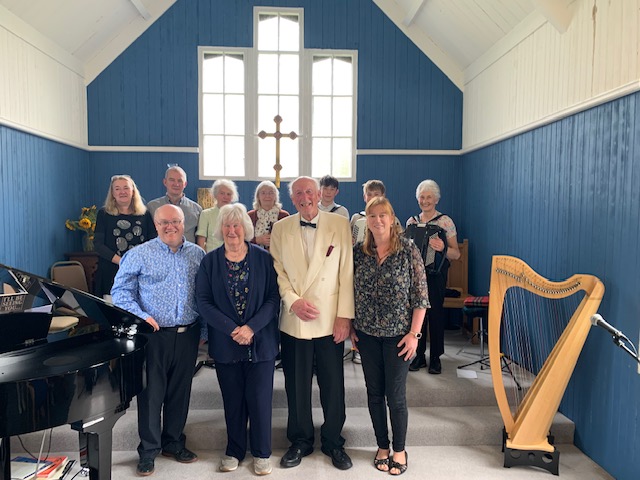
Thank you, thank you, thank you to all those involved in the two most recent concerts at St Columba’s in Brora. We have been overwhelmed with the support we have received and the attendance numbers at both concerts, when, altogether we have raised over£3,500 for CLAN Cancer Support Charity. Special thanks to all our performers (pictured above), to those who helped prepare the building, those who prepared and served refreshments and of course, to the wonderful Alistair Risk (pictured in the white jacket) whose idea these concerts were in the first place. Super effort team – God Bless you for sharing your gifts and talents in this way!

I will enter His gates with thanksgiving in my heart!

Our thanks go to the workers at Jedan Joinery for completing significant restoration work to the entrance porch at St Finnbarr’s Episcopal Church in Dornoch. The porch looks great and thanks too to all those involved in the process to find contractors and to the Wickham family for a generous financial contribution. Much of the wooden structure has been replaced, as have the foundations to the porch. You’ll see in the pictures below that we have also been gifted two planters which now stand either side of the porch. These were made for us by Dornoch Men’s Shed. A very smart looking porch, which will hopefully stand for years to come! Thanks everyone!

Sermon for Sunday 3rd August 2025

* Ecclesiastes 1:2, 12-14 * 2:18-23 and Psalm 49:1-12 * Colossians 3:1-11 * Luke 12:13-21

Have you ever bought new things to organise and hold your old things in order to make room for more things?

Do you sometimes find and bring home “good boxes” knowing that someday you’ll probably have some stuff to put in those boxes?

Lots of shops that sell storage containers and storage businesses thrive on that kind of thinking.

“Take care! Be on your guard against all kinds of greed.”

Have you ever been so envious of another’s life that you were unable or unwilling to celebrate his or her successes, abilities, or good fortune? Have you ever looked at others and said to yourself, “What about me? That’s not fair. Why isn’t that me?”

“Take care! Be on your guard against all kinds of greed.”

Has the grammar of your life ever been predominately in the first person singular, I? I want, I need, I did, I hope, I achieved, I accomplished, I will. I, I, I.

“Take care! Be on your guard against all kinds of greed.”

Have you ever bought something to make yourself feel better? Maybe because you were sad, lonely, angry, scared. You wanted a new life or a new feeling more than a new thing, but you bought it anyway.

“Take care! Be on your guard against all kinds of greed.”

If any of this sounds familiar, or if you answered yes, or even if you didn’t but you understand what I am talking about, then you just might know something about greed in your own life.

I say that not as a judgment or a criticism but in recognition that I, and maybe you too, can be as much a barn builder as the man in the parable Jesus tells in today’s gospel (Luke 12:13-21).

A few years ago, Betty, a priest who was a friend of mine, was about to retire. She invited me to come and look through the shelves of books in her study that she needed to get rid of because she was moving out of the rectory into her own much smaller house.

I was quite excited because I knew she had some great books. After a couple of hours of pouring over the shelves I had filled six boxes of books and loaded them into the back of the car.

When I arrived home with my new books I was thrilled. When Peter came out to help me unload he was not so thrilled. “Where will we put them all?” he asked. I began telling him my plans for more bookshelves, more shelves in the office and more shelves in the music room. “There is another option,” he said. I interrupted. “No,” I said, “I’m not getting rid of any of my books. I need them all!”

“Take care! Be on your guard against all kinds of greed.”

As Jesus warns, there are all kinds of greed. It might be books, shoes, or some other tangible thing.

It might be amassing money, land, or other form of wealth.

But greed can also be about time, attention, approval, love, knowledge, power, control, being right, being in charge, or a thousand other things.

Ultimately, though, greed is not really about any of these things. They are just the symptoms or pointers to a deeper issue.

The issue is not about quantity, but a condition of the heart.

Greed is really just a way of dealing with our own feelings of deficit and emptiness. It’s not so much about having enough but about being enough.

When we believe ourselves to be deficient, when we lose belief in ourselves, when we feel we are not enough, then we can become greedy. We use things and other people to fill the hole inside us.

Greed deceives and convinces us that if we just have more ________ then we’ll be ________. Fill in the blanks with whatever it might be for you.

For example:

If I have more money than I will have a more secure future. The real issue, however, might be fear, uncertainty, or the unpredictably of life.

If I get more books then I’ll have more knowledge and answers. People will see me as studious and intelligent.

If I can get more of your time and attention then I’ll feel accepted, important, and relevant.

If I can gain more power and control then I’ll be safe and respected. No one can hurt me.

Greed uses external things to deal with internal matters and it rarely works.

It leaves us wanting more, always seeking the next pound, the next book, the next word of approval. The thing is that greed steals and deprives us of what we most want. Greed robs us of our lives.

That doesn’t mean that possessions are inherently bad or wrong.

The antidote to greed is not necessarily in clearing out the cupboards, throwing away our books, or giving away our belongings, though in some cases that might be a necessary starting point.

The real work is interior work. Greed shows us to be living in poverty towards God. The antidote to greed then is to live in richness towards God.

That means that we must invest in ourselves, in each other, and the world in the same ways in which Jesus invested himself in us; through love, mercy, compassion, justice, hope, courage, acceptance, truth, beauty, generosity.

This is the wealth of God. This is the life God shares and invests in us through Jesus Christ. So to live in richness towards God begins with knowing that we already are God’s beloved treasure.

There is freedom in that. It is the freedom to live richly towards others and the world. It reveals that there is enough. It declares my life to be as important and valuable as yours. It eliminates the need for comparison with and judgment of myself and others. Being takes precedence over having.

I can’t help but wonder if greed might not be at the core of the political vitriol, the violence in today’s world, and the disfunction and hurt in so many of our relationships.

When greed is present in our lives, it robs us of God’s wealth. The boxes, shelves, and cupboards of our lives are already full. We have no need, no desire, no room for God. It isolates us from self, others, and God. Greed works its deception and turns us back on ourselves and the grammar of our life soon becomes first person singular.

I know what I will do.

I will pull down my barns.

I will build larger barns.

I will store my things in my new barns.

I will relax.

I will eat.

I will drink.

I will be merry.

When that happens greed has robbed me of you and the possibility of us. There is no second or third person. There is only me, a “fool” Jesus says in the parable; a fool who closes the barn door after the thief has escaped with my life.

“Life does not consist in the abundance of possessions,” Jesus says. Somewhere deep within we already know this. We really do. This is not a new message for us. Here’s why I say that.

Just think for a moment about a child you have known. If you are a parent, just think about the day you held your child or grandchild for the very first time. Think about the times you pulled him or her close and whispered your dreams into tiny ears. For those of us who are not parents, just recall the last child you saw baptised. Recall the day a friend introduced you to his or her newborn child. Recall the faces of school children on the playground. Do you remember that day? Can you picture their faces?

What were your greatest hopes and dreams for that child? What were your sincerest prayers for his or her life? What did you desire more than anything else for that little one?

Was it a big fancy house? A shelf full of books? A wardrobe full of shoes and handbags? Did you pray that they would always be on the winning team, that they would be rich and wealthy? Did you hope they would be number one in their class, or that they would be more powerful, important, and successful than everyone else? No, that’s probably not what you hoped and prayed for that child.

Why weren’t those your first concerns? Because something in you already knew that “life does not consist in the abundance of possessions.” And if you know that to be true for them you know it to be true for yourselves. You wanted more for that child.

I’m betting you prayed that child would find meaning and purpose in their life. You hoped their life would be filled with joy. You wished them a world of peace. You prayed they would look in the mirror and see their own beauty, that they would trust their own goodness, and that they discover their own holiness. You prayed they would find that special one and know what it is like to love and be loved unconditionally. You wished them to imagine all the possibilities for their life.

The reason those things were your prayers, hopes, and wishes is because somewhere deep within, you know and want those same things for your life. You touched your own richness towards God. You caught a glimpse of the treasure that you are and want to be, the treasure God knows you to be already.

Can you imagine if we lived that way? How different our lives could be? What possibilities that would create in our relationships?

“Take care! Be on your guard against all kinds of greed.” Remember that you are Gods treasure and so, each and every day – live in richness towards Him.

Sermon for Sunday 27th July 2025

Genesis 18:20-32 and Psalm 138 * Colossians 2:6-15, (16-19) * Luke 11:1-13

“What’s in a name?”

A question that many of us will have heard many times. But I wonder, do you know where that question was first asked – or at least first written down?

Of course, you may guess when we add the words that follow –

“What’s in a name? That which we call a rose, by any other name would smell as sweet”.

The well known line, spoken by William Shakespeare’s character Juliet when expressing her view that the feud between her family and that of her Romeo (the Montagues and the Capulets) should not prevent their love for one another.

But for some people, their family name proudly identifies who they are, which tribe they belong to and can even hint at the values that they will most probably uphold.

Family names such as Baker, Taylor and Smith hint at a profession in a family’s history, whereas Windsor, Thornton or Stanford claim a historic family connection with a great estate.

But what does talking about being part of a particular family have to do with today’s Gospel?

If we look at the Gospel only literally – well, probably not very much.

If we read it only literally, we’ll be tempted to say that this Gospel gives us two things. It gives us the exact words of a prayer to say, and then it tells us that all we have to do is pray hard enough and long enough and we can get God to give us what we want. But reading those few verses of this Gospel literally can lead to real frustration and heartbreak when we come up against hard things in life. “I asked, but I didn’t receive what I wanted. I knocked but that door wasn’t opened.”

But we should realise that this reading is not actually a “how-to” reading. It’s not intended to give us a recipe of sayings that we can call on when we want or need something. We need to look deeper, to take a look at these few verses in the context of this whole section of Luke’s Gospel, and then we’ll see that we’re actually getting a whole lot more.

These few verses are part of a whole picture given to us in Luke, a picture that tells us something very important about what it means to be a part of God’s family, to be the people of God. Just think back to the last two Sundays’ Gospels? First, we heard the parable of the Good Samaritan. That story reminded us that it’s through our actions, our works, the way we treat others, that we show we understand we’re living in the kingdom of God. We do things in a certain way because we understand the lessons Jesus taught about how those who claim to be his followers ought to act.

Then last week we heard again the story of Martha and Mary. Jesus was not putting one sister above the other. He was reminding us that we must support our actions by prayer. We must also constantly renew and strengthen ourselves to do God’s will by listening to God’s word and sharing together in prayer.

In today’s Gospel, Jesus is continuing his teaching about what it means to be his disciples. These disciples have heard Jesus teach others; they may have heard him speak to Martha and Mary. Now they want Jesus to teach them to pray, too. And here’s where things get interesting. Our English translation says, “When you pray, say . . .. ” But remember that what we read this morning is a translation of the original Greek text. If we go back to it, we find that this verse could be translated, “When you pray, you are saying . . .. ” And that gives us something more to think about.

Remember that Jesus was talking to Jews, to his own people. The prayer that we have come to call “the Lord’s Prayer” is not an exclusively Christian prayer. It’s certainly not a “me-and-Jesus” prayer. Any devout Jew could pray these same words today, and many did pray exactly this way in Jesus’ time. Jesus was reminding his listeners that they already knew how to pray; they’d been doing it all their lives. He was making them conscious again of the outline or the form of a prayer that maybe had become too familiar.

Then he went on to give them an example of how prayer ought to affect us. We mustn’t make the mistake of turning the story of the neighbour and the bread into an allegory. We can’t make God the neighbour and us the person who needs some food in the middle of the night. That’s not the point of the story. The point is that, if we are members of God’s family, we’re bound to act in a certain way.

Take a good look at the verses we’ve turned into contemporary hymns. The Gospel says, “Ask and it will be given to you.” Ask whom? “Seek, and you will find.” Seek where? “Knock and it will be opened.” Knock where? Too often we say, “God is the answer,” and then we try to set things up as a me-and-Jesus vertical line.

What would it be like if we all realised that we have to be a part of this prayer, that if we’re part of this family then we need to be the ones who are asked, and we are going to be the ones who are sought out by the needy, and we are the ones who must open our doors. What would it be like if we really opened our hearts and our doors not only to people in need outside the church, but to each other, inside the church, giving and receiving the same kind of love Jesus modelled for us? If we can say that this really is who we are, then we’re working out what this Gospel means for us as people of God who happen to be Christians, who happen to be Episcopalians, living and working in this place.

So this Gospel may be doing for you what it was doing for those who were gathered listening to Jesus. It may be reminding you that yes, this is how we pray. We don’t need to be doing anything outlandish or extraordinary. But we do need to keep our prayer in front of our eyes, as it were. We need to remember that God is the holy One. That means that we need to remember that, while God does provide for us, we need to reach out to others and mirror God to them. We need to forgive and be forgiven. We need to remember that, however good we are, we still fail, we are still sinners, all of us, but that God forgives us. If God forgives us, and we are God’s people, then shouldn’t we forgive each other? When we are open to the unconditional forgiveness of God, then we will come to be known as a group of people who welcome the stranger and the sinner.

So it’s exciting, really! We belong to the whole of the Gospel of Luke. We might see ourselves sometimes as Samaritans, sometimes as Marthas or Marys, even sometimes as priests and Levites, but above all we should see that we’re a community of faith together. We’re people of prayer living in the kingdom of God.

This kingdom, as Jesus constantly taught, is here and now. By our baptism, we’ve promised to live a different life – the type of life God would live, the kind of life God did live in Jesus. A life that looks to God through praying together and reading the Scriptures, through our liturgies, and through our sharing in the Eucharist. It’s not an easy life, but as Paul said in Colossians, “As you have received Christ Jesus the Lord, continue to live your lives in him, rooted and built up in him and established in the faith, just as you were taught, abounding in thanksgiving.”

Sermon for Sunday 20th July 2025

* Genesis 18:1-10a and Psalm 15 * Colossians 1:15-28 * Luke 10:38-42

We start with a trick question for you today: Are you a Mary or a Martha?

If you have ever spent time reading or listening to interpretations of today’s gospel passage, you probably understand the dichotomy implicit in the question. Martha, we often say, is the “active” one, rushing around, busying herself with the demanding practicalities of life. Mary, on the other hand, is the “contemplative” one, resting attentively at Jesus’ feet, engaged in a more conventionally prayerful, intellectual encounter with her Lord.

Two sisters, two followers of Jesus, and, we are told, two diverging possibilities for discipleship, with Mary’s prayerful receptiveness being “the better part” and, therefore, the one to which we are usually taught to aspire.

It’s not surprising that we tend to engage with the story in this way, as a sort of spiritual personality test. And don’t we love personality tests. Consider the enduring popularity of frameworks and tools that measure and compare our dispositions, from astrological signs to the Enneagram to those random Facebook quizzes that reveal which dog breed or Disney Princess you resemble. (And by the way, I am both a Papillon and Princess Elsa from Frozen).

We are and always have been—in ways both meaningful and absurd—people desperately seeking a glimpse of ourselves. We sift through our habits and tendencies for some definitive indicator of who we are, some solid thing at our core, a name by which we might be distinguishable in this increasingly crowded and confusing world.

And so, when we hear Luke’s Gospel today, we might ask ourselves: which one are you? Martha or Mary? Busy or mindful? Striving or tranquil? Perhaps, as you hear the question right now, you can already feel the pressure of having the right answer, of measuring up, of choosing that “better part.”

But before you get too lost in all of that, remember what was said at the outset: it’s a trick question. It is a false choice.

It is false, quite simply, because it is not the choice that Jesus, by way of this text, asks us to make. Jesus is not setting the sisters against one another, nor is he creating a hierarchy of models of discipleship. The dichotomies that we read into the text are in fact our own fabrications, borne of our own desire to render the world understandable through categories and labels. We do this all the time!

This is not Jesus’ agenda.

When he tells Martha that Mary has “chosen the better part” he is not challenging Martha’s “personality,” nor is he even rejecting Martha’s present busyness, but is instead gently calling her back to the fullness of herself, reminding her of both the ground of her being and the telos, the purposeful endpoint, of all of this good, hard, and necessary work: namely, himself.

Martha lives and serves, as we all do, in the name of Jesus, the One who has knocked upon her door and who now lives in the midst of her activities. It is his holy name that imbues her practical work with luminous significance. The cooking and the cleaning and the mending and the tending of small, daily things—all of this holds the possibility of divine service, but only when those things are done in mindfulness of God’s ever-present love. That mindfulness is what we must bring to the table as disciples, and so Jesus simply wants Martha not to lose sight of him, knowing, as he does, how easy it is to become “worried and distracted by many things.”

What he offers, then, is not a competition between Mary and Martha as archetypes of greater and lesser discipleship, nor a distinction between the relative virtues of being and doing, but instead the continuous and crucial choice that each of us must make, in all that we do, between remembering Jesus or forgetting him. This is a Gospel story that calls us to remember. This is a Gospel story in which Martha is asked—as we are—to do this—all of this, everything—in remembrance of him.

And how badly we need that reminder, especially now, caught up as we are in the continuous maelstrom of those “many things” that trouble the world around us. How tempting it can be to look at the state of the world, or even the state of the Church, and to feel a slow panic begin rise within, repeating to ourselves like a mantra, or a plea: more to be done, more to be done, more to be done.

Of course, there is more to be done. Much more, and much of it will be different from what we have done before in our lives and who we have been before. The Kingdom requires us to roll up our sleeves. But as we do so, as we make our lists and tend to the cracks and the spills and the dusty corners of our days, we cannot forget that we do not act by ourselves or for ourselves. We do so in the name of Jesus. We do so in and through the power of his peace.

This is what Martha needed to remember, and it is a necessary reminder whenever we sit down, as individuals or as a community, to consider who we are and where we are going. We must ask ourselves not only what to do, but why, and for whom? Why do we work so hard to try keep our churches healthy? Why do we persist with our traditions in the midst of widespread apathy and violence? Why do we dare to dream of a world that is guided by love and justice when too often we see a world burdened by fear and inequality? The answer cannot simply be, as Episcopalians love to say, “because we’ve always done it that way.” The answer must be Jesus. We work hard because of Jesus. We persist because of Jesus. We dare to dream because of Jesus. We cannot and must not forget this; we cannot forget him, no matter what we do.

We are not given, in the text, Martha’s response to the Lord. It would not really make much sense, though, to infer that she suddenly dropped all of her work at that moment and sat alongside her sister. After all, there were still mouths to feed, still places to be set at the table, still broken fragments of this or that to be gathered up and repaired. There still are all of these things to be done, and there always will be, and thanks be to God for the grace we are each given to do the necessary, unglamorous work that sustains us. It is holy work, done upon the holy ground that is, in fact, everywhere, once we remember to look for it.

So no, you are not a Martha. You are not a Mary. All of us are both of them, and neither, for love requires us sometimes to strive and other times to be still. They are not separate paths, but merely the varied landscape of the single Way back home.

You are a follower of Jesus. A servant of Jesus. A lover of Jesus.

Will you follow him back to yourself?

Will you not forget him, for as long as you live?

Those are not trick questions!