Sermon for Sunday 15th February – The Transfiguration of the Lord

Luke 9.28-36

“Mirror, mirror on the wall, who is the fairest of them all?”

I’m sure you will remember this question from the fairytale Snow White – the question that the wicked and vain Queen puts to her magic mirror, expecting the mirror to proclaim that she, the Queen herself, is the fairest in all the land.

I wonder who you think is the fairest in the land?

According to a popular survey, women such as Audrey Hepburn, Raquel Welch and Grace Kelly would stand a good chance at such a title.

And on the men’s side, what about Marlon Brando, Clint Eastwood or James Dean?

Of course, the make-up artists, personal trainers, and designer outfits gave them all a helping hand, as did the glamourous lights of Hollywood.

But were any of these really the fairest in the land?

We’ve heard this morning the story of the Transfiguration. And I wonder, when Jesus was transfigured before his disciples, was he truly the fairest? Was his, in that fleeting yet indelible moment, the most beautiful of all bodies?

For many of us, steeped in the artistic images and songs of the western church tradition, the intuitive answer would seem to be, “yes, of course, He must be.” Jesus is God Incarnate, after all. Surely his glorious body, infused with blazing light on the mountaintop, is the loveliest of all imaginable sights.

Or is it?

Beauty is a complex thing, and we, in our time are challenged to consider how we talk about the aesthetic dimensions of the holy.

Sometimes, the way we speak about the worth and dignity of certain bodies over others reveals the pervasive influence of our unspoken assumptions about what is beautiful and what is not. It might even be said that in the west, we live in a society burdened by the tyranny of beauty—a worldview that equates physical perfection with being the best that a human being can be.

And we don’t have to look far to find evidence of this. Open up the pages of a glossy magazine or scroll through the airbrushed cavalcade of images on social media, each one showing a person claiming to be just a little bit more accomplished or happy or appealing than you are. Note all of the promises of modern marketing that you will be satisfied, that you will be whole, if only you will buy this thing, achieve this status or correct this physical flaw.

All around us, in ways subtle and not-so-subtle, value is focussed on certain physical standards of “beauty.” Some of these are personal, about our own physical bodies: skin colour, body shape and size, ability, age, gender identity, nationality. Others, though, are institutional: membership numbers, average Sunday attendance, followers, financial accounts, cultural influence, political power etc etc.

And of course, the church is not immune from these tendencies. Indeed, the main stream church denominations longing for their former wealth and prestige is but one manifestation of this servitude to the aesthetic, a single-minded fixation on the mighty Jesus of the mountaintop rather than the humbler manifestations of his day-to-day existence in the valleys and backstreets where he was most often found.

In all of this, there is the tacit acceptance of a certain standard of perfection that is wielded against the different, the marginal, and the vulnerable.

That which is beautiful is seen as more “real” and thus as having more value than the squalid and the broken realities of our lives. In the personal and the corporate experiences of this tyranny of the beautiful, there is an underlying assumption that up there, enshrouded in the clouds, a perfected version of our presently imperfect, unacceptable body is tantalisingly within grasp, if only we would reach a little higher.

And so, if we say yes, in the Transfiguration, Jesus was indeed “fairest,” we unwittingly subjugate ourselves and others to the idea that Christ’s glory is the same as an imaginary physical perfection—a body that is bright and pure and unmarred by the messiness of life. But then, when we look at our own scars; at our own tender, hidden, mottled places; at our own sometimes intolerably plain reflections in the mirror, we can see only insufficiency. And we begin to believe that God is as far from us as the bright lights of a city we will never visit. And so God’s beauty becomes our despair.

But thankfully, this is not the Jesus we are actually given in the good news, even if it is the one we’ve spent centuries imagining.

If we listen carefully, we will notice that, in fact, “beautiful” is not a word any of the gospel writers use to describe the Transfiguration. “The appearance of his face changed,” Luke simply tells us in today’s passage, “and his clothes became dazzling white.” If anything, it is brightness, not beauty, that characterises the nature of the Transfiguration, and it is terror and confusion, not pleasure or jubilation, that characterises the reactions of those present. So however we might describe Jesus at that moment, imagining a sort of physical beauty is not an adequate approach. Thinking of him as overwhelming, or perhaps even frightening, is probably closer to the truth—like a person staring directly into the noonday sun.

Terror in the face of divine glory is, in fact, quite consistent in the Biblical tradition. And we might even go so far as to consider that divine presence is not meant to be experienced directly by the senses. It is not adequate to call it beautiful, because it is not aesthetic—it is beyond our ability to receive or comprehend.

The Transfiguration, important as it is, is an incomplete revealing of God in Christ because ours is also the God of the Crucifixion and Resurrection and Ascension. One cannot understand Christ without all of these facets: Jesus’ nature as Lord of all creation has not, in fact, been fully revealed until he bears the hideous marks of Calvary, until he has inhabited and conquered the stifling tomb, and until he has poured out his Spirit upon all of our bruised, imperfect mortal flesh.

In the strange, inconceivable totality of Divine love, God is shown as the One who embraces ugliness and pain even more closely than majesty or beauty—if only to free us from the delusion that we are ruled by any of it.

And so perhaps it is freedom, more than anything—more than beauty or terror—that we should receive from the account of the Transfiguration: how free God is to be more than we can understand; how free God is to shatter our categories of what is worthy and what is not; how free God desires us to be within the dazzling radiance of all-encompassing love, no matter how broken our bodies and our hearts.

Such freedom is startling, to be sure, and we are still learning how to bear it, how to trust in it. But it is also the gateway to true life—a life not reserved for the fairest and most beautiful alone, but for everything and everyone, reconciled at the last, beyond our imagining, by God’s unfailing mercy.


Sermon for Epiphany 5 – 08.02.26

Matthew 5.13-20

Back in the 1990s, when I was at university, during the long summer holidays I volunteered as a leader at Christian Youth camps in the Lake District. And it was there that I discovered that one of the skills that you needed to develop to be a good youth leader was to be able to think up games and activities that could sometimes leave those taking part with a bit of a surprise – after all we often hear that God is full of surprises don’t we?

Take for example, the good old Christian youth camp toffee apple bobbing. Just like regular apple bobbing – toffee apples in a bowl of water, and the first contestant with hands behind their backs to take a bite out of an apple is the winner. Except, of course, with Christian youth camp toffee apple bobbing, the apple is replaced by a toffee covered raw onion! Oh My!

And then of course, during the breaktime between activities, orange squash and custard creams. Or should I say, orange squash and custard creams where the custard filling has been carefully removed and replaced with toothpaste?

Or maybe you would have preferred a fresh cream iced finger? Yes, we did once get to those as well, putting a layer of mayonnaise under the layer of squirty cream – although that did rather backfire when the Bishop of Penrith who was visiting us for the day decided he would quite enjoy a cream cake!

Now I’m not telling you about all this just to make you disgusted at the goings on of youth camp leaders, or to make your stomach turn. All these gross activities were actually carefully planned in an attempt to teach young people about how appearances can be deceiving and about the importance of gaining a deep understanding of situations so that we don’t just jump into moral and mortal danger.

In our society today, we are all searching for authenticity, aren’t we? We warn each other to look out for ‘fake news’ or to take a ‘deep dive’ into information in order to check it has been BBC verified. We all want the inside to match the outside. When promised a toffee apple, who wants to bite into an onion? Nobody delights in a toothpaste custard cream to say nothing of a mayo-iced finger.  The inside should match the outside.

Sugar and salt look almost identical to the naked eye but they operate very differently on the tongue. Which one is which? Only a full tasting will be able to help us finally decide.

Today Jesus has a lot to say about salt and the importance of salt being salt and not something else, “You are the salt of the earth; but if salt has lost its taste, how can its saltiness be restored? It is no longer good for anything, but is thrown out and trampled underfoot.” Well, what does that mean?

Firstly, it’s important to remember that Jesus is talking to his disciples: it’s these people that he is describing as the salt of the earth. That is good and bad news for them, and for us in our generation today.

We see that Jesus has a vision in mind, a standard by which we disciples should live in the world. We are meant to be the salt of the earth, a sort of leaven or spice for the world. It’s interesting that Jesus uses this metaphor of salt.

Salt, in a dish, is not just salty, but since it is such a fundamental flavour it highlights all the others. In a word, we followers of Jesus are meant to enchant the world, to draw out the flavours of all the world, all that is in existence, absolutely everything!

For too long Christians have been the people who want to somehow run away from the earth, to escape into an abstract spiritual existence. But here we see that Jesus would have his followers deeply engage with the world, indeed to act as a spice that enlivens all the rest. With this spice, the world feels things more deeply, the highs are higher, the lows are lower. With this spice of Jesus’ disciples the world feels, thinks, and acts more profoundly.

Now, before all this, Jesus says that we are the salt. The key word here is are. He doesn’t say, “You will someday be the salt of the earth,” or “Continue to work at becoming the salt of the earth,” no, “You are, the salt of the earth.” For Jesus, we disciples are indeed already the salt of the earth, this is a spiritual reality, we are already the salt of the earth, it is a state of being that is already in place. This calls to mind the great saint Evelyn Underhill who said that spirituality is more about reminding and remembering than learning something new. We are this salt of the earth, if you don’t believe me, ask Jesus.

So, with this reminder that Jesus has a clear idea of what we are to be in the world, this enlivening spice, and that we are indeed that spice, we come face-to-face with the prospect of how we are doing in the light of Jesus’ statement. In other words: how are we doing in living with the standard that Jesus has laid out? Are you living as the salt of the earth? Are you enchanting and enlivening the flavours of life, are you feeling, thinking, and living deeply in the pain and joy of the world or are you living in another way that Jesus doesn’t describe? He is pretty harsh too when considering the prospect of salt without saltiness: “If salt has lost its taste, how can its saltiness be restored? It is no longer good for anything, but is thrown out and trampled underfoot.”

It seems to me that a life of saltiness that Jesus is getting at here is one that, without fear, moves into the world in love and affection. We salty ones shouldn’t allow ourselves to be bowled-over by the tragedies and disappointments of the world, but we also shouldn’t allow ourselves to fall into quiet resignation over situations of injustice. We followers of Jesus, we salty ones, should walk a brave line of love into the deepest experiences of life, neither being swept away nor disengaged. This brave walk of course happens only because we are empowered by the Holy Spirit which, in my experience, is more about granting patience and tenacity more than anything.

But what does this salty life look like anyway? To me it seems that a salty life of following Jesus is one where, first and foremost, the disciple has begun to make peace with themselves. Where in your life have you shied away from the cold facts of life? Which relationships have you let grow cold because the truth is just too awkward? Which aspect of your personality and habits are hindering a zest of life, what needs the salt of Jesus?

Next, I suppose, is that the salty ones begin to move beyond themselves and gently offer themselves to others; hopefully simply as presence, as an ally, as a friend, but not as an overpowering fixer. We are salt, not pepper. Salt allows the flavours of others to shine. Pepper insists on being forward and in your face. Being salt means that we listen, we notice, and we don’t have to have our way.

Being salt for the earth means to remind the world of what God created it to be: a loving commonwealth that is created for the flourishing of all and that anything other than that is not living in accordance with how God desired things to be.

You are the salt of the earth, called so by Jesus himself, and so be salt and nothing else, not sugar, or an onion, or a toothpaste Custard Cream.

Walk bravely into the world and know that we walk together empowered by the Holy Spirit.

Amen.

Winter Warmer – concert a triumph!

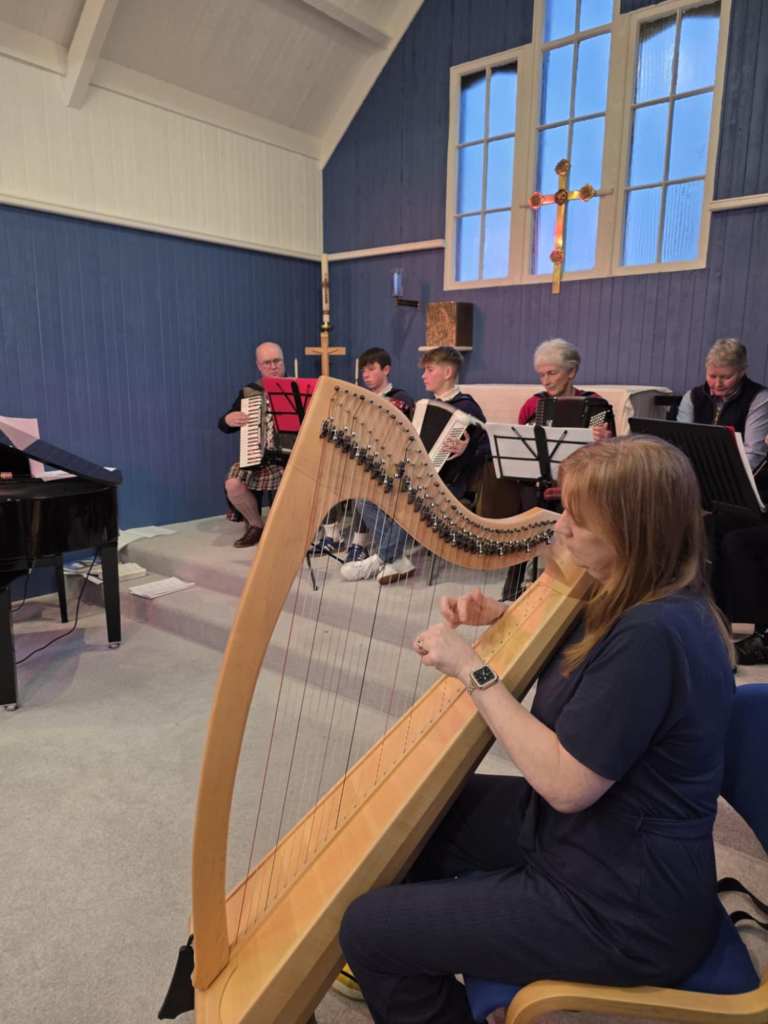
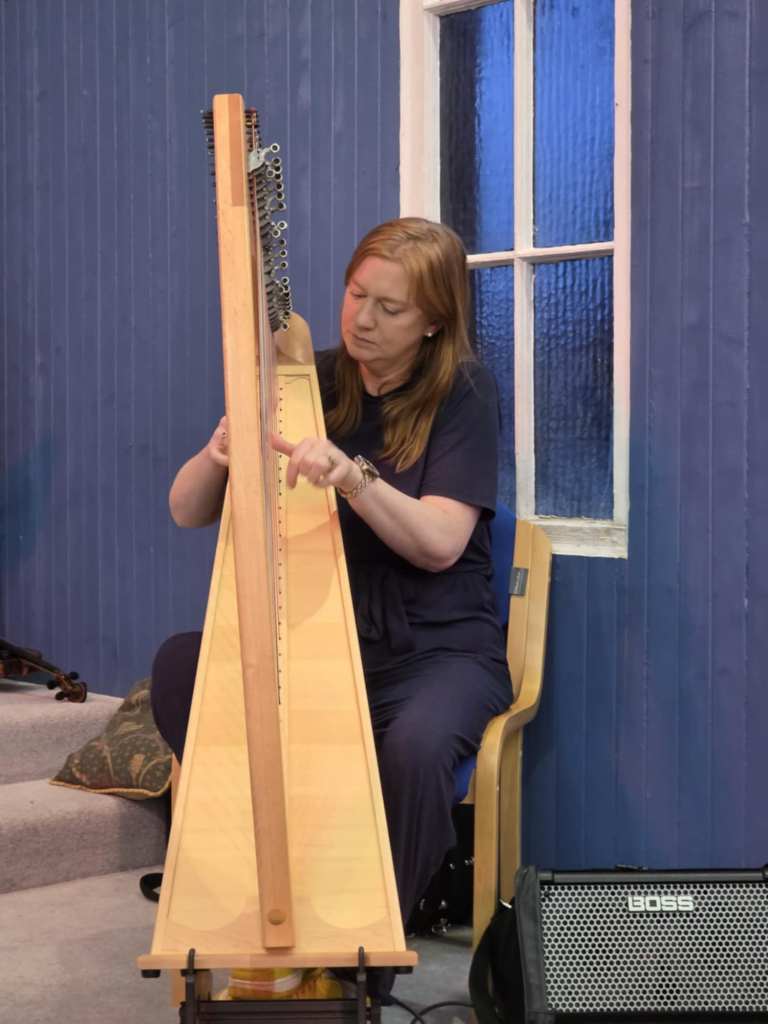
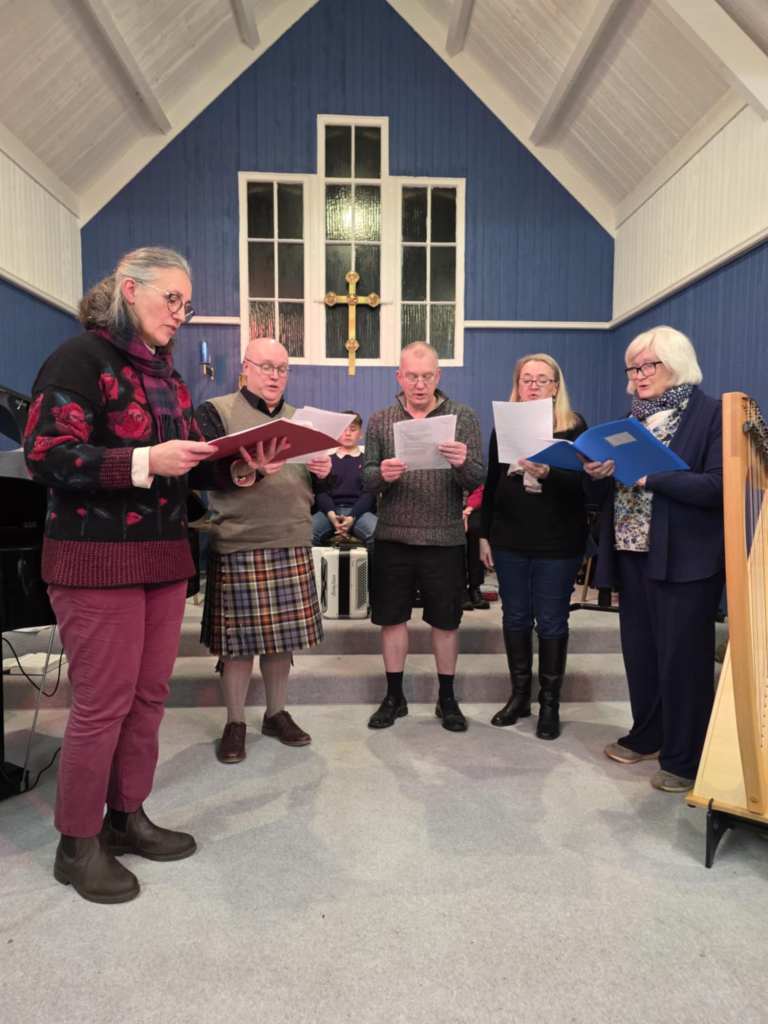
Members and friends of St Columba’s Scottish Episcopal Church (aka The Tin Tabernacle) in Brora were entertained by a variety of musicians last Saturday afternoon as part of the church’s ongoing series of seasonal concerts in aid of CLAN Cancer Support charity. Concert goers were treated to a selection of Traditional Scottish music, popular ballads and a number of Robert Burns’ poems set to music, among other items. The evening was introduced by Alistair Risk, a member of St Columba’s congregation whose idea the series of seasonal concerts were. Canon Simon Scott (the priest in charge and one of the entertainers) said, “It was a joy to be able to gather together in our little tin tabernacle to share music that warmed both the hearts and souls of us all”. Look out for St Columba’s spring concert coming later in the year!

Our sincere thanks to all who helped, especially those who set things up, provided and served refreshments and cleared away afterwards!

Sermon for Sunday 25.01.26 – The Conversion of St Paul

Acts 26.9-23

Of the many towering figures among the disciples of Jesus in the New Testament, St Paul stands head and shoulders above them all.

Energetic, bright, well connected and a great communicator it is not surprising that at almost every service worship serice there is a reading from one of his letters – usually the 2nd reading during our Holy Eucharist for us Episcopalians. His finger-prints are to be found in almost every discussion about what Christians believe. Yet despite that, St Paul had one big hang-up: however much he despaired at the qualities and abilities of the other Apostles, at least they could all say they had met Jesus: they been called by him, been transfixed by him; and of course many of them had seen him die before becoming witnesses of his Resurrection.

Paul’s encounter with Jesus took a very different form. So, the story that dominates today’s readings – one of four re-tellings of Paul’s conversion story that we find in the earliest history of the Church (the book of Acts) – starts with this very self-confident Greek educated Pharisee putting himself at the disposal of the Jewish authorities in order to eradicate all trace of this heretical upstart, Jesus.

In our story then, he is on horse-back, on his way from Jerusalem to Damascus, in order to lead a mass round-up of known Jesus sympathisers. Rather like the SS in occupied Europe during the second world war, people would have been genuinely scared to death of him.

And at some point on that journey the horse rears, Saul (to use his pre-Christian name) is thrown to the ground and he hears the voice of the man he had never met saying to him: Saul, Saul, why are you persecuting me?

And so overwhelming was this experience that he finds himself completely incapable of doing anything. In modern parlance he was ‘as weak as a kitten’ – blinded and completely disorientated. And as we know, from then on his life took a completely different course as he used his considerable abilities to carry the Christian Gospel to the far flung corners of the Roman Empire – to Corinth, Thessalonica, Ephesus … all the names we recognise from hearing the readings on Sundays … until he was finally beheaded in Rome during one of Nero’s frequent persecutions, sometime around 60AD.

Today, we concentrate on just those few minutes on the road, those few days of what we call ‘his conversion’.

We can so easily take the mickey out of those who say they can remember the very moment and the place when they ‘gave their lives to Christ.’ That’s because, for most people in Church, the realisation that ‘being a friend of Jesus makes so much more sense than being without him’ takes a little more time before the penny drops. But we do recognise that more dramatic changes of heart do occur and the story of the conversion of a young Canadian by the name of Jean Vanier is one such.

Jean Vanier’s father was Governor General of Canada and the young Vanier found himself in Paris just after the liberation in 1945. There, one morning, he and his mother were taken to meet some of the prisoners returning from various concentration camps in Poland. He wrote later of his amazement that any of them could still walk, so emaciated were they from disease and starvation. He recalls their faces twisted with fear and anguish. It was a life-changing event.

Despite his initial plans for a career in the military, he completed just five years in the Canadian naval service before hearing the strongest imaginable inner spiritual calling “to do something else”.

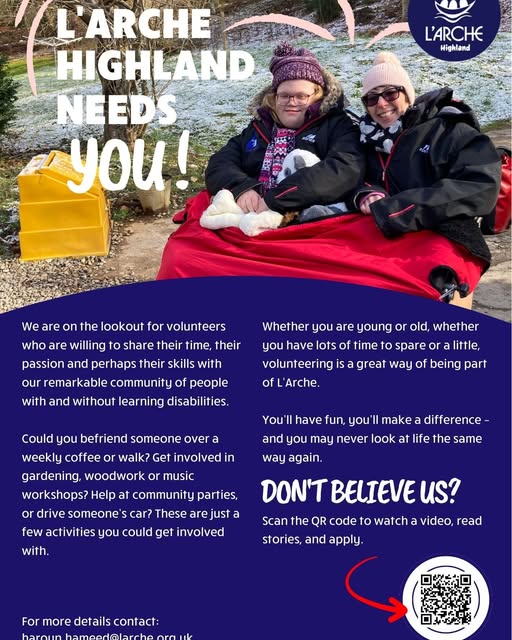
Jean Vanier was the man who went on to set up the first L’Arche house, inviting two men from a local institution, both with quite severe learning difficulties, to share his simple domestic life. I’m sure many of you will have heard of L’Arche communities. There are now something like 1,800 such communities in 80 countries (and we are fortunate to have our own L’Arche Highland community based in Inverness) where the able bodied and the disabled live in community together, learning from one another and caring for one another.

And that might have been a quite remarkable life and a hugely Christian ministry in it’s own right. But it is out of his practical experience that Jean Vanier was able to speak into situations of extreme tension, when the leaders of the nations were simply not able to listen to or accept the point of view of others, resulting in the breakdown of former peaceful friendships between allies.

Here is something Vanier said,

‘I know just how painful it can be to listen to other people as they express their innermost feelings. But to meet people at this level is not to argue with them or tell them what to do. When we are clothed with humility we begin, to our surprise, to find things in the other person of real value. When those with great skills and those with fewer come together in this way, something happens. There is a spark – and both groups change’.

And isn’t this something that some of those in authority over us today need to think about so very carefully.

When we are clothed with humility we begin, to our surprise, to find things in the other person of real value.

Who can say what would have happened if Jean Vanier had not met those emaciated prisoners in Paris in 1945? Certainly, founding the L’Arche community was not how he imagined he would spend his life!

So our keeping this day in honour of the Conversion of St Paul is a response to the truth that God – perhaps more frequently than we give credit for – does knock at the door of our hearts, does throw people off their metaphorical horses, their carefully planned and organised fast tracks … and does offer them an alternative reason for living.

And what we see emerging are new ways of working, new truths – and new forms of happiness. In the lives of St Paul and Jean Vanier, there is also one vital parallel. Of all the passages in the Bible that many of us can quote from memory, is that from St Paul’s letter to the Corinthians, chapter 13, verse 4.

How does it go?

Love is patient, love is kind. It does not envy, it does not boast, it is not proud. It is not rude, it is not self-seeking, it is not easily angered, it keeps no record of wrongs. Love does not delight in evil but rejoices in the truth. It always protects, always trusts, always hopes, always perseveres. Love never fails.

Oh that world leaders would hearken to that voice of love right now!

When Jean Vanier stood at the station in Paris, when St Paul was bundled off his horse on the road to Damascus, they learned the same lesson. And either of them could have written those words – which both stem from the insight that the ways of God and his love for us are rooted … in patience.

Conversion is what happens when we are able to wait for others, wait upon others, wait with others. It is the over-turning of the ego and the openhanded desire to make community out of the bricks that are there – not the bricks we would, ideally, like to have to hand.

I’d like to finish our sermon today by offering two short quotes from Vanier’s wonderful little book Becoming Human.

The first is this –

‘One of the marvelous things about community is that it enables us to welcome and help people in a way we couldn’t as individuals. When we pool our strength and share the work and responsibility, we can welcome many people, even those in deep distress, and perhaps help them find self-confidence and inner healing’.

And the second –

‘Every child, every person needs to know that they are a source of joy; every child, every person, needs to be celebrated. Only when all of our weaknesses are accepted as part of our humanity can our negative, broken selves be transformed’.

That is what Church is about, that is what we are here for: and we must learn to be patient as we edge our way forward, allowing that converting process to be ours also, doing in our context, what Jesus did for St Paul and for Jean Vanier.

Amen

Incidently, if you might be interested in supporting our local L’Arche community, they are looking for volunteers right now! Take a look below –

Sermon for Sunday 18.01.26 – The beginning of the week of Prayer for Christian Unity

Today begins the Week of Prayer for Christian Unity and our online sermon leads us into this week.

I’m sure most of us will be aware of the parable of The Good Samaritanh, a story which Jesus tells as part of his response to a lawyer’s questions. A lawyer approaches Jesus. But he wasn’t the kind of lawyer we think of today. He was an expert in the Old Testament laws and interpreted how they should be applied to society.

I like to picture him with a professorial grey beard and a flashy red tunic. We learn later in the story that he cares about how he appears to others. He was a bit of a showoff and so we can imagine him all dressed up in fancy clothes.

The scene is a confrontation. The lawyer has plenty of reasons to think Jesus is what young people today call, “sus” or suspicious. In nearly every page of Luke’s gospel leading up to this encounter, Jesus had violated Old Testament laws. He cured on the Sabbath, he proclaimed forgiveness of sins. He shared fellowship at the table with sinners, tax collectors, and prostitutes. He let the disciples pick grain on the Sabbath and didn’t make them follow the prescribed ritual washings. And most curious of all, was how he hang out with and cured people outside of the faith.

The lawyer comes to set Jesus straight. Jesus’ followers must have held their breath in anxiety, wondering how this conversation was going to turn out.

The lawyer asks, “Teacher, what must I do to inherit eternal life?” He wasn’t asking about how to go to heaven because that wasn’t a very developed notion until long after Jesus’ resurrection. No, eternal life had to do with a quality of life in this world. How do you have meaning beyond the present moment? How do you live a life that adheres to God, one saturated by grace? In other words, how does one live a good life?

Jesus does the typical rabbi thing by doing something they still teach clergy to do. He answers a question with a question. “What does the law say, and how do you interpret it?” Jesus recognises that its not helpful to simply quote lines from the Bible; you have to figure out a reasonable way to apply them to life.

Now this was actually an easy question. Every Jewish child had this answer memorised by the time they were five years old. “You shall love the Lord your God will all your heart, soul, strength, and mind. And you shall love your neighbour as yourself.”

Jesus says, “You have answered correctly. Do this, and you will live.”

The crowd exhales. That was easy. Everyone agrees! But the lawyer hadn’t had his Hercule Poirot moment yet. So he baits the trap, “And who is my neighbour?”

To us it sounds like he throws an easy question back to Jesus. Everyone knew the passage from Leviticus about loving one’s neighbour. The context is about taking care of your people. Your people. The people who are like you, those with whom you have things in common. When we think of our neighbours, we think the same. Neighbours are people we share a post code with, a socio-economic demographic, maybe a similar culture and worldview.

The trap the lawyer set was to get Jesus to say that neighbours are like you. Share love with the ones who are like you, your people the ones around you. These are the people you are responsible for. If Jesus had given that kind of answer the lawyer could have said, “Then stay inside your circle Jesus. Don’t be messing with tax collectors, sinners, prostitutes, foreigners, and especially the stinking Samaritans!

Instead of giving the lawyer the answer he expected, Jesus did another typical rabbi thing. Answer a direct question with a story and more questions.

Jesus tells the familiar story about a man on his way from Jerusalem to Jericho – the story of the Good Samaritan.

And at the end of the story Jesus asked the lawyer, which of these three was a neighbour to the man in the ditch.

“The one who showed mercy.”

“Go and do likewise.”

The lawyer wanted to know what he had to do to have eternal life, a life worth living, a life that connects you with the Eternal One. The answer is love God with your whole self and love your neighbour but neighbour includes enemies, people in need, people who’ve made mistakes.

Our Christian ethic is rooted in this story. We are people who help. We are people who get involved to improve our neighbourhood. We also respond to Jesus’ invitation to expand the circle of who we consider our neighbour. Sometimes when we give money to people overseas, people will ask, “Why should we send our money to help those people when there are people who are hurting right here?” Part of the answer is that we remind ourselves that Jesus challenges us to widen the circles of our care. Our neighbours are those in need anywhere in the world.

We are connected to them in God’s eyes. When God looks at the world, our divisions and national boundaries are as nothing. It’s one world and if we are going to sense God, it means to love our neighbours. To help even those who aren’t like us, any who are in need.

Who has been passed by and left in the ditches today? Who can we help? I learned that over the past two years there has been a huge spike in the number of senior citizens living in fuel poverty and even becoming homeless. I think of children lost in the foster care system, those who have fallen into the cycle of addiction, those we have written off simply because their lifestyle, spending priorities or world view isn’t as we think it should be. We have each one of us, left someone in the ditch and walked on by.

Martin Luther King Jr. in his last sermon talked about this parable and said we should always be asking not, what will happen to me if I don’t help, but what will happen to them if I don’t help.

Over the years, I’ve often felt guilty and sometimes even lost sleep over not being able to help more people. With so much need in the world around us, how can we respond to all of it. There is after all only so much we can do. Taken too far the story might seem that we should hop out of our car every time we see a homeless person and give them our credit card.

There were times when Jesus had to walk away from healing people to go and care for himself.

And so we must do what we can.

As the Christian family in our part of the world, we must open our hearts and saturate Sutherland and beyond with the grace of God. No questions asked, no provisos, no catches – as the people of God who worship Him in His majesty and splendour, in our joyfully diverse ways, together we are called in Christian Unity to love and serve each and every one of our neighbours – to be an agent for positive change in people’s lives. Are you ready for that? Are you ready to serve? Or will you pass by on the other side?

Sermon for the The Baptism of the Lord 2026

Matthew 3.13-17

Last Sunday morning, we saw the three magi visit the infant Jesus – in the course of a week, we have fast forward about 30 years and we meet the adult Jesus as he emerges on the edges of the river Jordan to be baptised by his cousin, John.

It is a peculiar story. Jesus enters the scene not as a valiant king or leader we might expect from the way Matthew starts the gospel, but instead comes in the most humble way possible, alongside sinners coming to repent and receive cleansing waters from the River.

Here, though, Matthew is very intentional in his telling. He takes on what one commentator notes as the tone of the “apologetics,” those who engage in the theological or philosophical practice of explaining or defending a point with careful justification and strong conviction.

His retelling of some stories and events is intended not simply to act as a historical record, but also (and maybe more pointedly) to provide a response or defence to his audience concerning certain implications that others, and maybe they, have drawn

In the case of the birth narrative, Matthew wanted to be clear that this child born was not some ordinary baby born out of wedlock to a teenage mother, but a child conceived by the Holy Spirit – one that God had planned for in a unique and miraculous way.

Similarly, in the telling of Jesus’ baptism, Matthew takes time to include a conversation between John and Jesus that answers the inevitable question believers would have – if Jesus was without sin, why did he need to be baptised?

The answer fits neatly into Matthew’s ongoing perspective that Jesus Christ was the fulfilment of what had been promised. Matthew liked things to be done decently and in good order. In his gospel, Jesus’ baptism is a reflection of that, as a part of fulfilling a plan set into motion long ago. His approach to this moment is pivotal, and illustrates the kind of leader and messiah Christ will be – one who truly walks alongside the people and is a servant of all. Such humility echoes prophets like Isaiah, and foreshadows the events that are to come.

But back to the riverside where we discover more about who exactly Jesus is.

After he convinces John to actually baptise him, the heavens break open. The Spirit of God descends like a dove in what I imagine to be a Hollywood inspired cinematic glory, and the voice of God speaks to all who have gathered.

This is another unique feature of Matthew’s telling – in Luke and Mark this voice is heard only by Jesus, but in Matthew it is a public proclamation: “This is my Son, the Beloved, with whom I am well pleased.” In this proclamation, God claims and affirms Jesus’ identity and commissions him to carry out his purpose on earth.

It is from this text, along with the Great Commission (see Matthew 28:18-20) that we draw our understanding of the sacrament of Baptism.

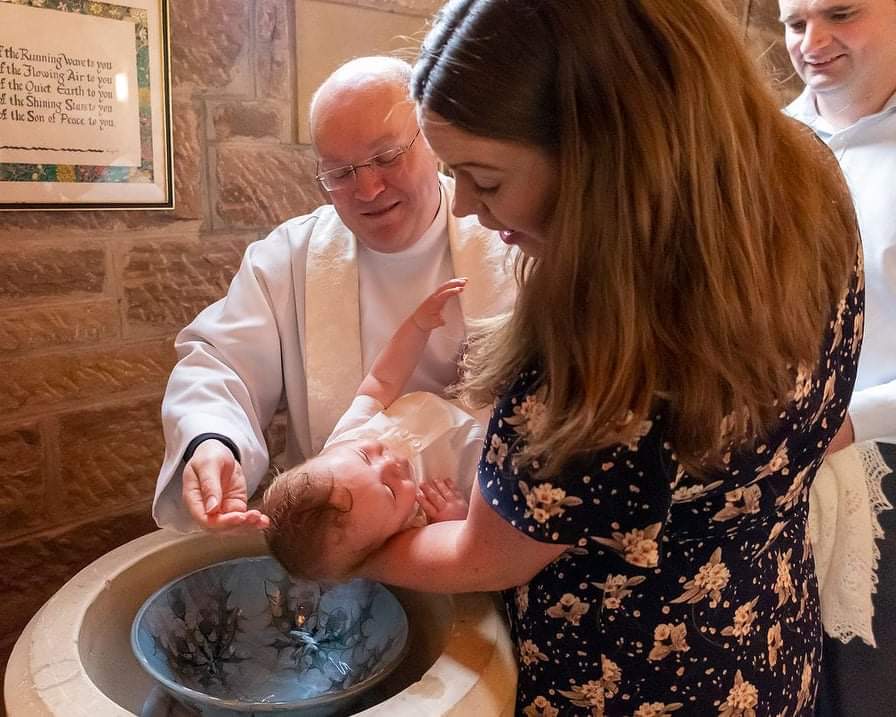
Baptism of baby Darragh at St Finnbarr’s

Along with communion, we identify it as something Christ participated in and instructed us to do in the same way. The concluding words of our passage from today celebrate God’s claiming of Christ as his beloved Son. In the same way, in baptism we affirm God’s love for us, and proclaim for the one being baptised, whether a sweet and squirmy infant, a tenacious and talented teen or a weathered and wise adult, that they belong to God. Baptism gives us a new label to wear – “child of God.”

To understand this new label, we first should unpack a bit more about what baptism does and means. Baptism is “a sign and seal of incorporation into Christ .” In it, we are connected in a tangible way to Jesus and reminded of the grace and love extended to us by God. We believe that the Holy Spirit binds us in covenant to God in this sacrament, which is a symbol of inclusion in the church universal.

As we begin a new year together, it is particularly appropriate to think about these things, and the new life given to us in Christ. Baptism reminds us of that reality which has already happened, and is a way that we can respond. It enacts and seals what the Word of God proclaims: God’s redeeming grace is offered to all people . There are numerous other explanations for what happens in Baptism, all with rich symbolism that ties into the totality of the gospel narrative and speaks to the breadth and depth of this symbol. But, for today, I encourage you to hold in your mind that Baptism is a sacrament that reminds us we are “claimed” as Christ’s own forever. Now, this is a claim that has happened well before the water hits our head. It is a promise as old as God, but in Baptism we write it on a label for all the world to see.

Baptism reminds us of the best versions of ourselves, our core identity that was woven into our beings by a compassionate creator.

Theologian and former Archbishop of Canterbury, Rowan Williams says the Church has come to view baptism as “a kind of restoration of what it is to be truly human. To be baptised is to recover the humanity that God first intended.”

Baptism is the mark of a new creation. Reminding ourselves of this assures us that God wants, above all else, to be in a loving relationship with us, God’s beloved children.

This is the root of our identity as Christians – that we belong to God. This is true from the very beginning. It is not something we have earned because we are particularly attractive or talented. It is because God created us to be in relationship, going so far as to send Jesus to make sure we knew just how much He loved us. In order to truly be faithful disciples, we have to allow this name, this label, to be the one that transcends all of the other labels we take on. Above all else, we have to remember that we are children of God.

Of course, that is quickly tested. In our lives we juggle many different names and roles. Some of them fit in well with the idea of being a child of God, others? Not so much. And sometimes, instead of letting God proclaim who we are, beloved, we allow the world around us to define us.

As we grow, we sometimes forget the heavenly voice, and we begin to listen to other voices that confuse us. Perhaps we hear voices when we are children through report cards that tell us that we are not clever enough or don’t sing nicely enough to be in the choir. As teenagers, we hear voices through the callous comments of other teens who tell us that we are not cool enough, not the right size or shape. As adults, we hear voices that tell us we are not successful enough or that we do not have enough money. Somehow, as God’s voice gets drowned out, we listen to these other voices, and we are tempted to forget who we are. We are tempted to forget that a congregation of Christians and God himself have claimed us as beloved children of God .

God’s promise to us is a promise sealed in the waters of Baptism, and God will continue to repeat it to us as many times as it takes for us to believe it.