This cartoon is in the Church Times this week:

This cartoon is in the Church Times this week:
at our
on
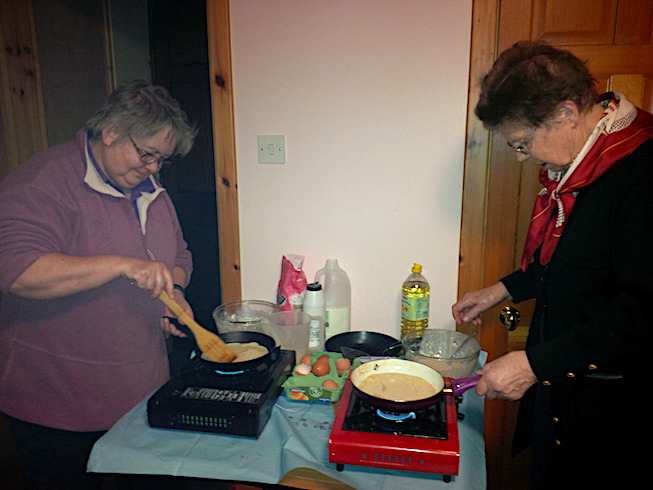
This year you will have to make your own pancakes, but the usual quiz and other entertainment will be available and people in all our congregations will be able to join in the fun.
If you have a ‘Party Piece‘ that you would like to contribute, then let James, Janet or Beatrice know and then everyone will be able to appreciate your special talent!!




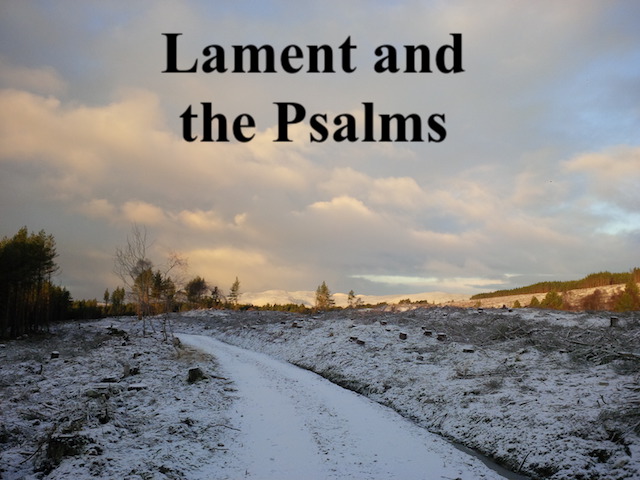
A quick search in dictionaries for a definition of lament reveals that it’s: to express sorrow, regret or unhappiness about something, or it’s a formal expression of sorrow or mourning. But Biblical Lament is actually much more than this. It’s not just a formal expression of sorrow.
When we experience loss, grief is inevitable. In St. Augustine’s terms, we’re each a collection of loves that bind us to people, places, and practices. Whenever these bonds of love are severed, we grieve. Grief isn’t a choice; we’re subject to it whether we like it or not.Lament, by contrast, is the exercise of spiritual agency in the face of loss. As a spiritual practice lament seeks to incorporate the experience of loss into the broader story of our lives before God. Where grief threatens to shatter the coherence of our story, lament re-opens our hearts to the possibility of a recovered sense of wholeness. Lament doesn’t internalise our pain, sorrow or loss, but helps us to call out to God. So it’s not just an expression of deep emotion resulting from loss, it calls to God for action and ends in praise to God. To lament is to join a long line of those who have wrestled with God in the midst of their sorrow.
We find lament throughout the Old Testament. Most clearly we find lament in the Psalms and these are referred to extensively throughout the New Testament. The Psalms are the Prayer Book of the Bible. As such they encompass the full range of human experiences—and in particular make room for experiences of suffering through Psalms of Lament.
The sessions will be centred around the following headings:
The material will also be available on paper, by email and on the Web Site at:
https://episcopaldornochtain.org/study-group-resources/
For more details or to receive paper or emailed copies of the materials speak to James (contact details).
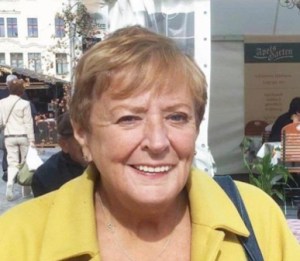
Rev Alice Moira Grigor, who retired to Cromarty in 2015, died on 27 December 2020 aged 71. She served as Don Grant’s Diocesan Advisor during his training and Don writes of her:
“Her stories and examples of parish situations were a delight as well as being informative. She could talk for Britain, meaning that our meetings were never less than two hours and often more, though they were always too short.“
At her funeral on 8th January, Patsy Thompson, a neighbour and the Warden of Lay Readers in Moray, Ross and Caithness said:
“Priest, relative, neighbour, friend – in every role Moira was a true force of nature. Everyone who knew her emphasises her powerful energy and stamina, her courage, her generosity, her skill as a cook, her love of fine art and music, and her sense of style.“
Patsy has also said:
“Moira had enough energy to power the national grid. I miss a strong, vital theologian friend, someone to cross swords with about church and mission; someone who introduced me to Wentworth’s jigsaws and taught me how to do lockdown with a much better grace.“
You can read Rev Ann Tomlinson’s full piece about Moira and all the other news from the SEI in the February 2021 SEI Newsletter.

A wonderful picture from Campbell and Dawn.
Caption suggestions to James by Shrove Tuesday 16th February.
Dawn and Campbell will be the judges.
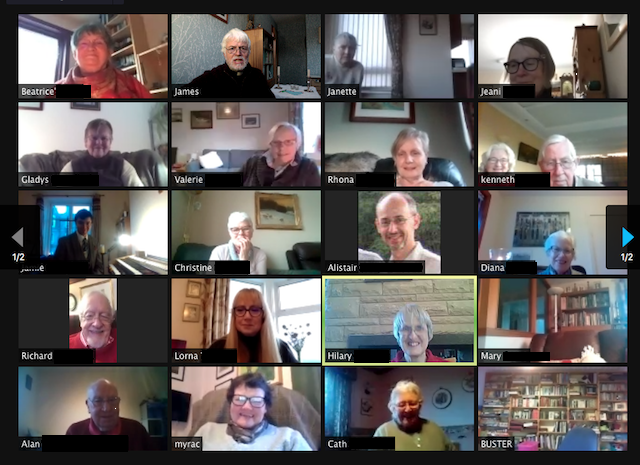
Yesterday, during this Week of Prayer for Christian Unity (18th-25th January), 35 people met from across the Churches and Denominations in Sutherland and Easter Ross and one or two from as far afield as Arbroath. We met as Christians united in a common faith. We met as part of “a great multitude that no one could count, from every nation, from all tribes and peoples and languages, standing before the throne and before the Lamb” (Rev 7). We met “united in the same mind and the same purpose” (1 Cor 1).
We met because before Jesus died, he prayed to his Father:
I ask not only on behalf of these, but also on behalf of those who will believe in me through their word, that they may all be one. As you, Father, are in me and I am in you, may they also be in us, so that the world may believe that you have sent me. The glory that you have given me I have given them, so that they may be one, as we are one, I in them and you in me, that they may become completely one, so that the world may know that you have sent me and have loved them even as you have loved me.
John 17:20-23
We met for a Service of Unity. We met to pray, to listen to Scripture and to reflect on Christian Unity.
A huge thank you to everyone who read, who provided music and who joined us in a outward and visible sign of our Unity in Christ.

I have been reading an important and fascinating book about the effects of human activity on the planet that we share. This book isn’t a long list of statistics and dire warnings; it contains no graphs or tables or maps. This is a book of stories, from individuals across the word; thirty-five stories in fact. They are stories told by Christians who have experienced some of the direct and indirect effects of man’s activities on their neighbourhoods, their environment and their way of life.
“Words for a Dying World” is, as it’s byline says, a collection of “Stories of Grief and Courage from the Global Church”. You can probably see why I find this book fascinating, but why do I think it’s important? The reason is, because these stories are told not as complaint, not to attribute blame and not as answers to specific problems, but as lament. In his story about his Grandma’s oil well, Kyle Lambelet writes:
“Lament is one of Scripture’s primary modes of prayer. The psalms are full of them. God laments over creation before the flood; Rachel weeps over her children; Jeremiah cries out in exile; Job denounces God’s abusive sovereignty. Laments are prayers at the end of human agency. They confront the reality of our situation in recognition that things are not as they should be.”
“My Grandma’s Oil Well” Kyle Lambelet (in “Words for a Dying World“ ed Hannah Malcolm)
Lament is an important part of grieving and something which our current Western culture struggles with. Lament is a way of dealing with grief and, as Kyle says, was an important part of the culture of the peoples of the Old Testament. Lament names the grief, shares the grief in community, talks about that which is lost and acknowledges the loss. But as Hannah Malcolm the editor of this book says:
“We grieve the death of particular things, whether creatures or places, and, until we understand this, our relationship between others and ourselves, we will continue to flounder in slogans and simplifications. If grief is an expression of love, our grief takes on the shape of the places and creatures to whom we intimately belong.”
“Introduction: The End of the World?” (in “Words for a Dying World“ ed Hannah Malcolm)
In the last year we have all experienced the loss of people, things, activities and important aspects of our lives, as a result of the global pandemic that is Covid-19. It is important for all of us to find the time and the place to name those losses in the company of others, and since each of us experiences an individual set of losses, and the same loss affects each of us in different ways, it’s important that we have the opportunity to share our stories and our sadness. But lament isn’t simply a maudlin introspection on what is no more, but it also allows us to work through our grief at the loss and see hope beyond it.
Our new Eucharistic Prayer for Lament affirms this in the following petition:
Glory and thanksgiving be to you,
most loving Father,
for you have redeemed us through your Son.By his life and sacrificial death,
SEC Eucharistic Prayer for Lament
he conquered the powers of darkness,
transforming our lament
and freeing us to praise you.
We learn from the psalms, that biblical lament comes in many forms. Some is directed toward an enemy; some toward God; some is individual and isolated; some is communal and comprehensive. Lament is a response to the full range of problems in the human condition. The psalms specifically name: isolation, shame, despair, danger, physical impairment, and death as cause for lament.
Lament may be a helpful way to reflected on any loss, and there are both personal and community aspects to that. With this in mind, our Lent Study this year will explore Lament, both in general and in particular and use the Psalms as an import source of helpful material.
I leave the final word to Hannah, as she writes in the conclusion:
“If we cannot bring ourselves to be truthful about our broken histories, or the current trauma we face and perpetuate, we cannot begin to heal. Survival, compassion, honesty. These are all good reasons to grieve. But the conviction that Christ’s resurrection marked the death of death also contains the hope that our works of love in the present are not consigned to destruction. They participate in a transformed future.”
“Conclusion: World without End?” (in “Words for a Dying World“ ed Hannah Malcolm)
Blessings
James

Following media reports that church leaders have threatened legal action if the Scottish Government does not reverse its recent decision to close places of worship during the current phase of the Covid pandemic, the Primus would like to make clear that the Scottish Episcopal Church is not part of the group seeking change.
“Having worked closely with the Scottish Government during the pandemic, alongside the Church of Scotland and many other denominations in a bid to protect the vulnerable by stemming the spread of the virus, I would like to reiterate that we have no part in the move to take legal action against the Government,”
Most Rev Mark Strange – 16 January at 19:07
said the Most Rev Mark Strange, Bishop of Moray, Ross & Caithness and Primus of the SEC.
A group of 500 church leaders – 200 from Scotland and 300 from elsewhere in the UK – have written to the First Minister calling for her to lift the ban on communal worship. They have given the Scottish Government until 5pm on Thursday (21st January) to respond, and the group has said it will seek judicial review if the closure of churches is not dropped from lockdown restrictions.
No SEC churches have signed the letter.
The Church of Scotland has also distanced itself from the call for legal action.
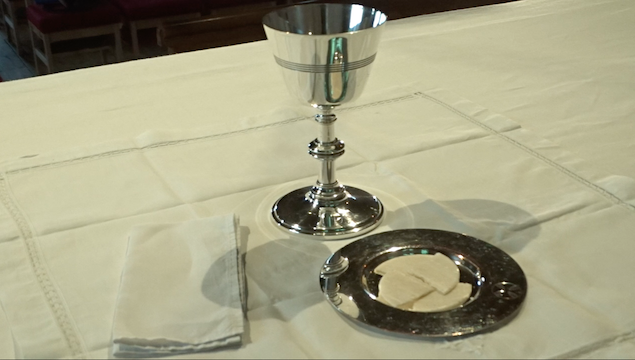 There is now a local on-line Epiphanytide Eucharist for the rest of January available via our Active Worship on-line page. This service is part of a series of services that have been provided since May, replaced as the seasons change.
The way that we have organised these materials is to try and allow as many as are able to Worship together, sharing in the offering the Liturgy, the Prayers and the Readings. To facilitate active participation:
At points 2, 3 & 4 you’ll need to pause the playback until you’ve offered the prayers or readings. In addition you could also pause it to sing a hymn, play a piece of music, reflect on the readings or read a sermon.
To help with 2 & 3, we’ve prepared a document containing the Collects and Readings for each Sunday from Epiphany to Candlemas. These are available via the Active Worship on-line page under ‘Services’ on our website.
The Epiphanytide service was recorded in St Andrew’s Tain and a new service will be recorded for Lent in St Finnbarr’s in the next week or two.
Other service that are being planned include:
Meanwhile we will continue to distribute weekly sermons via the web site, email and post.
Can we Christians align our beliefs and everyday habits in the twenty-first century? Christians have been formulating ‘rules of life’ at least as far back as the fourth century. The sixth-century Rule of St Benedict is probably the most widely known Christian rule of life, but a lot has changed since then! Is there scope for a Christian rule of life in the twenty- first century?
Advances in technology and communication, particularly social media, enrich our present-day lives whilst at the same time driving us to distraction. A cacophony of voices vies for our attention: how do we hear the Gospel above them all?
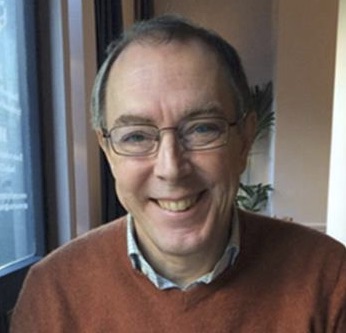
The Revd Dr Michael Hull, SEI’s Director of Studies (above), will facilitate an online discussion of issues about belief and habit, faith and practice, with insights from Justin Whitmel Earley’s “The Common Rule: Habits of Purpose for an Age of Distraction” (Downers Grove, IL: IVP Books, 2019) available via: https://www.thecommonrule.org
The discussion will be held on Wednesday 20 January 2021 from 7pm to 8pm and delivered via Zoom. The link and password will be emailed on the morning of Wednesday 20 January. To register, please visit this link.
 Scottish Episcopal Church - Dornoch, Lairg, Brora, Tain & Tongue