James was asked to write a Guest Blog for the Scottish Recovery Network, this is what he wrote:
James was asked to write a Guest Blog for the Scottish Recovery Network, this is what he wrote:
During the 40 days from the Resurrection at Easter until the Ascension, Jesus appeared many times to individuals and groups, as our Eucharistic Prayer for this season puts it so beautifully:
Making himself known in the breaking of the bread,
speaking peace to the fearful disciples,
welcoming weary fishers on the shore,
he renewed the promise of his presence,
and of new birth in the Spirit
who sets the seal of freedom on your sons and daughters.
Using some of the passages describing these events, together with short reflections and prayers and some rather wonderful paintings by the French Artist Tissot, Stations of the Resurrection provides the opportunity to see how Jesus came to the Disciples as they tried to make sense of all that had happened and tried to return to their old lives. Their dreams had been shattered and they found themselves feeling ineffective and discouraged. If that is how you are feeling in Lockdown then maybe it will give you renewed hope in the future.
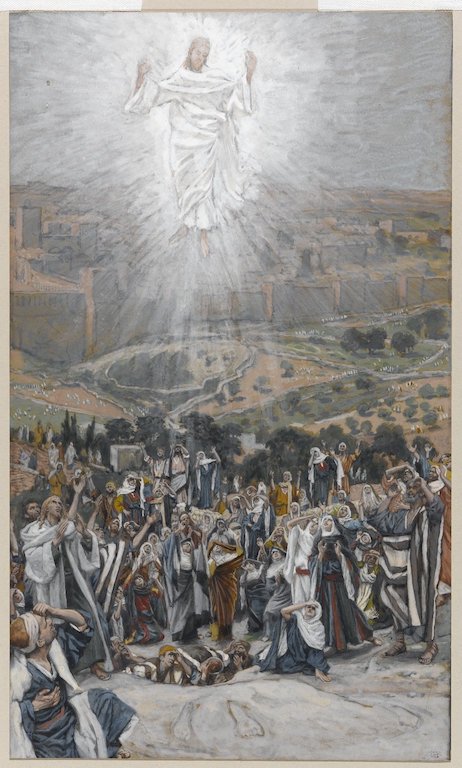
“It is not for you to know the times or periods that the Father has set by his own authority. But you will receive power when the Holy Spirit has come upon you; and you will be my witnesses in Jerusalem, in all Judea and Samaria, and to the ends of the earth.”
When he had said this, as they were watching, he was lifted up, and a cloud took him out of their sight.
Acts 1:7-9
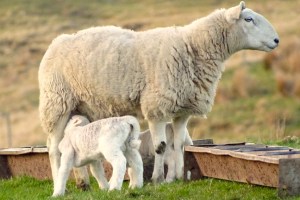
“What do you think? If a shepherd has a hundred sheep, and one of them has gone astray, does he not leave the ninety-nine on the mountains and go in search of the one that went astray? And if he finds it, truly I tell you, he rejoices over it more than over the ninety-nine that never went astray. So it is not the will of your Father in heaven that one of these little ones should be lost.” Matthew 18:12-14
This morning (Good Shepherd Sunday) our Collie Moss and I went for a government-approved, socially-distanced walk in the sunshine. The birds were singing (especially a very vocal cuckoo) and there was the sound of sheep being fed in the distance. On our way back along the track, Moss stopped and lay down, in the way that he does when he’s heard a vehicle. Sure enough along came our neighbouring crofter on his quad bike. He told us that one of his sheep had disappeared and he was out searching for it and asked us if we had seen it.
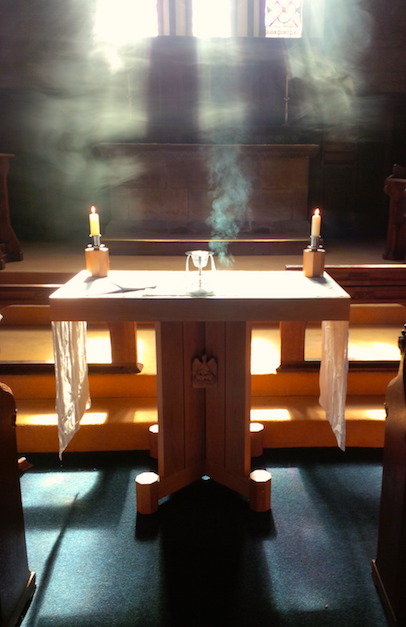
I call upon you, O Lord; come quickly to me;
give ear to my voice when I call to you.
Let my prayer be counted as incense before you,
and the lifting up of my hands as an evening sacrifice.
Psalm 141:1-2

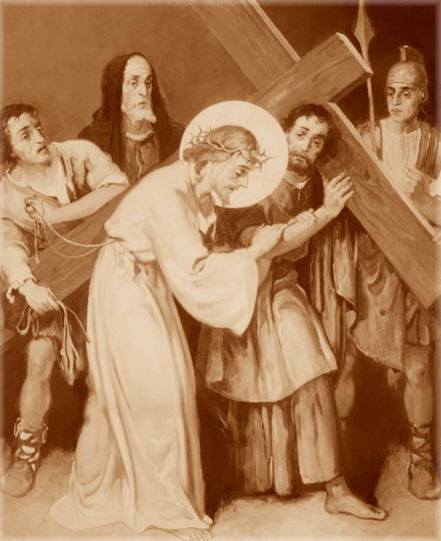
Simon Scott reflects on some of the characters who feature in the Good Friday story.

Back in NZ when I was a Probation Officer, I was a Home Detention specialist – managing offenders ‘tagged’ to stay at home, (up to 12 months) who would otherwise have received a prison sentence. I managed a wide variety of people, but they all went through distinct stages of their sentence, that I monitored closely.
Since we are all now effectively on Home Detention – I thought it worth sharing these stages so you are aware of the very real impact this sort of confinement will have – I know I’m feeling it & have a genuine appreciation for what my ‘offenders’ went through.
The planet has been given a ‘wake up call’ – we’ve all got the opportunity to dig deep & examine the issues that got us here & how we can expand more as individuals- lets all make it count.
Just watch out for Week Three people, & look after & support one another.
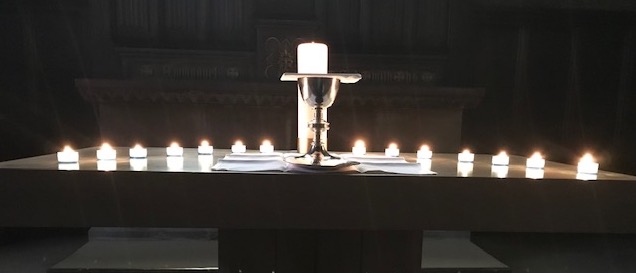
During this time of crisis, Simon and James are separately celebrating the Eucharist each week, each “standing before God with the people on his heart“. It’s difficult for both us and you not being able to share the Eucharist together. However we should be clear as to role of the priest in the Eucharist as (in some sense) representing Christ to the people, and also as representing the people to God (“standing before God with the people on his/her heart“).
No priest does this because of inherent goodness or other qualities they possess or because of any dignity or status. Priests who preside at the Eucharist do so in the full knowledge of their own unworthiness and as participants in the sinfulness of the world. In the Liturgy, the priest represents the incarnate Christ in His identification with the people, not as someone standing over them, but as belonging to them, and they to him/her.
Michael Ramsey, who was Archbishop of Canterbury from 1961-1974, wrote in his book “The Christian Priest Today“, that “Being with God with the people on your heart is the meaning of the daily office, of the Eucharist and of every part of your prayer and service of people.” Sound advice, which is why the book, first published in 1972, is still on the recommended reading list of those in training for ministry in the Church.
As we celebrate the sacrifice of our Lord and Saviour in this ‘socially distanced’ way, it’s instructive to read the rubrics in the service for “Communion of the sick” in the Scottish Prayer Book, dealing with the situation where someone is unable to “receive the Sacrament with his mouth“:
“If a man, either by reason of extremity of sickness, or for want of warning in due time to the Priest, or by any other just impediment, do not receive the Sacrament of Christ’s Body and Blood: the Priest shall instruct him that if he do truly repent him of his sins, and stedfastly believe that Jesus Christ hath suffered death upon the cross for him, and shed his Blood for his redemption, earnestly remembering the benefits he hath thereby, and giving him hearty thanks therefor; he doth eat and drink the Body and Bread of our Saviour Christ profitably to his soul’s health, although he do not receive the Sacrament with his mouth.”
Rubrics in “Communion of the sick” in the Scottish Prayer Book 1929.
Blessings
James
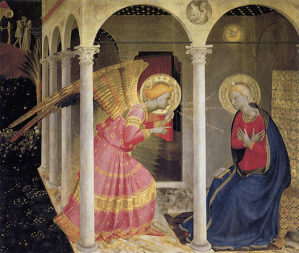
On Wednesday this week, it will be exactly 9 months to go to Christmas – and I have been invited to share a few musings with you, reflecting upon the lovely Feast of the Annunciation which this Wednesday brings us. It is a feast of great encouragement, because centre-stage is Mary, and it serves to remind us that we find in Her the sort of disciple weare all called to be. We see in this teenage Mother our own potential as Christians – all that we can be and become if we only open our hearts in loving trust to God as She did, despite the human doubts and weaknesses that are part of who we are. Mary is full of questions – when Mary receives the visit from Gabriel at the Annunciation – ‘How can this be?’ is Her questioning response. And She continues to question when Her Son wanders off into the Temple – ‘Why have you done this?’
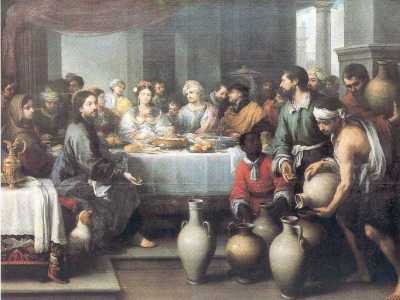
At Cana She offers us the perfect model of prayer – “They have no wine” – and during His public ministry Jesus does not single His Mother out for honour because of Her biological role, but responds to Her as someone who hears God’s word and gives it flesh and bones.
Like all the disciples of Jesus, the Mary we meet in the Gospels walks by faith and not by sight. She treasures what words She has received from and about Jesus, and ponders them in Her heart. You can hear the Mary of the Magnificat glorying in the power of God who lovingly overturns all the signs of toxic power within society. The Mary of the Magnificat is not some simpering waif of a virgin but more like a warrior queen, robustly challenging the forces of sin and human greed in the name of the God whose power transforms our world. It’s as if Mary says, “Make my song yours too, because as Gabriel told me – ‘With God no thing shall be impossible’.”
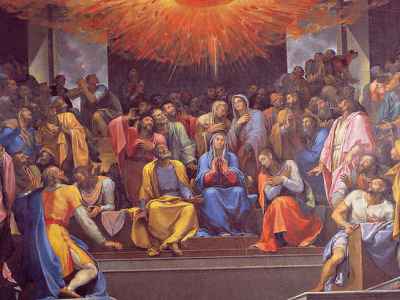
We were reminded in last Sunday’s Gospel of that devastating scene atop Calvary, where She stands grieving at the foot of Her Son’s cross. The beloved disciple, another model for all followers of Christ, is told by the dying Jesus to cherish Mary as his Mother, and She is told to care for him as Her own. When the church is born with the coming of the Holy Spirit at Pentecost, Mary is there again, at the heart of the community, no longer grieving, but worshipping Her Son.
Mary’s questions at the Annunciation are our questions too – how is it that God can work through such weak instruments as we too often feel ourselves to be – something we feel particularly acutely as we face our current crisis? Well, just look where else we encounter Mary. She is there, watching as the tasteless water of our lives is turned into the life-giving wine of Her Son’s grace. Like Mary, we are invited to treasure all that we know of Jesus and ponder it in our hearts. Her Magnificat blesses us, not because by some accident of birth we are members of the Church, but because we too are part of the humanity in which She and Her Son shared – and this is something to really celebrate!
Before I conclude, I’d like to leave you with a lovely and whimsical poem, written by an Anglican Priest called Penelope Dent – whom it is my guess may not a fashionable size zero (but I may be wrong)! She conjures up a Mary who is so very human – much more of a Mother, and less of a queen – a Mary who knows what it is to be thoroughly human, and who like a best friend, prays daily for us, out of love, to Her Son. It’s called My Fat Virgin Mary:
I’m tired of skinny Virgin Marys,
Medieval, milk-mild.
The one I want has a bosom and a heart.
Brooding, maternal and magnificent.
You listen, you love
And you understand.
O most funny,
Glorious, vulgar fat Lady.
I love you
And the God who made your commodious bosom,
Head rest, heart rest
For the uncomforted.
Hold us and love us,
You who dare to be big
And despise corsets.
You who love life
And bottles of stout, pork pies
and bags of greasy chips,
Wrapped in newspaper.
Belligerently beautiful,
Queen of all fat women,
Defender of the unloved.
Accuser of the small-minded, sawdust people,
Who never get involved nor find the time to love your Son,
Wrapped in themselves.
O most funny Lady, most funny Lady,
Mother of mothers,
Praise be to you for showing us your acceptance,
Your grief and your rejoicing.
Praise be to you for daring to be big,
Proud of your girth
And all Glorious within.

 Scottish Episcopal Church - Dornoch, Lairg, Brora, Tain & Tongue