Corpus Christi

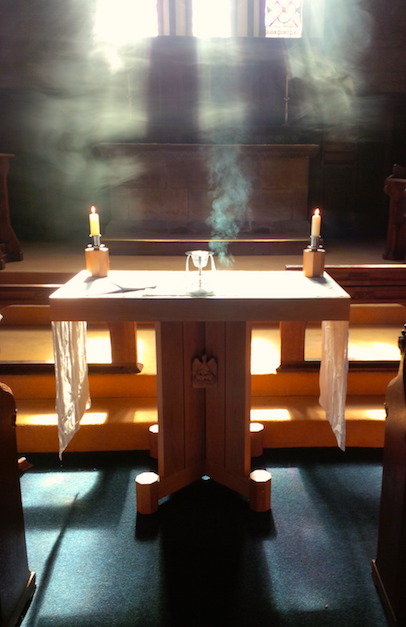
The Feast of the Thanksgiving for Holy Communion, commonly called, Corpus Christi was first celebrated in the 14th Century. It began as a local custom to celebrate the Mystery of Christ’s presence in the Eucharist and slowly spread throughout the Church, finally being added to the Kalander in the 15th Century.

William Harry Turton’s hymn “O thou who at thy Eucharist didst pray” sung to a lovely tune (Song 1) by Orlando Gibbons.

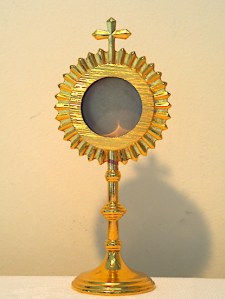
Perhaps the most famous aspect of Corpus Christi (literally the Body of Christ), that people associate with this feast day, is the great processions through cities, towns and villages.  The Blessed Sacrament is held aloft by a priest, in a monstrance, as a public statement that the sacrifice of Christ was for the salvation of the whole world.

Monstrances are one of those liturgical curios that appear sometimes, but in our tradition not very regularly.  This one belongs to Jamie (who drafted a substantial part of this piece for us).

Jamie’s Monsterance

The Host (the consecrated Bread) sits in the glass plate in the centre with ‘rays of glory streaming out from it‘. A reminder of the Glory of Christ, present in the Eucharist, and the glory of the Heavenly Banquet that we join when we take Communion together.

Traditionally, at the end of the Mass on Corpus Christi the Host (the consecrated Bread) is placed in a monstrance and the congregation spend some time reflecting on this Mystery of Christ made present in the bread and wine.

The officiating Priest would then take the monstrance and carry it aloft down through the church and out into the streets – with servers throwing rose petals down in front of it to make a carpet – a bit like confetti at a wedding – with bells ringing out to tell everyone that Christ was walking among them in the Eucharist.

It’ll be an irony not lost on many that the Feast of Corpus Christi has something of a hollow ring to it this year.  It’s a feast when we give thanks for the gift and privilege of Holy Communion, which we normally share on a regular basis.  So what does it mean to give thanks for something we can’t (at present) receive?

Corpus Christi represents more than just the Church giving thanks for the way that Christ remains, with us always – even unto the ends of the Earth. It’s a celebration that we, the Church, are united in and as the Body of Christ.

As Corpus Christi comes around this year, we have to do things differently.  And perhaps this involves reflecting on what being unable to meet up and share Holy Communion together these past months has meant.  It’s left a yawning gap in the lives of many members of our congregations. But of course, God’s not gone away, Christ is still very much with us.  And of course when we do reunite to break the bread and pour the wine together, we can have a thanksgiving as never before!

The Touch of Love (or a touch that kills)

Revd Canon Dr Sarah Hills, Honorary Canon for Reconciliation at Inverness Cathedral writes…

A touch of love or a touch that kills?

I have been feeling, like very many of us over the last week, angry, sad, bewildered. George Floyd in Minneapolis died being held down, kneeled on, struggling for breath. Touch comes in different forms. George died from a touch that killed him. That touch was sustained, unwarranted, brutal and deadly. That touch of a policeman’s body was seen by those around them in the street that day. It was seen by millions on TV. And that touch has come to symbolise much that is wrong in our world. Hate, racism, division, arrogance, even evil. And then Donald Trump touches the bible in front of an Episcopal church. Another touch – calculated, shocking, sinister. The bible is a book about love. The gospel message found within it is one of inclusion, not division. Of love triumphing over death. Of righteous anger, forgiveness and justice. Of diversity and welcome and healing. Of reconciliation. But these are not only words. These cannot only be words. The bible embodies these words in the touch of Jesus Christ. His touch of love for us. And he let us touch him – his cloak, his side, his hands and feet.

In Church in Holy Week, we recreate Jesus’s act of touching his disciples as he washed their feet, days before his own death. I find this act of foot washing on Maundy Thursday one of the most moving and poignant services. Touching another’s foot, drying their toes carefully, feels like one of the most sacramental of acts. An act of service, of devotion, of intimate connection. The feet come in all shapes and sizes, some toes painted, some misshapen and painful looking. Feet with a story to tell. Where have these feet walked? Who with? Why? Have they had to run from danger? Or made prints in the sand on the beach? Touches of love.

My father died at the end of March. I had not been able to say goodbye to him, and so I really wanted to see him at the chapel of rest. I did – but what I most wanted to do was to touch him. And I did. I held his hand, kissed him, and said goodbye. Of course, that last touch was not the same…but it was a touch of love.

I wonder if George Floyd’s family were able to give him a last touch of love, after the touch that killed him?

Our need for comfort through touch, through hugging a friend, through sitting on a parent’s lap, through holding a dying hand, is about goodness. It is grace filled, and in theological language, sacramental. It is about love being made visible.

It is an abhorrent distortion of this touch of love to kill someone because of their race. Or their colour, or creed, or sexuality or gender. Or for any reason.

I am a white South African, full of privilege. I am a mother and wife, delighting in our two boys and our Labrador. I am also Vicar of Holy Island, Honorary Canon of Inverness Cathedral and Canon of Reconciliation for the Primus of the Scottish Episcopal Church. As a reconciler, it seems no accident that I find myself on Holy Island, a liminal place straddling the land and the sea, a beautiful place where pilgrims come to have their hearts and souls touched. A place founded by St Aidan in 635AD, an Irish monk sent from Scotland as a peacemaker.

My life is full of privilege. I know that. Maybe I shouldn’t even be writing this piece. But I believe that as a South African who grew up in Northern Ireland during the troubles, now priest and reconciler living on a holy island, that I have some duty to say something. And so I offer this in humility. Not because I am an expert. Not because I have experienced the racism that George Floyd and millions of others have. But because I am confused and heartbroken. I feel the need to offer something of myself through writing this in order to work through what is going on around us, and in case it resonates with anyone else. Archbishop Emeritus Desmond Tutu has said that to be silent in the face of oppression is to choose the side of the oppressor. This oppression has benefitted me and all of us who look like me.

This last week I have been forcibly reminded of the time of apartheid in South Africa that my parents and countless others fought against. Of numerous deaths because of race and colour. Deaths due to the touch of blows, of batons, of bullets, of electric shocks. I was born in South Africa, and my parents were both involved in anti-apartheid activities. We left when I was a young child and went to Northern Ireland where I grew up. As a medical student I spent time in back in South Africa working in a rural hospital in the 1980’s. While there, I found myself joining in protest marches with thousands of other South Africans, demonstrating against apartheid. During one of the marches, the police fired on us. I joined other medics in the back streets of the township treating those who had been shot. I touched someone’s shoulder as I fought to remove the bullet lodged in his muscle.

Afterwards, the bullet out, we exchanged the touch of a bloody and careful hug. He and I were fortunate that day. George Floyd, Trayvon Martin, Stephen Lawrence, Ahmaud Arbery, Belly Mujinga, Steve Biko, the people on the bridge in Selma, and thousands of others were not.

My dear friend Glenn Jordan died yesterday. He was a true reconciler, a brave and beautiful man. Funny, hopeful, deeply humble and one of the most profound and poetic thinkers I have known. I remember him sitting on our sofa here on Holy Island, glass of whisky in his hand, touching my heart, and all of ours there that evening. I suggested a swim off St Cuthbert’s beach below our garden the next morning. The touch of the icy water, then the touch of our frozen hands as we high fived afterwards. The touch of love. I never got the chance to hear what Glenn would have to say about the situation we find ourselves in this week. In the USA, and if we are honest, everywhere in our broken world. We have lived, we continue to live with conflict, violence, and the touch of death. But I know that Glenn would not want me to stop there. Nor would my father.

The touch of love is here to stay. The touch of love enables us to be angry. And so we should be. To grieve. To lament. To search for justice. For all those suffering racism, brutality and discrimination throughout our world. For our children and our children’s children. And these things – grief, lament, searching for justice and even forgiveness, we must do. Without them, reconciliation is useless. But if we can hold fast to the touch of love, reconciliation will come. Maybe not today. Or tomorrow. But it is there in the hope that Jesus Christ brings us. The touch of love is stronger than the touch that kills. Always. And forever.

I end with a prayer from the ‘father of reconciliation’, Desmond Tutu

Victory is Ours

Goodness is stronger than evil;
Love is stronger than hate;
Light is stronger than darkness;
Life is stronger than death;
Victory is ours through Him who loves us.
Amen.

Sarah Hills
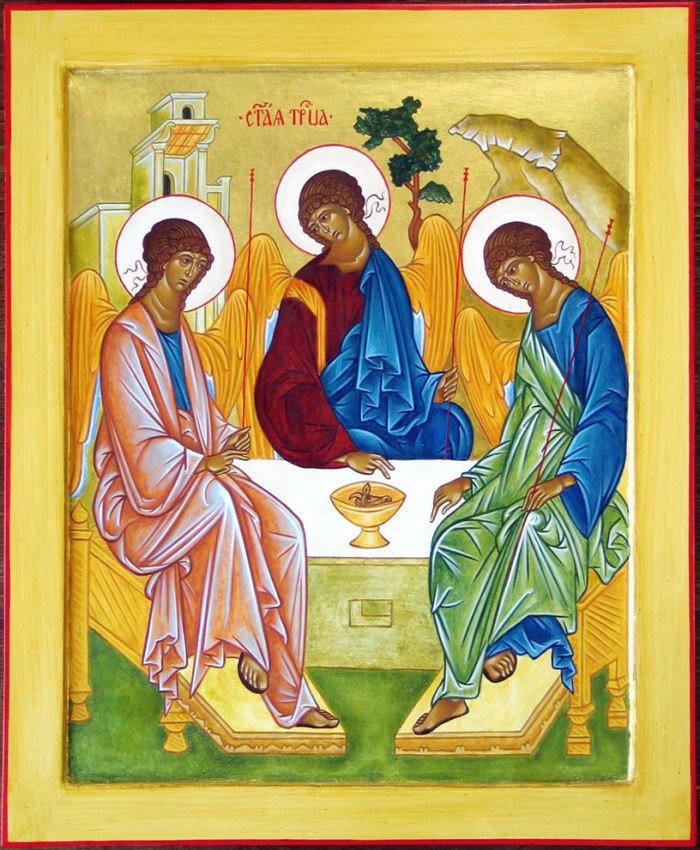
The Blessed Trinity

On this Trinity Sunday, Simon sings the words of John Henry Newman to an arrangement by Patrick Appleford.

Firmly I believe and truly
God is Three and God is One;
and I next acknowledge duly
manhood taken by the Son.

And I trust and hope most fully
in the Saviour crucified;
and each thought and deed unruly
do to death, as he has died.

Simply to his grace and wholly
light and life and strength belong,
and I love supremely, solely,
him the holy, him the strong.

And I hold in veneration,
for the love of him alone,
holy Church as his creation,
and her teachings as his own.

Adoration ay be given,
with and through th’angelic host,
to the God of earth and heaven,
Father, Son and Holy Ghost.

A Growing Family

On Sunday (31st May), which is the Feast of Pentecost, Revd Nicholas Court (above left) who has served the North-West corner of the Diocese (with congregations in Ullapool, Achiltibuie, Lochinver, Kinlochbervie and Tongue) for the last 11 years, retires. I’m sure that you would all join with me in wishing Nicholas and Gilly a long and happy retirement, even though until the end of lock-down Nicholas will still be helping to provide pastoral care in these areas. However from Monday (1st June), the congregation of St Mary-by the-Cross, Tongue will join our family of congregations in East Sutherland and Tain.

For the benefit of those of you who are unfamiliar with the Episcopal arrangements ‘up north’, I have assembled a little history and description, with the help of a number of people, as will become become obvious.

Anna and I have been regular visitors to Tongue for the last 30 or more years, since her parents Alan and Irene bought a house beyond Melness. There was no Episcopal worship for some while and so they (and Anna, the boys and I when we were visiting) made the 120 mile round trip down to the monthly service in Kinlochbervie. The Services there were at first in the Fishermen’s Mission, then the Old School Restaurant and finally in the Community Centre. Over the years, KLB was served by Revd Chris Dormer, who travelled from Ullapool, then Revd Cliff Piper, who travelled from Tain and then Revd Mel Langille, who travelled from Golspie.

From June 2003, Services started at the Fir Chlis, House of Prayer and Retreat, run by Kathleen Pannell, who had found a ‘half built property just outside Tongue village’ overlooking Ben Loyal, a year earlier. Kathleen takes up the story.

We moved in on 24th March 2003 and on June 22nd Fr John Stevenson from St. Peter and the Holy Rood, Thurso celebrated the first Service of Holy Communion with about 20 communicants. I opened Fir Chlis up as a Retreat House, inviting people to ‘Come away to a deserted place, and rest a while’. Fr John continued to come once a month to celebrate Mass and when I was blessed with hosting a priest on retreat, we would be blessed with regular, sometimes daily, Mass.

Fr Len Black took over from Fr. John at some point when the Episcopal church was trying to find its way in a changing world, but the congregation was truly set on a firm footing when I met Fr Nicholas in April 2010. The congregation of St. Mary by the Cross was officially constituted on 5th April 2012 by Bishop Mark and numbers attending have grown significantly since. During 2017/2018 we counted up that more than 75 folk had attended the monthly services here at one time or another, many travelling miles to attend, and folk from several different denominations too. It’s been such a joy to host these services month on month, to witness people growing in their love of the Lord through His gifts of Bread and Wine.

St Mary’s now enters a new phase of its life, at a time when although the future looks very uncertain for us all, it is more important than every that we trust in our faithful and loving God. As St Paul wrote to the Romans:

We know that for those who love God all things work together for good, for those who are called according to his purpose.” and:

May the God of hope fill you with all joy and peace in believing, so that by the power of the Holy Spirit you may abound in hope.

On behalf of all of us in East Sutherland and Tain, may I extend a warm welcome from our family in Tain, Dornoch, Lairg, Brora and all the places in between, to ‘our friends at the very top’ in Tongue.

Blessings
James

Stations of the Resurrection

During the 40 days from the Resurrection at Easter until the Ascension, Jesus appeared many times to individuals and groups, as our Eucharistic Prayer for this season puts it so beautifully:

Making himself known in the breaking of the bread,
speaking peace to the fearful disciples,
welcoming weary fishers on the shore,
he renewed the promise of his presence,
and of new birth in the Spirit
who sets the seal of freedom on your sons and daughters.

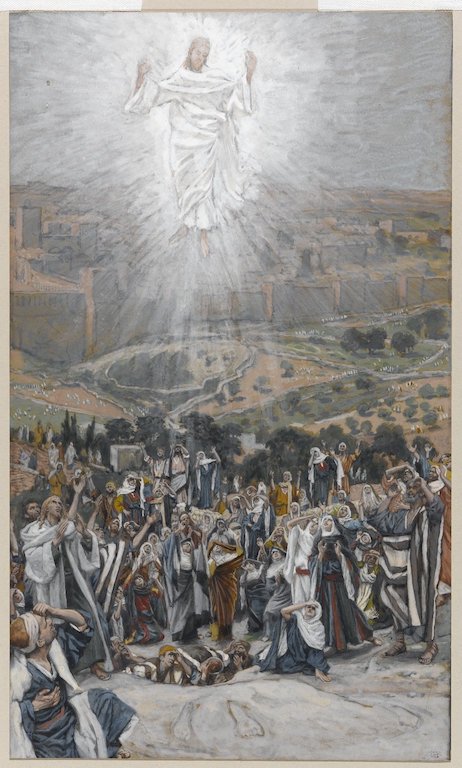
Using some of the passages describing these events, together with short reflections and prayers and some rather wonderful paintings by the French Artist Tissot, Stations of the Resurrection provides the opportunity to see how Jesus came to the Disciples as they tried to make sense of all that had happened and tried to return to their old lives.  Their dreams had been shattered and they found themselves feeling ineffective and discouraged.  If that is how you are feeling in Lockdown then maybe it will give you renewed hope in the future.


Risen and Ascended

It is not for you to know the times or periods that the Father has set by his own authority.  But you will receive power when the Holy Spirit has come upon you; and you will be my witnesses in Jerusalem, in all Judea and Samaria, and to the ends of the earth.

When he had said this, as they were watching, he was lifted up, and a cloud took him out of their sight.

Acts 1:7-9

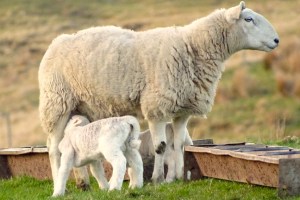
Lost Sheep on Good Shepherd Sunday

What do you think? If a shepherd has a hundred sheep, and one of them has gone astray, does he not leave the ninety-nine on the mountains and go in search of the one that went astray? And if he finds it, truly I tell you, he rejoices over it more than over the ninety-nine that never went astray. So it is not the will of your Father in heaven that one of these little ones should be lost.”  Matthew 18:12-14

This morning (Good Shepherd Sunday) our Collie Moss and I went for a government-approved, socially-distanced walk in the sunshine. The birds were singing (especially a very vocal cuckoo) and there was the sound of sheep being fed in the distance.  On our way back along the track, Moss stopped and lay down, in the way that he does when he’s heard a vehicle.  Sure enough along came our neighbouring crofter on his quad bike. He told us that one of his sheep had disappeared and he was out searching for it and asked us if we had seen it.