Cycles of Life

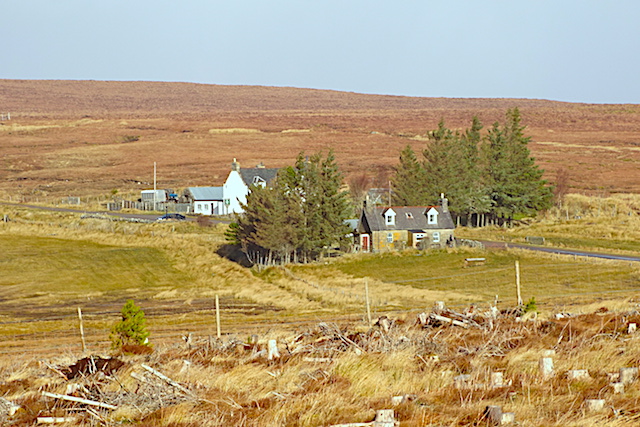
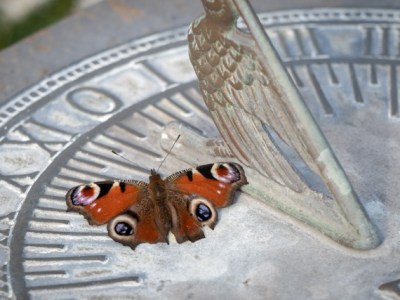
photo by JRP

Le Quattro Volte” is an idiosyncratic film by Michelangelo Frammartino. It lasts for an hour and a half, following cycles of life in the hills of Calabria. In four chapters the film successively chronicles a year in the life of an old man, a young goat, a tree and a batch of charcoal. There’s no dialogue, you do hear murmurs of human speech, but they’re unintelligible and there are no subtitles. There’s also the barking of a dog, the bleating of goats and clanging of their bells and the wind sighing in the branches of the gigantic pine that’s felled for a village celebration.

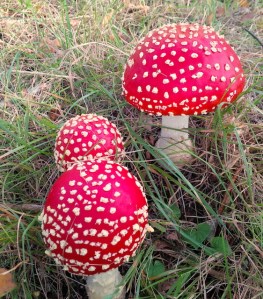
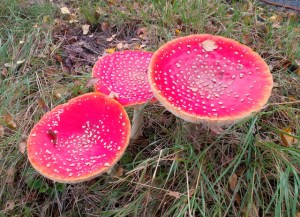
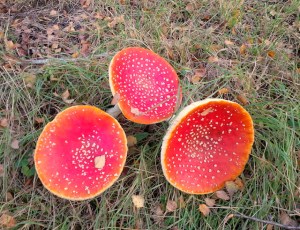
Perhaps watching such a film doesn’t sound like a particularly entertaining way to spend 90 minutes, but when I saw it in 2011, I found it captivating. In the same way I found watching a small cluster of fly agarics (Amanita muscaria) last week. They emerged, looking for all the world like iconic toadstools in a Walt Disney cartoon, but by the following day they looked more like plates, then like shallow bowls, after which they fell over and started to disintegrate.
They say that the one certainty in life is change and, as in both the film and the toadstools, change often occurs in cycles. The cycles may be over years, months, weeks or days, but there’s an inevitability to them, whatever the cycle length. Most of us find change unsettling, even when it is part of what one might call gentle cycles, as illustrated in my examples.

However over the last seven months we have had a great deal of a much more disruptive change thrust upon us. One of the more difficult aspects of change is the grief that we feel for what has been taken away. We recognise grief when someone that we love dies or suffers from a life-changing accident or disease. We may also recognise grief when we lose something that has been a familiar part of our life, or that hold precious memories for us. But we may also grieve for our way of life, the things that we are used to doing, the people that we are used to meeting or gathering with.
Grieving isn’t a well defined process with clearly delineated stages as is often written about in self-help books. Grief is individual and if there are stages, one may bounce backwards and forwards dealing with denial, isolation, anger, bargaining, depression before accommodating and accepting a ‘new normal’.
Over the past few months, I have found the cycles of nature very helpful in adapting to the changes that have happened and that may be what appealed to me about “Le Quattro Volte”. I have also found the psalms to be of great comfort, because the psalmist frequently found change and the circumstances in which he found himself troubling and God was always there at his side to comfort him.

The Lord is my shepherd, I shall not want.
He makes me lie down in green pastures;
he leads me beside still waters;
he restores my soul.
He leads me in right paths
for his name’s sake.

Even though I walk through the darkest valley,
I fear no evil;
for you are with me;
your rod and your staff—
they comfort me.

Blessings
James
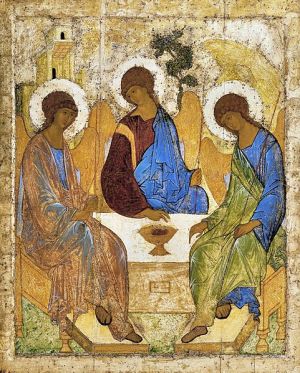
Three in One

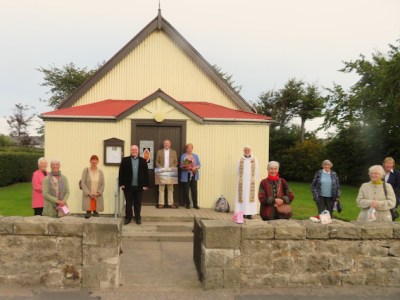
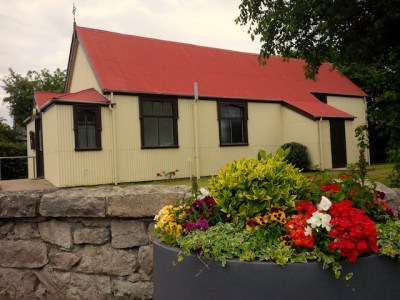
St Columba’s in Brora has been open for Individual Prayer on a Sunday afternoons for many weeks now, but on today (27th September) the Eucharist was once again celebrated in the “Tin Tabernacle”.

It was a lovely occasion, where we marked a Trinity of events. St Columba’s opened for worship after three years of closure due to fire on 28th September 2019, so this weekend marked the first anniversary of resumption of worship.

It was of course our first service since the start of lock-down in March, some six months ago.

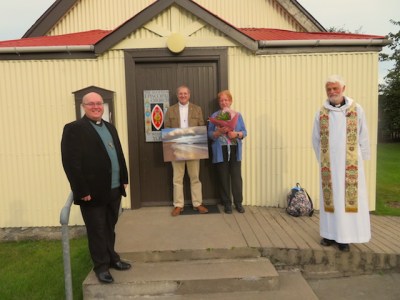
Finally, it was the last service of Don Grant’s period of curacy with us and fittingly, he was presented with a painting of Brora beach, to remind him and Silvia of their time with St Columba’s. Thank you Don for what you have done in Brora over the last twelve months and we all wish you well in the next phase of ministry based out of the Cathedral in Inverness.

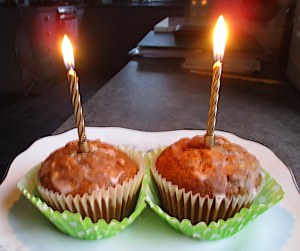
We weren’t of course able to have a party to celebrate these things but Claudia spend this morning making individual ‘cup-cake’ birthday cakes with a candle in the middle for each member of the congregation – thanks so much Claudia.

Thanks to everyone who helped to prepare the Church, the flowers and provide us with lovely music during the service and of course everyone who was there filling the Church to almost its (COVID) capacity. St Columba’s will now be open for worship each Sunday at 4pm.

Prayer in the Upper Room

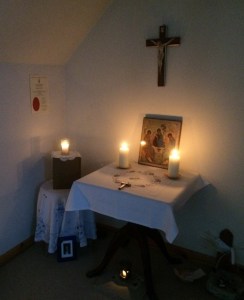
Fir Chlis Chapel

The Return is a movement which invites people return to God by coming before His presence in humility, in sincerity, in prayer and in repentance.

From the Biblical Feast of Trumpets (18th September) until the Day of Atonement (28th September).  We are invited to observe 10 Days of Prayer, Fasting, and Repentance.

During this period, Kathleen Pannell will be opening her “Upper Room” chapel at Fir Chlis in Tongue to anyone feeling led to come to offer prayer. Should you wish to drop in for a while you would be most welcome.

The door will be open from 10am until 8pm each day.

Kathleen has put in place measures to implement Government Guidelines regarding Covid-19. There will be sanitiser and masks in the hall and a book to record a name and phone number. Those dropping in should take responsibility for ensuring Social distancing both in the chapel and whilst entering and leaving.

During this period, Rev Beverly Cushman is going to post a special prayer on the Altnaharra and Farr and the Melness and Tongue websites each day.

Please phone Kathleen if you need any more information

Rewilding the Church

I have been sent a book for review entitled “Rewilding the Church”. In it Steve Aisthorpe sees the Church as having slipped out of kilter with its head – Jesus. He uses the metaphor of the rewilding used to restore a balance between nature and its environment, to suggest the corrective that we need to get back on track. He writes: “The New Testament’s vision of Church is not a herd of people with common beliefs or shared behaviours. Rather, it is a community centred on Jesus [which] draws them together in a shared quest of Christward transformation.

The last six months have had a profound effect on all our lives. Gone are a lot of the certainties that we’ve come to rely on. One of those certainties was that there would be services of worship, according to a regular pattern, in eight locations around Sutherland and Tain.

For much of that time, there’ve been no services and, even though there has been a resumption in Dornoch and Tain and also three church buildings open for Individual Prayer, there are a number of places where we can’t yet meet and people who for many reasons can’t be present even though they would like to be.

We’ve all spent much of more time on our own with God these last few months and the gatherings online, the broadcast services and now the hygienic, distanced and masked services aren’t the same as the familiar experiences we were used to and it can all seem very strange indeed.

Increasingly in our society, there are people who used to go to church who now describe themselves as Christians who do not go to church. What does our experience of the last six months say about such a position? Have we not all been Christians who do not go to church? Overwhelmingly the people that I talk to in our congregations speak about missing the fellowship of worshipping and praying together. They’ve come to realise just how important community is in being followers of Jesus. We seem to be very keen to get back to meeting up for prayer and praise, rather than only engaging with God on our own. Far from being the end of the Church, lockdown seems to have made us all appreciate the time that we spend together as the Body of Christ, the Community of Faith.

The balance between being with God on our own and being together with God is described by Dietrich Bonhoeffer, always the one to express things neatly in just a few words: “Let him [or her] who cannot be alone beware of community … Let him [or her] who is not in community beware of being alone.

Steve Aisthorpe concludes that “Rewilding the Church is not about implementing our best ideas with unusual passion; it requires stopping or slowing down, a conscious setting aside of preconceptions and a determination to discern what God is doing and our role in that.” Now is probably an ideal time to do just that.

Blessings
James

100 years young today

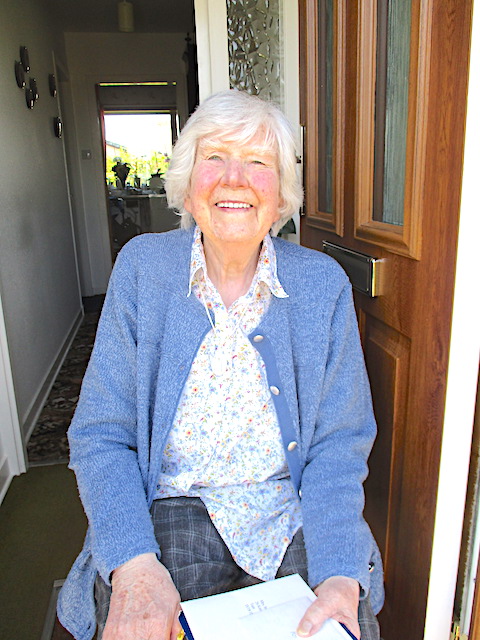
Barbara at her front door with her card from ER II

Have you heard the one about the Funeral Director, the Priest and the Lord Lieutenant?  Well this afternoon all three turned up with pipers and standard-bearers and an MP at Barbara Rae’s house in Tain.  The occasion was Barbara’s 100 birthday.

Born in the aftermath of the 14-18 Great War, Barbara lived and served through the 39-45 second world war, and all its after effects – a life changing and life affirming experience for so many of that generation. Barbara, in common with both our own Marjorie Taylor and actress Patricia Routledge, attended Birkenhead High School; though of course they were not all there at the same time and neither Barbara nor Marjorie bear any resemblance to Hyacinth Bucket in “Keeping up Appearances”.

Barbara’s war included the blitz of Liverpool – she was not yet 21 by the time it ended. She was lucky to survive. She worked in Liverpool but lived with her parents in Birkenhead. Her brother David was serving in France and having his own adventures. The family home was badly bomb damaged in May 1941 and they had to move out, but the family survived.

Barbara joined the Women’s Auxiliary Air Force in 1942 after the Liverpool blitz, and went into the Meteorology section of the RAF. She had her main training in London, and thereafter was based at several UK airfield locations. Especially RAF Millom and RAF Cark in Lancashire (Cumbria) the Lake District, which is where she eventually met Willis. They were married in 1945. During the time that Willis worked for Customs and Excise at Liverpool Docks.

They lived in Birkenhead until 1961 when they made the move up to Tain where Willis was the Excise Officer at Glenmorangie Distillery until his retirement in 1981. Their children Ian and Pat were educated at Tain Royal Academy. In 1974 they bought a new build house in Knockbreck Avenue – and lived there from 1976. So, Barbara is one of the longest duration residents of the Avenue…and certainly the oldest!

Barbara who had always been active in her church in Birkenhead quickly found her way to St Andrew’s Church. Barbara did so much in and for St Andrew’s Church over the years, much of it as part of the St Andrew’s Ladies Guild, (later the St Andrew’s Fellowship). She put in hours of patient needlework to make altar frontals and pulpit falls, she repaired vestments and all these things we still experience as they’re still in weekly use. She arranged flowers to enhance the congregation’s experience of coming to church. She did work on the Church Magazine and was a member of the Vestry. Just a few of the things that Barbara did in our Church.

Barbara was also very active for some years with the Women’s Royal Voluntary Service (the WRVS) in Tain again helping with their local work, and especially delivering ‘Meals on Wheels’ around Tain and environs. Both Barbara and Willis were also active in later years with the Tain Choral Group and the Garrick Singers (now Easter Ross Musical Theatre). Willis performed for a few years with the Garrick Singers, whilst Barbara as ever just got on with things needing to be done in ‘wardrobe’ and backstage.

Sadly Willis died in 2000 after having suffered a heart attack and a series of strokes in the 90s which left him with reduced mobility and unable to talk properly, but he was ably looked after by Barbara.

Today family and friends turned out up and down Knockbreck Avenue to honour Barbara, an amazing lady. It was a privilege that we were all able to celebrate with you on this special day…..

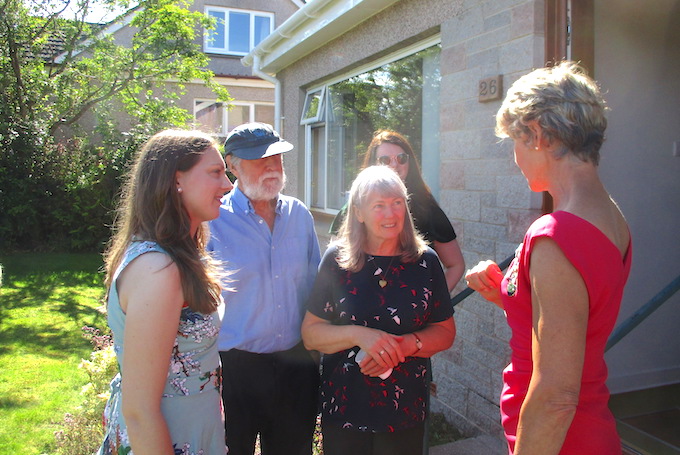
Lord Lieutenant Joanie talking with some of Barbara’s Family

The Transfiguration of Our Lord

Almighty and everlasting God,

who revealed the glory of your beloved Son

when he was transfigured on the holy mountain:

mercifully grant us such a vision of his divine majesty,

that, being purified and strengthened by your grace,

we may be transformed into his likeness, from glory to glory;

through the same Jesus Christ, our Lord,

who lives and reigns with you,

in the unity of the Holy Spirit,

one God, world without end.  Amen.

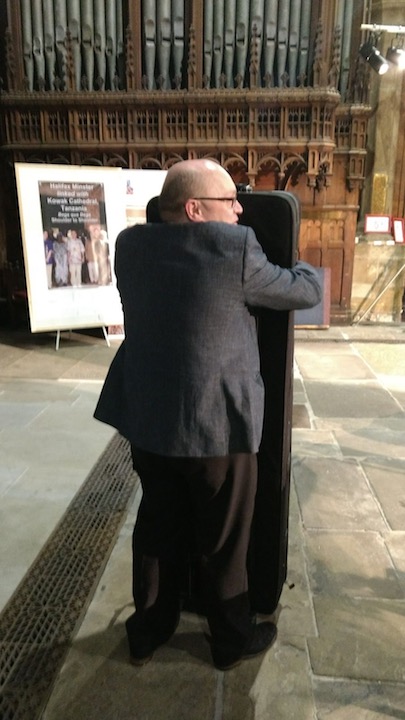
Caption Competition no. 2 – the result

There were 15 entries for the Caption Competition this time and they were quite a diverse set clustered around themes of Lockdown, Hugs, Dancing, Phones/Tablets and Musical Instruments, so a big thank you to all who entered and came up with this little lot:

Sending a big mobile hug x

“Hello….. can you hear me? I’m on my mobile…”

“…my shield and protector…”

“God is this the only way to get a cuddle in Lockdown??”

“Forget social distancing, let’s just have a good old hug”

Rev Simon was so over Covid 19 he couldn’t wait to have a bear hug – his new prescription from spec savers had been delayed !!!!

“One, two cha cha cha”

Simon was thrilled with his new tablet.

Beach Boy Simon gets ready to ride the next (Covid) wave.

Viewers question Fr Simon’s claim to never being board in Church.

A preview of the new normal for the next series of Strictly?

Um…. BYO referred to bottles, not musical instruments.

“How did you get past Security with that?”

“You really didn’t need to bring your own organ, Simon, we do have one here, you know. In the loft!”

But the one that made Anna and I giggle the most was:

“Do you know this keyboard’s standing on my toes?”
“No, but you hum it and I’m sure we’ll all soon be joining in.”

Well done Nicholas Court for coming up with that one.

James and Anna

Community in the Body of Christ

Churches across the land are struggling with the question: “should we open or should we not?” One line of argument is: “You don’t need special words, a special place, special objects or special people to talk to God. God loves you and is listening. So just do it. The church buildings may be shut, but the ears of Heaven aren’t.” All of that is of course true, however, the spirituality that we’ve inherited in the Episcopal Tradition isn’t simply about an individual, personal, relationship with God. Our tradition is centred around a Community relationship with God and with each other, culminating in our sharing in the Eucharist together; entering into the Community of the Trinity which lies at the very heart of our faith.

Much of St Paul’s writing is to and about Community. For Paul Salvation is the work of God that brings people into a right relationship with both God and with one another. In brief, we’re being saved from the broken relationships with God and each other that can and do unleash the forces of sin and death in the world.

At times, Christians have sometimes reduced Paul’s message of salvation to something like: “Believe in Jesus, have a personal relationship with Him and you’ll go to heaven when you die.” This is true, as far as it goes, but … in his letters, Paul never stops talking about relationships among people and between people and the rest of God’s creation, as he wrote in his letter to the Colossians:

Bear with one another and, if anyone has a complaint against another, forgive each other; just as the Lord has forgiven you, so you also must forgive. Above all, clothe yourselves with love, which binds everything together in perfect harmony. And let the peace of Christ rule in your hearts, to which indeed you were called in the one body.” Col 3:13-15

Paul emphasises the multiplicity of gifts in the Body of Christ, the Community of Faith, and that one part of a body can’t operate alone but all parts need to work harmoniously together, no part being superior to any other.

Now there are varieties of gifts, but the same Spirit; and there are varieties of services, but the same Lord; and there are varieties of activities, but it is the same God who activates all of them in everyone. … For just as the body is one and has many members, and all the members of the body, though many, are one body, so it is with Christ. For in the one Spirit we were all baptized into one body—Jews or Greeks, slaves or free—and we were all made to drink of one Spirit.” 1 Cor 12

A couple of weeks back, St Finnbarr’s and St Andrew’s started opening for what the Scottish Government calls ‘Individual Prayer’, however our opening shouldn’t be viewed through the lens of ‘privatised prayer’. In order to be able to open, the members of those two Communities have had to work hard together to put in place plans and prepare the buildings, so that those using them can do so safely. People from within and beyond our Church Communities have appreciated our hospitality in opening them and several people have felt able to take their first steps outside their homes in four months, into the sanctuary of well prepared spaces, where prayer has been offered by the Community for well over a century.

In the coming weeks, some of our congregations will be able to meet again for services of worship and for that we should give thanks, but there’s still much to do to create the environment needed. So as we look towards opening buildings for worship, we do so as a Community working together. The challenge is, as it was in opening for Individual Prayer, to provide a prayerful, safe environment. Unless we can achieve that we’ll remain closed. Finding God in Prayer and Worship is surely more likely at home, than in an environment that looks like a combination of a crime scene, a shop and a hospital.

What we need to keep uppermost in our minds, is that all that we do should be grounded in prayer and guided by the desire to provide spaces and communities where people can be present to God and God to them and where people feel able to pray and worship together. In this, we all have our part to play.

Blessings
James