
Service in the Week of Prayer for Christian Unity at St Finnbarr’s, Dornoch – Wednesday 21st January – 6pm – it would be great to see you there!
Today begins the Week of Prayer for Christian Unity and our online sermon leads us into this week.
I’m sure most of us will be aware of the parable of The Good Samaritanh, a story which Jesus tells as part of his response to a lawyer’s questions. A lawyer approaches Jesus. But he wasn’t the kind of lawyer we think of today. He was an expert in the Old Testament laws and interpreted how they should be applied to society.
I like to picture him with a professorial grey beard and a flashy red tunic. We learn later in the story that he cares about how he appears to others. He was a bit of a showoff and so we can imagine him all dressed up in fancy clothes.
The scene is a confrontation. The lawyer has plenty of reasons to think Jesus is what young people today call, “sus” or suspicious. In nearly every page of Luke’s gospel leading up to this encounter, Jesus had violated Old Testament laws. He cured on the Sabbath, he proclaimed forgiveness of sins. He shared fellowship at the table with sinners, tax collectors, and prostitutes. He let the disciples pick grain on the Sabbath and didn’t make them follow the prescribed ritual washings. And most curious of all, was how he hang out with and cured people outside of the faith.
The lawyer comes to set Jesus straight. Jesus’ followers must have held their breath in anxiety, wondering how this conversation was going to turn out.
The lawyer asks, “Teacher, what must I do to inherit eternal life?” He wasn’t asking about how to go to heaven because that wasn’t a very developed notion until long after Jesus’ resurrection. No, eternal life had to do with a quality of life in this world. How do you have meaning beyond the present moment? How do you live a life that adheres to God, one saturated by grace? In other words, how does one live a good life?
Jesus does the typical rabbi thing by doing something they still teach clergy to do. He answers a question with a question. “What does the law say, and how do you interpret it?” Jesus recognises that its not helpful to simply quote lines from the Bible; you have to figure out a reasonable way to apply them to life.
Now this was actually an easy question. Every Jewish child had this answer memorised by the time they were five years old. “You shall love the Lord your God will all your heart, soul, strength, and mind. And you shall love your neighbour as yourself.”
Jesus says, “You have answered correctly. Do this, and you will live.”
The crowd exhales. That was easy. Everyone agrees! But the lawyer hadn’t had his Hercule Poirot moment yet. So he baits the trap, “And who is my neighbour?”
To us it sounds like he throws an easy question back to Jesus. Everyone knew the passage from Leviticus about loving one’s neighbour. The context is about taking care of your people. Your people. The people who are like you, those with whom you have things in common. When we think of our neighbours, we think the same. Neighbours are people we share a post code with, a socio-economic demographic, maybe a similar culture and worldview.
The trap the lawyer set was to get Jesus to say that neighbours are like you. Share love with the ones who are like you, your people the ones around you. These are the people you are responsible for. If Jesus had given that kind of answer the lawyer could have said, “Then stay inside your circle Jesus. Don’t be messing with tax collectors, sinners, prostitutes, foreigners, and especially the stinking Samaritans!
Instead of giving the lawyer the answer he expected, Jesus did another typical rabbi thing. Answer a direct question with a story and more questions.
Jesus tells the familiar story about a man on his way from Jerusalem to Jericho – the story of the Good Samaritan.
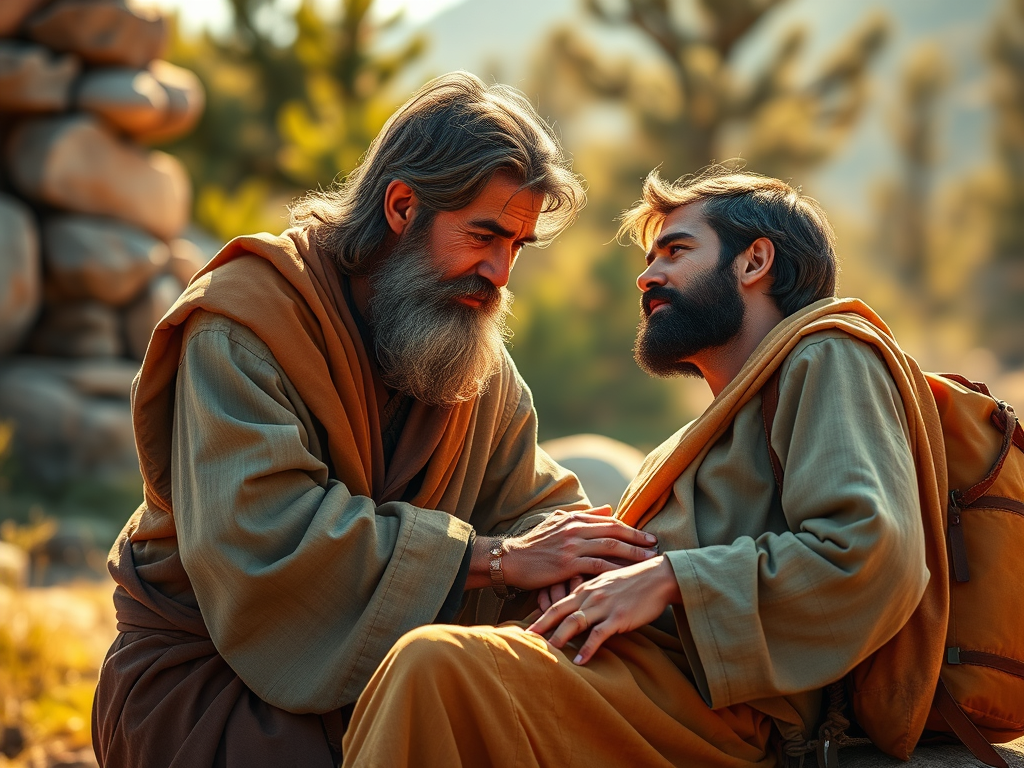
And at the end of the story Jesus asked the lawyer, which of these three was a neighbour to the man in the ditch.
“The one who showed mercy.”
“Go and do likewise.”
The lawyer wanted to know what he had to do to have eternal life, a life worth living, a life that connects you with the Eternal One. The answer is love God with your whole self and love your neighbour but neighbour includes enemies, people in need, people who’ve made mistakes.
Our Christian ethic is rooted in this story. We are people who help. We are people who get involved to improve our neighbourhood. We also respond to Jesus’ invitation to expand the circle of who we consider our neighbour. Sometimes when we give money to people overseas, people will ask, “Why should we send our money to help those people when there are people who are hurting right here?” Part of the answer is that we remind ourselves that Jesus challenges us to widen the circles of our care. Our neighbours are those in need anywhere in the world.
We are connected to them in God’s eyes. When God looks at the world, our divisions and national boundaries are as nothing. It’s one world and if we are going to sense God, it means to love our neighbours. To help even those who aren’t like us, any who are in need.
Who has been passed by and left in the ditches today? Who can we help? I learned that over the past two years there has been a huge spike in the number of senior citizens living in fuel poverty and even becoming homeless. I think of children lost in the foster care system, those who have fallen into the cycle of addiction, those we have written off simply because their lifestyle, spending priorities or world view isn’t as we think it should be. We have each one of us, left someone in the ditch and walked on by.
Martin Luther King Jr. in his last sermon talked about this parable and said we should always be asking not, what will happen to me if I don’t help, but what will happen to them if I don’t help.
Over the years, I’ve often felt guilty and sometimes even lost sleep over not being able to help more people. With so much need in the world around us, how can we respond to all of it. There is after all only so much we can do. Taken too far the story might seem that we should hop out of our car every time we see a homeless person and give them our credit card.
There were times when Jesus had to walk away from healing people to go and care for himself.
And so we must do what we can.
As the Christian family in our part of the world, we must open our hearts and saturate Sutherland and beyond with the grace of God. No questions asked, no provisos, no catches – as the people of God who worship Him in His majesty and splendour, in our joyfully diverse ways, together we are called in Christian Unity to love and serve each and every one of our neighbours – to be an agent for positive change in people’s lives. Are you ready for that? Are you ready to serve? Or will you pass by on the other side?
Matthew 3.13-17
Last Sunday morning, we saw the three magi visit the infant Jesus – in the course of a week, we have fast forward about 30 years and we meet the adult Jesus as he emerges on the edges of the river Jordan to be baptised by his cousin, John.
It is a peculiar story. Jesus enters the scene not as a valiant king or leader we might expect from the way Matthew starts the gospel, but instead comes in the most humble way possible, alongside sinners coming to repent and receive cleansing waters from the River.
Here, though, Matthew is very intentional in his telling. He takes on what one commentator notes as the tone of the “apologetics,” those who engage in the theological or philosophical practice of explaining or defending a point with careful justification and strong conviction.
His retelling of some stories and events is intended not simply to act as a historical record, but also (and maybe more pointedly) to provide a response or defence to his audience concerning certain implications that others, and maybe they, have drawn
In the case of the birth narrative, Matthew wanted to be clear that this child born was not some ordinary baby born out of wedlock to a teenage mother, but a child conceived by the Holy Spirit – one that God had planned for in a unique and miraculous way.
Similarly, in the telling of Jesus’ baptism, Matthew takes time to include a conversation between John and Jesus that answers the inevitable question believers would have – if Jesus was without sin, why did he need to be baptised?
The answer fits neatly into Matthew’s ongoing perspective that Jesus Christ was the fulfilment of what had been promised. Matthew liked things to be done decently and in good order. In his gospel, Jesus’ baptism is a reflection of that, as a part of fulfilling a plan set into motion long ago. His approach to this moment is pivotal, and illustrates the kind of leader and messiah Christ will be – one who truly walks alongside the people and is a servant of all. Such humility echoes prophets like Isaiah, and foreshadows the events that are to come.
But back to the riverside where we discover more about who exactly Jesus is.
After he convinces John to actually baptise him, the heavens break open. The Spirit of God descends like a dove in what I imagine to be a Hollywood inspired cinematic glory, and the voice of God speaks to all who have gathered.
This is another unique feature of Matthew’s telling – in Luke and Mark this voice is heard only by Jesus, but in Matthew it is a public proclamation: “This is my Son, the Beloved, with whom I am well pleased.” In this proclamation, God claims and affirms Jesus’ identity and commissions him to carry out his purpose on earth.
It is from this text, along with the Great Commission (see Matthew 28:18-20) that we draw our understanding of the sacrament of Baptism.
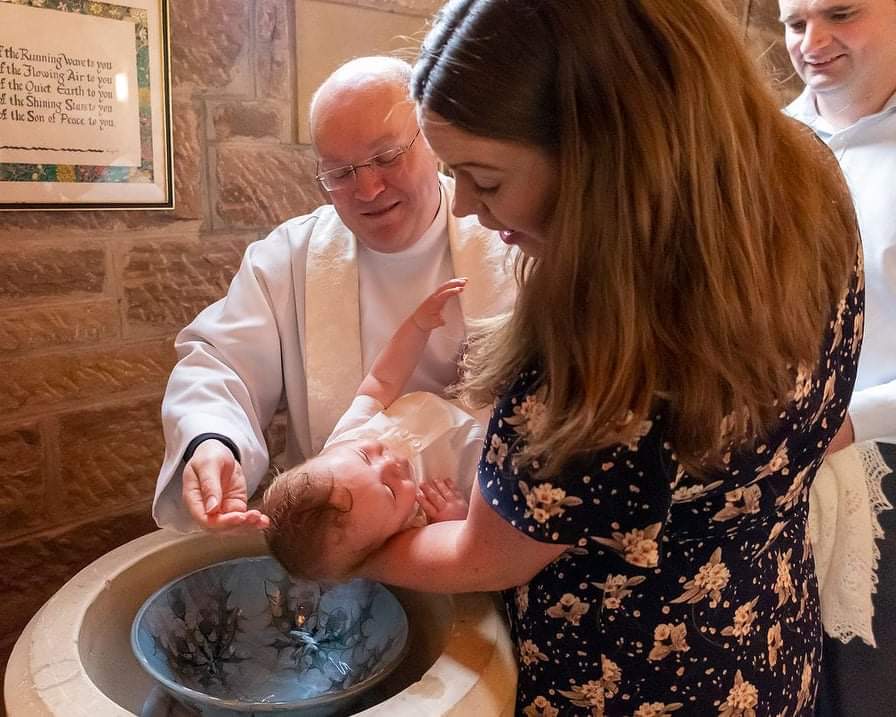
Along with communion, we identify it as something Christ participated in and instructed us to do in the same way. The concluding words of our passage from today celebrate God’s claiming of Christ as his beloved Son. In the same way, in baptism we affirm God’s love for us, and proclaim for the one being baptised, whether a sweet and squirmy infant, a tenacious and talented teen or a weathered and wise adult, that they belong to God. Baptism gives us a new label to wear – “child of God.”
To understand this new label, we first should unpack a bit more about what baptism does and means. Baptism is “a sign and seal of incorporation into Christ .” In it, we are connected in a tangible way to Jesus and reminded of the grace and love extended to us by God. We believe that the Holy Spirit binds us in covenant to God in this sacrament, which is a symbol of inclusion in the church universal.
As we begin a new year together, it is particularly appropriate to think about these things, and the new life given to us in Christ. Baptism reminds us of that reality which has already happened, and is a way that we can respond. It enacts and seals what the Word of God proclaims: God’s redeeming grace is offered to all people . There are numerous other explanations for what happens in Baptism, all with rich symbolism that ties into the totality of the gospel narrative and speaks to the breadth and depth of this symbol. But, for today, I encourage you to hold in your mind that Baptism is a sacrament that reminds us we are “claimed” as Christ’s own forever. Now, this is a claim that has happened well before the water hits our head. It is a promise as old as God, but in Baptism we write it on a label for all the world to see.
Baptism reminds us of the best versions of ourselves, our core identity that was woven into our beings by a compassionate creator.
Theologian and former Archbishop of Canterbury, Rowan Williams says the Church has come to view baptism as “a kind of restoration of what it is to be truly human. To be baptised is to recover the humanity that God first intended.”
Baptism is the mark of a new creation. Reminding ourselves of this assures us that God wants, above all else, to be in a loving relationship with us, God’s beloved children.
This is the root of our identity as Christians – that we belong to God. This is true from the very beginning. It is not something we have earned because we are particularly attractive or talented. It is because God created us to be in relationship, going so far as to send Jesus to make sure we knew just how much He loved us. In order to truly be faithful disciples, we have to allow this name, this label, to be the one that transcends all of the other labels we take on. Above all else, we have to remember that we are children of God.
Of course, that is quickly tested. In our lives we juggle many different names and roles. Some of them fit in well with the idea of being a child of God, others? Not so much. And sometimes, instead of letting God proclaim who we are, beloved, we allow the world around us to define us.
As we grow, we sometimes forget the heavenly voice, and we begin to listen to other voices that confuse us. Perhaps we hear voices when we are children through report cards that tell us that we are not clever enough or don’t sing nicely enough to be in the choir. As teenagers, we hear voices through the callous comments of other teens who tell us that we are not cool enough, not the right size or shape. As adults, we hear voices that tell us we are not successful enough or that we do not have enough money. Somehow, as God’s voice gets drowned out, we listen to these other voices, and we are tempted to forget who we are. We are tempted to forget that a congregation of Christians and God himself have claimed us as beloved children of God .
God’s promise to us is a promise sealed in the waters of Baptism, and God will continue to repeat it to us as many times as it takes for us to believe it.
Matthew 2.1-12
There can be few passages of the Bible that have become as misrepresented as this one has throughout history. Not misrepresented in a bad way – but the story has become so mythologised that it is hard to sometimes focus in on what the story says rather than what we think it says.
The picture that many of us have of this story is so different from the real thing. We sing a carol, don’t we?: “We three kings of Orient are”. But they weren’t kings – they were astrologers. You might know the names these kings have been given – Caspar, Melchior and Balthasar. But there’s no mention of that in the original story.
And the story gets embellished even further. Melchior is represented in pictures and paintings as an old man, grey haired with a long beard and he brings the gold. Caspar is young and hasn’t yet got a beard and he carries the frankincense. Balthasar is represented as having African origins with a newly grown beard on him and he brings the myrrh.

It’s a nice image – but it’s all embellishment on the story. None of it is recorded in the Bible.
And so what we need to do is avoid the pitfall of romanticising this story too much in case we begin to miss the point of what we can learn about God, our own spiritual journey and our response to Jesus – the Christ-child.
As I re-read this passage this year, for me, it is speaking of the response we can make to Jesus in our own lives. There are 3 very different responses to Jesus in this passage. Let’s have a look at them…
The first response we see is in King Herod a response of anger and rejection
Herod has reigned as King in Palestine for nearly forty years and he wasn’t called Herod the Great for nothing. He was the only ruler in Palestine ever to have kept peace and stability in that region. He was a brilliant architect and builder; a man of great vision.
Not only that – but he could be very generous too.
In difficult times, he had been known to stop taxing people in order to give them a chance to survive. And during one particular tough famine, he even melted some of his own gold to buy corn for the starving people.
But there was one deep flaw in his character: he could be very suspicious and couldn’t tolerate others rivalling his power and he was paranoid about people plotting against him.
He murdered his wife and mother-in-law. He assassinated three of his sons. Anyone who got close to claiming power from him were dealt with.
So, when the three visitors from the East arrive looking for the King of the Jews, we can just imagine his reaction.
There’s only one King of the Jews! No-one is taking that title from Herod! So, in his anger and paranoia, he decides to get rid of all the babies aged 2 and younger in the area of Bethlehem.
The very thought of Jesus Christ, the Messiah, made him angry. He rejected any notion that another person could have power and dominion over him.
And it is not so unusual for the mention of the name ‘Jesus’ to make people angry. Perhaps you have mentioned Jesus in a conversation and been taken aback by the over-reaction of hostility you then faced. And, often, that hostility and anger stems from a bad experience someone has had of the church or Christians in the past, which then gets projected onto their view of Jesus.
For us, too, maybe there have been occasions in our own lives when we have felt angry at Jesus. Perhaps when events in our lives have taken a turn for the worst. Or someone we love has become seriously ill or died. The pain in our lives has been so intense that we have doubted our experience of God and have rejected the very idea of faith in him.
So, like King Herod, one response to Jesus is to feel angry and to reject him; reject the claim of Lordship that he makes over our lives.
The second response to Jesus is that of the chief priests and teachers of the law. And their response is one of apathy and non-committal.
King Herod goes to the chief priests and teachers of the law for advice. “Where will the Messiah be born?” he asks them. And they know the answer. They’ve studied the Scriptures. They’ve asked the questions. It’s all there in their heads: The Messiah will be born in the town of Bethlehem in Judea. They can even quote the verse to the King which backs up their theory.
But that’s what is so sad – because that’s all it is for them: theory. What would you expect from these great religious leaders? You would expect, in the next verse, to read of them all hurrying off to Bethlehem themselves to greet the Messiah they had been waiting for. But no. There’s nothing of the sort. They give Herod the answer he needs and then they get back on with their own lives, untroubled and unconcerned with the news they’ve received.
How many people do we know who know the facts about Jesus in their heads but don’t recognise him as King in their hearts? How often do we know in our heads what God wants from us but we become apathetic in delivering the goods and refuse to sit under his Lordship over us?
Apathy and being unprepared to make a commitment to God is a very real spiritual malaise. At the beginning of a New Year, it is always a good opportunity for us to look back and reflect on that which has gone before and look forward to how we can be more committed and passionate in faith for the future.
Herod rejected Jesus. The teachers of the law remained apathetic about Jesus. But there is a third way, which is the way of the visitors from the East. And that way is to accept Jesus and to worship God as a result.
This is such an intriguing story – and it is only recorded in Matthew’s Gospel, of course. But it seems to me that this is a beautiful parable of the journey of faith that we all go through as we move into a deeper experience of God as Christians.
The story of the visitors from the East is a four-stage journey: from the head to the heart.
First, they study the facts. Their journey of faith begins with them asking questions. They are astrologers – they study the stars – and when they see a strange star in the sky, they ask themselves questions about it.
Second, they know that the only way to get an answer is to set out on a journey. But that journey involves risk. They have to come to the court of the king and risk their lives to find out about Jesus. But their desire for truth is stronger than their fear.
Third, they come into the presence of Jesus and they worship. And part of their worship is to offer him gifts: their’s is a sacrificial worship that is prepared to give as well as to receive.
And then finally, they make their way back home; back to their everyday lives, not leaving Jesus behind, but taking the experience of their encounter with them.
And there’s that lovely touch in verse 12 which says that they went back by another road, inspired by God in a dream.
And it’s true for all of us that once we meet with Jesus, we do take another road, life is never the same again. And it’s true too, that it is under the guidance of God that our route is chosen.
So, in the response of the Eastern visitors to Jesus, we see our very own journey of faith. Starting with questions in the mind. Setting out on a journey, which will inevitably involve risk and vulnerability. But a journey that leads us to the Christ-child, where we give him all that we have to offer. And then God sends us out, inspiring us and guiding us in which way we should go; a new journey with the experience of Christ in our hearts. The way of worship and adoration.
And so, in this remarkable story, stripped of the tinsel and the imaginary names and the made up characters, we find the most basic of Christian truths. Every one of us is confronted with the Christ-child this morning and we need to make a response. Will we be like King Herod and reject Jesus? Will we be like the chief priests and teachers of the law and remain lost in apathy? Or will we be like the visitors from the East and step out on a journey of faith? A difficult journey, not without questions and doubts, not without personal difficulties, not without sacrificial actions – but a journey that leads to Jesus Christ, God’s Son, our Saviour. A journey that takes us on a new road; a new direction under God’s guidance and within his grace and love and compassion.
Good morning to you my dear friend,
First of all, let me take the opportunity to wish you a very Happy New Year – I hope you are safe and warm during this spell of very cold and wintry weather.
Sadly, due to the weather conditions there will be no service at St Finnbarr; Dornoch or St Maelrubha Lairg tomorrow (4th Jan 2026). The concert planned for tomorrow afternoon at St Columba Brora is also cancelled.
It is always very difficult to take the decision to cancel services, but it is important to make sure everyone is safe, and given the ongoing severe weather and the Police Scotland advice against all travel unless absolutely necessary, I think this is the best decision to make.
A reflection for the Epiphany will appear on the website at about 11am in the morning.
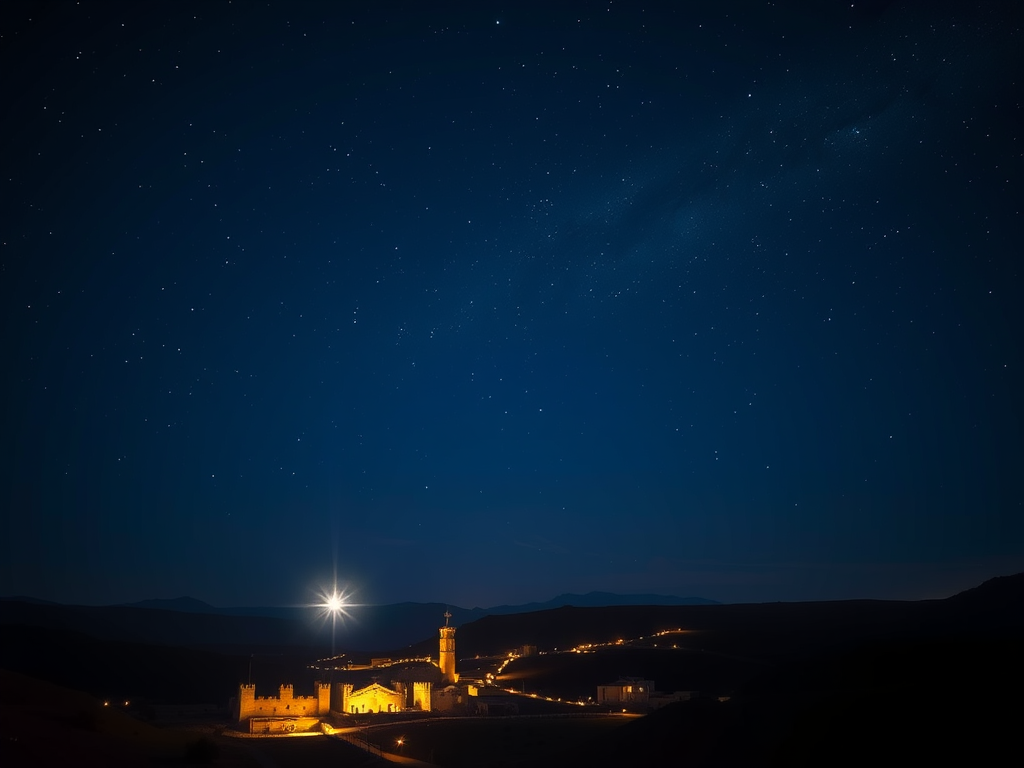
And you might like to use this prayer in your own devotions –
Collect for Epiphany
O God, who, by the guidance of a star,
revealed your only begotten Son to the nations:
Grant that we, who know you now by faith,
may at the last be led to see your glory face to face;
through the same Jesus Christ, our Lord,
who lives and reigns with you,
in the unity of the Holy Spirit,
one God, world without end.
AMEN
Sermon Matthew 2.13-23
The very last hour of the school term before the Christmas Holidays can for many Head Teachers be a little bit sad. Just before the children and staff go home full of festive cheer, it is our job to walk around school to check that all signs of Christmas have been removed. No tinsel, no trees, no pictures of santa, no cards pinned to notice boards – everything must come down, ready for the beginning of the new term when we return in January.
I know the big day was only a few days ago, but I wonder if anyone in church this morning has already taken down their Christmas decorations at home, or at least started thinking about doing so? We haven’t. We leave them up as long as possible. In fact, for us the Christmas decs stay up until at least the feast of the Epiphany – twelve days after Christmas.
It’s really important to appreciate these twelve days of Christmas and we can understand this short span of time as a sort of bridge between the birth of Jesus and his presentation to the world as its Saviour. We know so little about the years between Bethlehem and Jesus’ appearance at the Jordan River, asking to be baptised by John and so it seems entirely appropriate that we should pause here, on the first Sunday of the season of Christmas, to consider how Jesus got from the manger to Nazareth, the village where he would grow to adulthood.
St Matthew follows a clear pattern to tell us this story in our gospel today. He uses three dreams, three “obediences,” and three geographic locations to describe how prophecies about the Messiah are fulfilled in the birth of Jesus. Today’s reading picks up the tale where we left off on Christmas Eve. The magi have come to pay homage to a king. On their way, they have stopped to ask Herod where to find him. Herod tries to smooth-talk the magi into letting him know how their quest turns out, but an angel of the Lord warns them to go home by a different way than the one by which they came, and they follow this advice. The main character in this story is not the magi who have just left, and it is not Mary who gave birth to Jesus. It is not Herod, the evil and paranoid king. This is Joseph’s story.
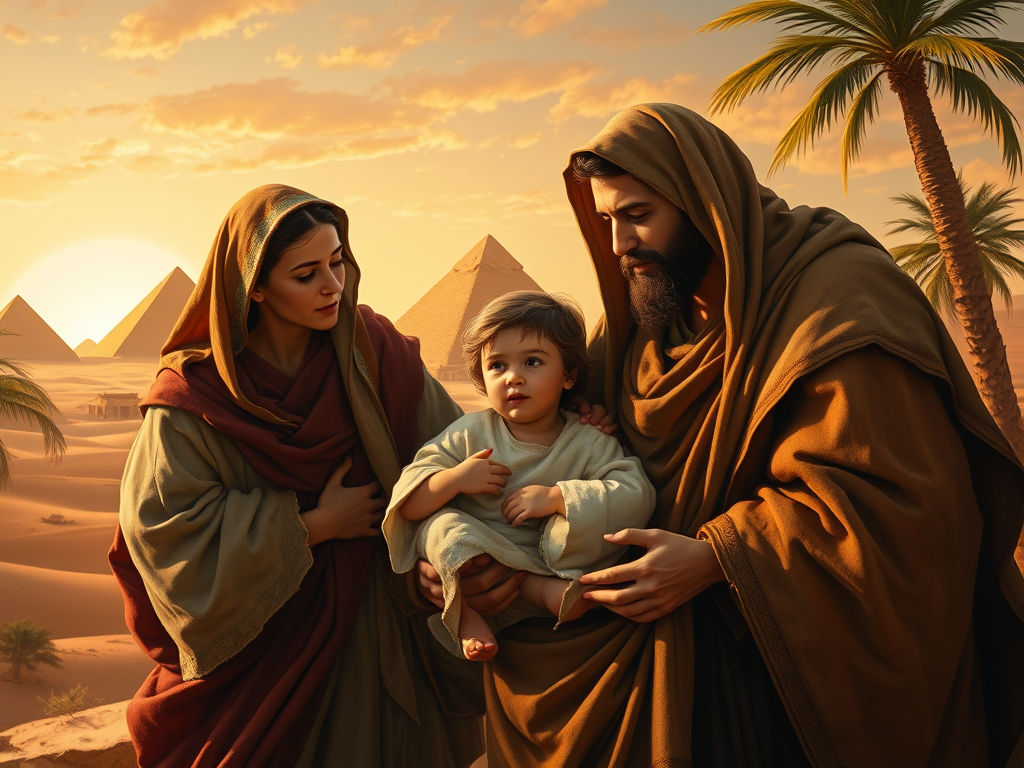
Our gospel passage falls neatly into three sections: God’s call into Egypt, what happens in a kind of “meanwhile, back at the ranch,” sort of section and God’s call back from Egypt, to a final destination in Galilee. While the writing may be tidy and well-organised, the story Matthew tells is certainly not. This young family did a lot of travelling, and many who preach on the story choose to focus on Jesus the Refugee as the main point.
Such a focus offers plenty of material. We could talk about the obvious parallels in Matthew’s Gospel with Old Testament writings. We could consider how Joseph’s flight into Egypt recalls another Joseph, back in Genesis, who went to Egypt against his will, but who became Pharaoh’s right-hand man and made it possible for the nation of Israel to survive, grow, and thrive, even under the hardship of slavery. Matthew reminds us of the story of the baby Moses, hidden in the bulrushes to protect him from Pharaoh’s slaughter of newborn Hebrew boys in Egypt. It is clear that Matthew draws a connection between the return of Moses to Egypt after Pharaoh’s death, and Joseph’s sudden return when he learns through a dream that Herod is dead. The young family’s trip back home to Israel reminds us of the journey Moses led through the wilderness, as the Israelites escaped their captivity in Egypt and headed toward the Promised Land. Matthew connects the story of Jesus’ early travels to God’s call, protection, and provision for his people throughout history. It’s a powerful connection. And there are certainly strong connections between Jesus the Refugee and the plight of refugees throughout the world right now. Refugees who have been displaced by politics, war, and the struggle with poverty – those who have the same fears and anxiety that Joseph and Mary must have experienced, as they did whatever they could to protect the young child, Jesus.
But nagging in the back of my mind, and perhaps in the back of yours, is the horror of what happens “meanwhile, back at the ranch.” While it’s important to see how the greater story of God’s activity among his people is connected to, and completed in, the story of Jesus, we cannot ignore those middle verses, the ones that speak of an unspeakable tragedy.
When Herod saw that he had been tricked by the wise men, he was infuriated, and he sent and killed all the children in and around Bethlehem who were two years old or under, according to the time that he had learned from the wise men. Then was fulfilled what had been spoken through the prophet Jeremiah: “A voice was heard in Ramah, wailing and loud lamentation, Rachel weeping for her children; she refused to be consoled, because they are no more.”
The question has been bothering us since the beginning of human history: How can a just and loving God allow evil to exist? How can God let innocent people suffer, while evil people thrive and prosper? The book of Job is filled with this question. In priest training school, they even give us a name for the problem: theodicy. But giving it a name, and even knowing that brilliant theologians have been struggling to find an answer for as long as we can imagine, doesn’t help when it becomes personal. When it’s your child being put to the sword, the question is no longer hypothetical. The pain is real, and the only question we can raise is “Why, God?”
Make no mistake: the slaughter of those children in Bethlehem was not God’s idea. It was Herod’s. Herod the Great never felt his position was secure, and he was known for his paranoia and brutality. He even had his favourite wife and some of his sons murdered when he suspected them of treachery. He decreed that forty Jewish nobles should be brought to Jericho to be killed when he died, so that there would be abundant mourning throughout the land at his death. Thankfully, the son who succeeded him decided not to carry out this final wish.
Matthew is the only source to describe Herod’s murder of the children in Bethlehem. Some scholars think the event wasn’t noteworthy for first century historians to record, partly because it was only one of many atrocities committed by Herod, and partly because the number of children affected was probably no more than twenty, given that Bethlehem was such a small village. Such violence against innocent children may have been unremarkable by first century standards, given that children were considered to be little more than property at that time. They were expendable. But Matthew names it as an atrocity. Matthew tells us that God cares that children are massacred. Misuse and abuse of children was common then, but Matthew explicitly calls that out as being wrong. Misuse and abuse of children is far too common now, and so we, in our day, must also call that out as being wrong.
We hear of the children in our own country who are victims of human trafficking. In our nation, the number of Child abuse cases continues to increase year on year. Atrocities against children are just as real now as they were in Bethlehem in 4 BC.
Some amongst us have suffered the terrible loss of their own children. Maybe they did not die violent deaths, but the loss is still real, and the pain is still acute. Some know, as others may not, what it means to weep with Rachel, who will not be consoled, because her children are no more.
So, when we ask, “Why, God? How is this Good News?” it may not help to know that Matthew is painting a bigger picture of God’s providence and protection for his people. Being reminded that God is not willing for any to perish, but wants to give each of us eternal life might seem like an empty promise. Knowing that bad things happening to innocent people has more to do with our sinful condition than God’s will for us might be difficult to explain. We can’t just shrug off the sorrow. We can’t diminish the pain of the here and now.
It’s a dangerous thing to be human, to be vulnerable, to face the fact of our own mortality. The Good News is not always sweetness and light. That pretty baby in the manger grows up to die on a cross. God has to watch his own Son, his only Son, die a horrible death. And God grieves.
God grieves over all the Herods and the Pharaohs and the murderers and abusers of innocent children. God grieves over us when we turn away from him. God grieves as only a bereft parent can grieve. That is exactly why this story is part of the Christmas story. Christ came to be God With Us – Immanuel. He came to be God with us in our sorrow, God with us in our fear, God with us in our wandering, God with us. Always.
The world is filled with darkness, with evil evident in every corner. But God is with us. The violence that surrounded Christ’s birth was the same violence that would eventually lead to his crucifixion. Christ went into every dark place we humans must go, even into the darkness of the grave. But he rose again. There is no darkness that can frighten God. God is with us.
Christmas is a dangerous season. It’s dangerous to be human, to admit our mortality, to hold in tension both this awareness of our vulnerability, and the awareness of God’s great gift to us in the person of Jesus Christ, who made himself vulnerable to the power of evil, and yet conquered it. The joy of Christmas depends on the joy of the resurrection at Easter.
There’s a little detail in this story, Joseph’s story, which we need to notice. Every time an angel of the Lord appeared to Joseph in a dream, Joseph immediately did what he was told to do. He did not ask, as the weeping mothers of Bethlehem must have asked, “Why, God?” He got up in the night, packed his family’s belongings, and he went where he was told to go. Even when he was afraid, he obeyed.
Only Joseph saw the angel. Only Joseph had the dreams. Only Joseph knew the magnitude of his task, to protect the Messiah from the danger of Herod’s henchmen. Just as Mary did not argue with the angel who told her she would give birth to the Saviour of the World, Joseph did not argue with the angel who said, “Go!” He just went. He answered God’s call with action.
God is calling us, today. He is calling us to be a voice for peace, justice, and grace. He is calling us to challenge the way things are in the world, to stand against evil when we see it, to be the presence of God for those who suffer violence and abuse, to let them know that God is with us, Immanuel.
When we challenge the world, we make enemies. Herods and Pharaohs will try to crush us. But our job is to connect the human story with Christ’s story, to rescue our history from being reduced to a timeline, and allow it to be converted into God’s event. That event is the breaking into our sin-filled world of the kingdom of God. As we become aware of God’s constant working in our lives, we are called to participate in that work. Whether we are sent to Egypt or Nazareth, whether we are called to feed the hungry or clothe the naked or heal the sick, whether we are tasked with comforting the bereaved or spreading hope to those who have lost it, God calls us. May we, like Joseph, answer that call without hesitation, knowing that God is with us, Immanuel. Amen.
Come along and join in with Carols at the Crask this afternoon! All welcome!


Most of you will know that for many years I have been a Primary Headteacher and the run up to Christmas, especially the Nativity Play has always been my favourite time in school. Watching the children act out this timeless story so confidently, makes me feel so proud of them all and I’ve been involved with many versions over the years. Most have gone smoothly with doting parents ‘ooing’ and ‘aahing’ at all the right moments, but we have had the occasional hiccup.
I remember one year in a school in Bolton, when I had cast the part of Innkeeper number 3 to a five year old called Kyle. Now Kyle was not very happy about this because he wanted to be Joseph and what made it even worse, was that his seven year old brother Sam had been given the part!
However, Innkeeper Kyle learned his lines and rehearsals went well. On the afternoon of the performance, the parents all filed in and there was a buzz of excitement as the children took their places for the start of the show.
The narrator began to read her words beautifully and Mary and Joseph went from door to door trying to find a place to stay. They knocked at the first door – Joseph spoke “I am Joseph and this is my wife Mary. She is going to have a baby and we need a place to stay”. Innkeeper 1 delivered his line perfectly – “Sorry but we have no room”. Joseph and Mary moved on to the door of the next inn.
Now it was at this point that from the side of the stage I could see Innkeeper Kyle stood behind door number three and he had a face like thunder!
Joseph knocked on door number 2. “I am Joseph and this is my wife Mary. She is going to have a baby and we need a place to stay”. “Sorry, but we have no room” the second innkeeper responded.
So, Mary and Joseph approached door number three and knocked. The door was opened by Innkeeper Kyle with his arms folded across his chest! Kyle’s older brother delivered his line. “I am Joseph and this is my wife Mary. She is going to have a baby and we need a place to stay”. At the top of his voice, Innkeeper Kyle replied – “She can come in, but you can beggar off!”
The school nativity play has become one of the traditional ways that we celebrate Christmas in today’s society.
And We celebrate the coming of God into the world in so many ways: every household has its own habits, every church its own patterns of services, every nation and community its own traditions.
In our own, and many other western nations, the preparations for Christmas involve an awful lot of shopping, food and presents.
In the words of John Betjeman:
We raise the price of things in shops,
We give plain boxes fancy tops
And lines which traders cannot sell
Thus parcell’d go extremely well.
Some ways indeed are very odd
By which we hail the birth of God.
But this is not going to be one of those sermons that tells everyone off for bowing to the commercial pressure of Christmas and missing the heart of it. Why not?
For one thing I love presents, and I think they are a really important part of Christmas,
But really, it’s because you’re here. Because it’s taken you time, will, energy, and in some cases, real courage to step through that door just to be here. You’ve pressed pause on the conveyer belt of Christmas so that you can truly enjoy the moment, you’ve made your way here just as the shepherds did, answering the call of the carolling angels.
And because you’ve brought tributes – gifts (not gold, frankincense and myrrh, and I’m not talking about what you’re intending to put in the collection plate either, though that’s part of it, too) – you’ve brought the finest tribute that you can, that of your very selves, together with all the ‘stuff’ that you carry with you, your motivations, your thoughts, the hopes and fears of all your years, as you come to meet the Christ child this morning. You have brought who you really are, and that is the greatest gift any of us has to offer.
But mostly it’s because Christmas isn’t primarily about what we have done, it’s about what God has done. Because Christmas is the great divine ambush, the ultimate proof that it is not so much that we seek God, but that he seeks us.
He is not the precious pearl or the buried treasure that we spend a lifetime seeking, we are the precious pearls and buried treasure that spend a lifetime being found by God.
The epic journey of the Magi, and the chaotic scrambling of the shepherds down the dark Bethlehem hillside are only possible because God had already made the leap from heaven to earth to come among them. The first move is God’s, and always was.
Our being here in church today – however long and arduous, or short and effortless our journey – is only possible because God had already got here ahead of us, reaching out all over again so that heaven could touch earth for us, right here. ‘The Word became flesh and dwelt among us’.
Because Christmas is the ultimate proof God can find his way into anything and everything, and if we are alert to it, we can see the heart of what Christmas is about wherever we look. For the heart of Christmas is Emmanuel: God with us. The heart of Christmas is Light in darkness. The heart of Christmas is heaven touching earth.
Yes, indeed, some ways are very odd by which we hail the birth of God, but even in the glitz and bling he is there. In every shiny Christmas bauble we see the reflection of our own face – and it is a reflection of someone who is made in the very image of God – a human being, the crown of God’s creation, in which he is pleased to dwell.
And if we look a little deeper in that reflection, we see not only ourselves, but those around us, our little corner of God’s world. We do not have to look beyond the material world to catch a glimpse of heaven: because of heaven touching earth we can find those glimpses of heaven right here and right now, everywhere we look. For when God came to earth over 2000 years ago, he never left.
Yes, if we look for him, we can see Christ even in the shiny stuff and in the trimmings.
And even in the darkest corners of the world, God is already there. Jesus called himself the Light of the World, and if you’re the light of the world, you go first to the places that need light the most: the places of deepest darkness. If you enjoy the sight of the candles and the tree lights then you know something about light in darkness, that no matter how dark a place is, even the smallest light brings such hope and warmth.
If you’ve ever been blessed with the miracle of forgiveness, or an act of unexpected kindness, or a much-needed word of comfort or guidance, then you also know something of what it means for heaven to touch earth. If you’ve ever found the grace to offer those words, or that kindness, or that forgiveness, to someone else, then you know something of heaven touching earth. If you’ve ever sung ‘Be near me Lord Jesus, I ask thee to stay close by me for ever’ and meant every word, then you know something of heaven touching earth.
God is not just here. Here, in church, that is. God is wherever we find ourselves, God is where the angels sing with joy, and we join in; God is where it is dark, and difficult, and dangerous. God is here, and God is in our hospitals and hospices, our prisons, and on our streets. And God is in every dark and battered street in Ukraine and Gaza and in every conflict zone in this war weary world. For there is no place on earth that’s too dark for the light of God to shine there.
So as heaven reaches out to us this Christmas, along with so many others, scattered across the globe, let us dare to grasp the hand of the tiny child in the manger, and so find that our little bit of earth has been touched, and changed, by a little bit of heaven.

 Scottish Episcopal Church - Dornoch, Lairg, Brora, Tain & Tongue