Christingles

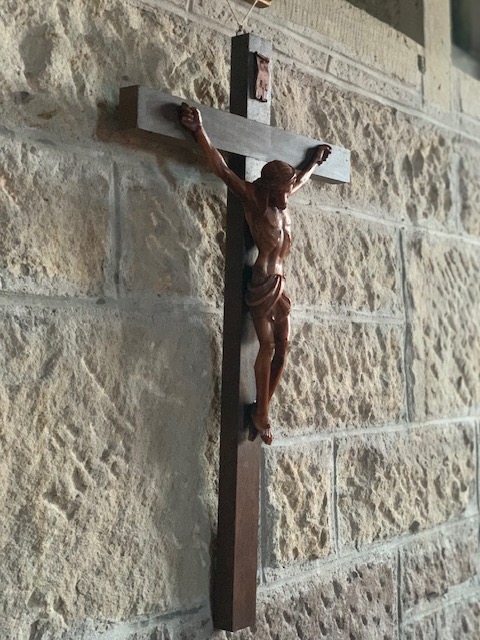
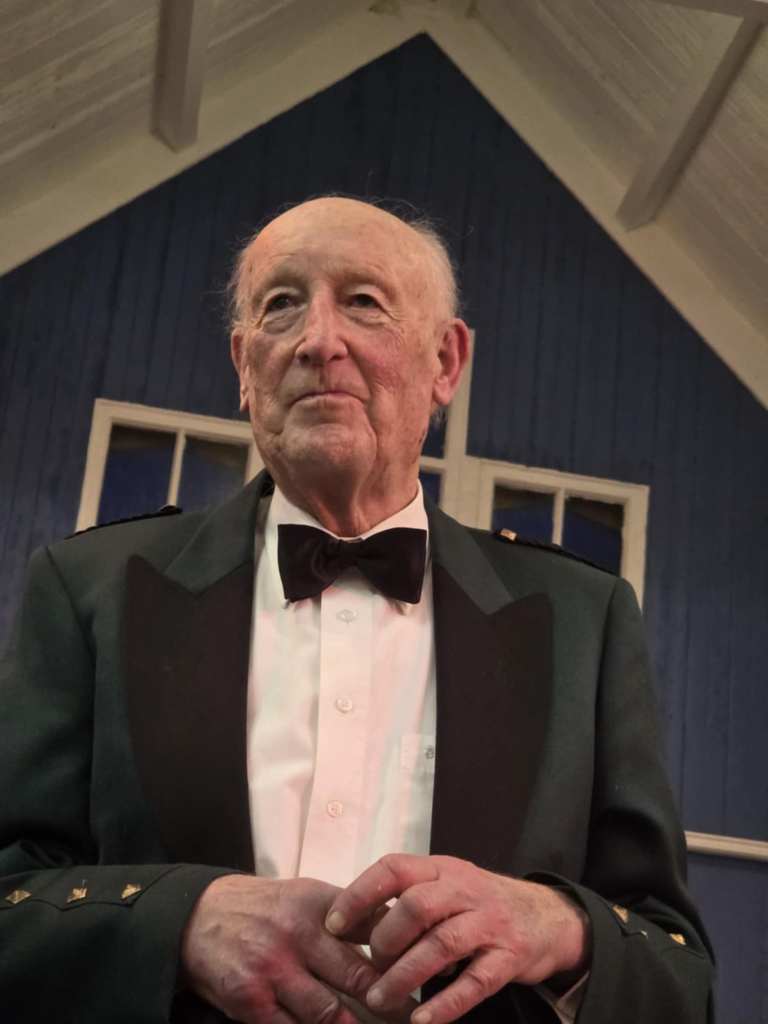
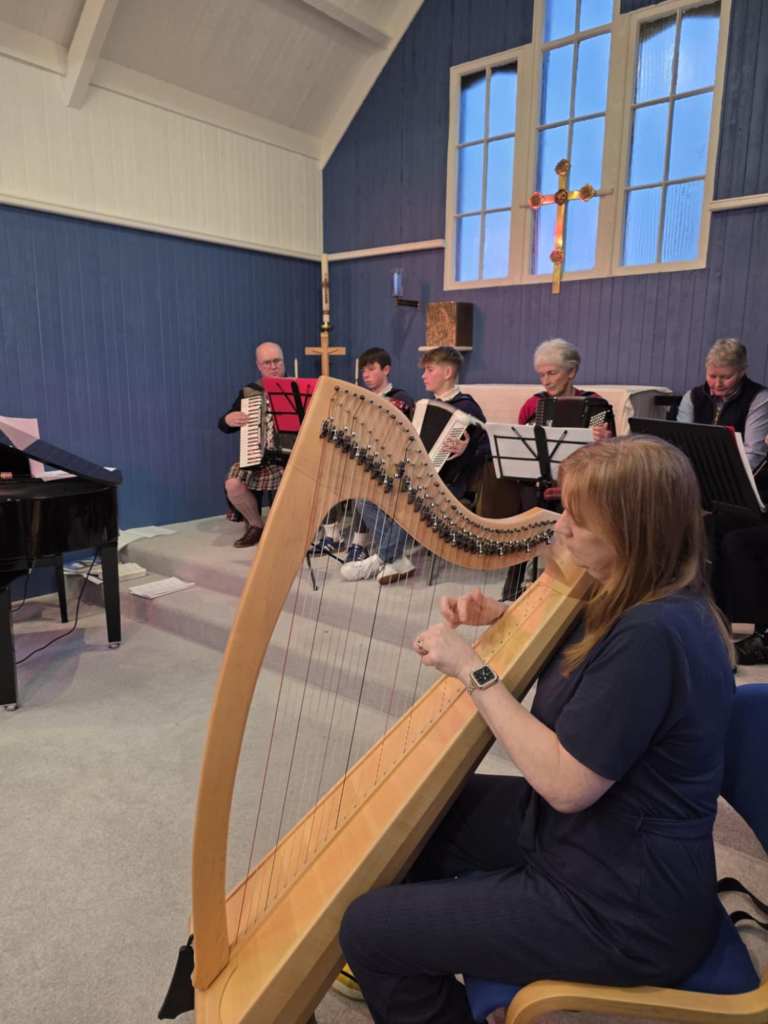
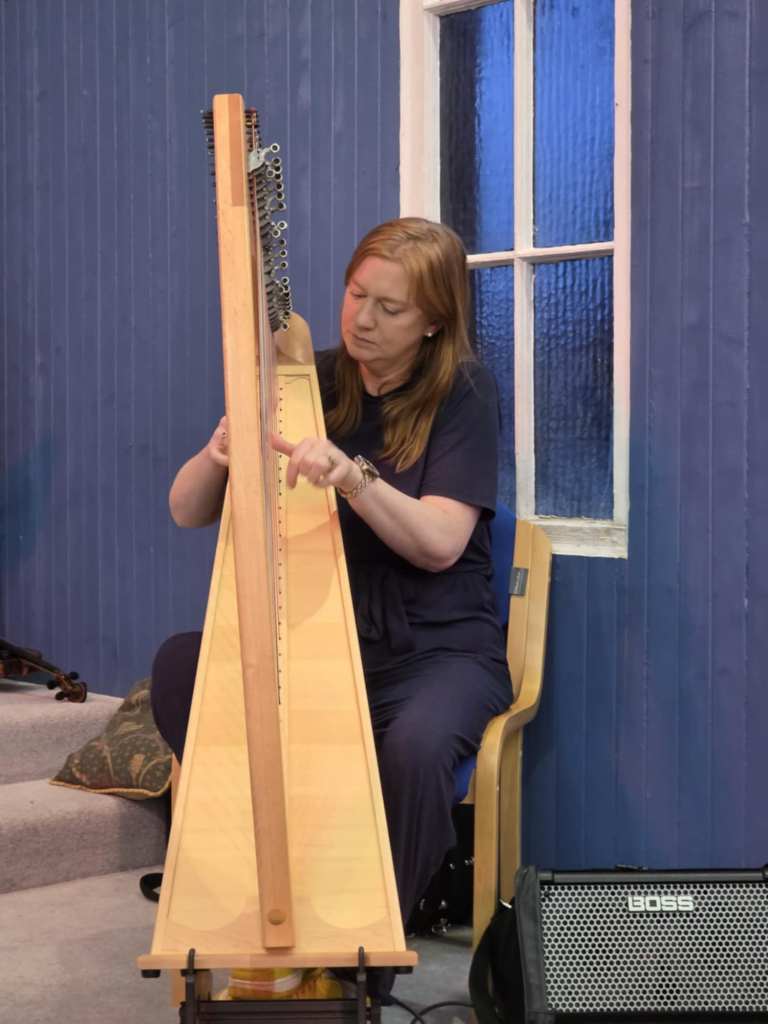
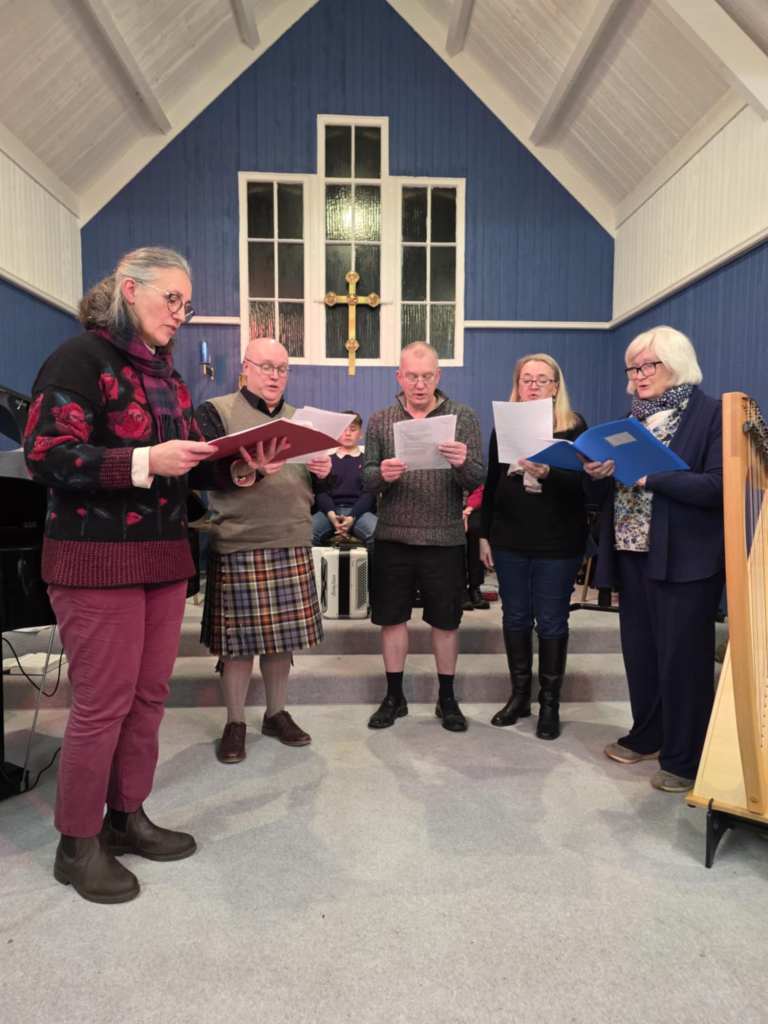
Thanks to all those who came along to our Christingle Making workshop yesterday. Our Christingle Service this afternoon was a beautiful gathering of friends from across all our churches in East Sutherland. Singing, scripture and laughter – a great boost in the hectic run up to Christmas!

Some pictures are from our Christingle Making – a nice problem to have was that we didn’t make enough for the service with nearly sixty in the congregation – our biggest Christingle yet!

Sermon for the Fourth Sunday of Advent 2025

Matthew 1.18 – 25

On this the fourth Sunday of Advent, the main character in our gospel reading is St Joseph. Now this poor fellow that appears in the nativity scene, unlike Jesus’ mother Mary, doesn’t get to feature in many other places in the gospels.

So, I wonder what you know about St Joseph?

a) What was his job?

b) Where was he born?

c) Who was he married to?

d) Where did he die?

e) Who is he the patron saint for?

f) What was his father called?

(See the answers at the end of this sermon)

This all sounds very respectable, but what a scandal we hear about Joseph and Mary this morning!

An unmarried woman. An unplanned pregnancy. An implausible explanation. It’s not hard to imagine what others were saying and thinking.

If Cissy and Ada (those two hilarious comic characters played by the late Les Dawson and Roy Barraclough) had been around at that time, the conversation over the back wall might have gone something like this:

Cissy: “Ey chuck, did you hear? That Mary from number 26 – she’s pregnant.”

Ada: “Well, I never would have thought it. Mind you, her mother had her later in life you know. But that Mary and Joseph should know better. I mean they aren’t even married yet.”

Cissy: “Well, I heard tell that Joseph’s not even the father”.

Ada: “Yer what – How could she do that to him? He’s such a good and just man.” Well, Who is the father?”

Cissy: “You know, I’m not sure, but that Hezekiah up at the Donkey stable put’s himself about a bit so I here. Anyhow, they say Joseph still intends to take her as his wife”

Ada: “He’s going to marry her after all this?”

Cissy: “The whole things a disgrace”.

Ada: “Her and her love child should be stoned”.

Cissy: “Ooo – that’s a bit harsh”

Ada: “Not at all – the law requires it. I do love a good stoning.”

Cissy: “I suppose your right – it is her own fault after all.”

Now I am sure Joseph heard the whispers and saw the looks, if not in the village, then certainly in his own imagination. Joseph knows this is a scandal. He knows there are questions of faithfulness. The love child in Mary’s womb proves that. By the light of day, it all seems pretty clear. Joseph will awake in the morning and do what he has to do. He will quietly send Mary away. But what appears to be one thing in the light of public scrutiny, becomes another in the night of silence, listening, and waiting.

Yes, this a scandal. But it is not a scandal of immorality. The real scandal is that God is with us. We thought God was up there, or out there, maybe somewhere in the future. But then Mary became pregnant. The scandal of that pregnancy is that God is intimately present. God’s holy spirit fills the womb of Mary. The wind of God is blowing through her life. The breath of God in her is so real that she begins to show like the pregnant woman she is. The scandal is that humanity can become pregnant with God.

Yes, Mary’s pregnancy raises questions of faithfulness. But it is not the usual question or accusation of betrayal and infidelity. Rather, this pregnancy is a statement of God’s faithfulness and commitment to God’s people. In this pregnancy God renews all the covenants of history and again chooses us to be his people. God’s continuing promise to show up and live in the midst of our lives is fulfilled in Mary’s pregnancy. This pregnancy is fleshly faithfulness.

Yes, the child within Mary is a love child. That is not, however, a euphemism for being illegitimate, a child born to unmarried parents. No, this child is the revelation of God’s love for humanity. Love that can be seen, heard and touched. This embodied love of God will feed and nourish God’s people.

Joseph’s daytime resolution to quietly dismiss Mary has given way to a night of dreaming, pondering, and wrestling. Joseph’s view of Mary, her pregnancy, even himself has been enlarged and opened. He has begun to see this situation, this scandalous pregnancy, through the eyes of faith rather than the stares of the villagers. Mary’s story and the angel’s words now speak louder than the villagers’ voices.

The only reason this could happen is because Joseph entrusted himself to the night, to the inner world where angels appear, guide, and speak God’s word. The night of faith shows reality to be more than the daytime drama with which we often live. It is the place where God speaks the truth about us and sees more than we sometimes see for ourselves. It is the night of Emmanuel. Joseph experienced God with him. He found holiness hidden, where it has always been hidden, in plain sight amongst the scandals, the talk, the looks, the questions and doubts.

So Joseph awoke in the morning and did what he had to do. He began emptying himself. He let go of fear. He let go of the villagers’ voices and stares. He let go of his doubts and questions. He let go of his own reputation and standing in the community. He let go of his ideas and hopes for what his marriage to Mary could have been. He let go of the law and punishment. With each letting go Joseph emptied himself so that, by God’s grace and mercy, he might become the womb that would protect, nourish, and provide security to Mary and her child.

He would be the womb that sheltered Mary and Jesus from Herod’s rage and the slaughter of the innocents. He would be the womb that safely took Mary and Jesus to Egypt. He would be the womb that sustained their lives in that land. He would be the womb that brought them back to Nazareth when the time was right.

Isn’t that what wombs do? They are the place where life is created and sustained, nourished and grown. They offer security and protection. They are that deep interior place where God’s life and breath meet and unite with ours to create something beautiful and sacred. The womb Joseph offered was as important as the one Mary offered. Even as God was acting in Mary’s womb to create new life, divine-human life, so God was acting in Joseph’s to sustain that life.

At one level today’s gospel is about Mary and Joseph but at another level it is about you and me. It is about us becoming more open and receptive, more womb-like in this final week of Advent so that we all might give birth to God’s Son in our time and our culture.

Joseph guides us to Christmas reminding us that before a womb can be filled it must first be empty. He invites us to enter the night of faith and to begin emptying ourselves of all that keeps our womb closed. We must let go of all those things that make our womb inaccessible. Things like fear, guilt, resentment and anger, the villagers’ voices and stares, the thoughts that say we are not enough, the doubts of God’s presence, the isolation and loneliness of loss and sorrow. Letting go creates space, openness, and opportunity for God.

Over and over we let go, emptying ourselves until we find that we are nothing and have nothing. That nothingness is our empty womb offered with scandalous faith that it will be filled with God, we will be re-created, the world will hear good news, and once again we will discover God is with us.

What do you know about St Joseph? (Answers)

a) Carpenter

b) Bethlehem

c) Mary

d) Nazareth – (Traditionally thought to be around AD18)

e) Fathers, pregnant women, Those looking for work, immigrants and estate agents!

f) Jacob (according to St Matthew) or Heli (according to St Luke)

TODAY – Making Christingles at St Finnbarr’s

Don’t forget – we are making Christingles in St Finnbarr’s Episcopal Church, Dornoch at 2pm this afternoon ready for our Christingle Service at 4pm on Sunday. Come and join in the fun – many hands make light work!

Sermon for 3rd Sunday of Advent

Sermon  11.2-11

Each year in the UK over 154 million Christmas crackers are pulled (and just as many bad jokes are read)!

Between us, we Brits eat 308 million slices of turkey, we listen to Christmas songs 460 million times and around a billion Christmas Cards are bought each year.

The British people spend around £4.9m on Christmas nights out during the festive season and over £19 million on presents with each UK household spending an average extra £500 every December – all these big numbers, all the excitement building up.

You can almost feel it – you can almost taste it – you can almost touch it. Christmas Day is less than a fortnight away!

For most people Christmas is a time for excitement in some form or another. Whether the excitement is because we can’t wait to celebrate – or we’ve got some friends or family coming to visit that we haven’t seen in a while – or like me, you get a bit of time off work. There is usually some reason for joy and excitement.

But what happens after Christmas is over? It’s back to normal – sort of.

Some of us step on the scales and realise how much we’ve overindulged. We look at our credit card statements and realise how much it’s all cost and we wonder was it worth it? Did it meet our expectations? Did Jesus coming at Christmas match the excitement? Do the benefits outweigh the costs?

That’s the question before John the Baptist today. Did Jesus’ coming to earth match the excitement that John had built up?

Did the cost of following Jesus outweigh the benefits? Jesus, you know – the one who John claimed would come after him and that would baptise with fire. The one coming after him whose sandals he said he was not worthy to tie – the Lamb of God who takes away the sin of the world. Who is so important and exciting that “I must decrease so he may increase”.

But now in our gospel reading today – we find John languishing in prison and he starts to reflect on what it’s all cost him. Not his credit card – not his waistline – but his freedom.

 And so, from jail, John sends some of his disciples to ask Jesus – “Are you the one who is to come, or should we wait for another?

Now why would John ask that?  Well, it’s because Jesus didn’t turn out to be all John expected him to be. John had become so bold believing Jesus would “cover his back”. He called the Pharisees and Sadducees a “brood of vipers”. He seemed to insult Abraham – remember he said “don’t think just because you’re Abraham’s children”.

But then he goes too far and criticises the King, Herod for marrying his brother’s wife and for that he finds himself in prison.

And Jesus? Well, Jesus was not following John’s expectations.  Remember, John said that the chaff would burn with unquenchable fire.  But Jesus didn’t seem to be pointing the finger of judgment against the evil doers.  This was a disappointment for John sitting in prison, awaiting his own judgment instead of his enemy’s.  Instead, Jesus is proclaiming forgiveness, healing the sick, bringing Good News to the poor.

 Was this really what Jesus was supposed to be doing?  Couldn’t anybody just do that? Are you the one who is to come? Or should I hope for someone else?

Sometimes Jesus said and did things that weren’t what people hoped for.  Like riding into Jerusalem on a donkey instead of in a chariot drawn by horses.

Sometimes Jesus says and does things that aren’t what we hope for.  Maybe at times we are tempted to ask, “Are you the one who is to come, or should we look for someone else?” And, certainly, many have done just that- looked for someone or something else.

Each of us has expectations about the kind of Saviour we want.  Some want a judgmental Messiah who points out where everyone else is going wrong.  To punish the evil doers by locking them up and throwing away the key – with no second chances. Some of us want Jesus to back our favourite cause, a Messiah who will assure us that God is on our side on a particular issue. Or maybe we want a gentle shepherd who will not demand anything of us, but only tell us that he loves us.

Jesus will at times upset our expectations. But that’s when we have to remember to trust His words – “your will be done, not mine”.

John wondered if Jesus was really the one in whom he should hope.  Maybe Jesus wasn’t exactly what John was expecting: He did bring fire – but it was the fire of the Holy Spirit. He did seek out  sinners – but forgave them. He confronted the unworthy– but he confronted them with grace – like Zacchaeus – like the woman caught in adultery – like the Samaritan leper – like the demon possessed man called Legion – even an undeserving dog, the Canaanite woman begging for crumbs from his table.  Grace upon grace.

John the Baptist couldn’t see that grace for himself being locked away in his prison cell. And maybe, at times, it is hard for us to see God’s grace in our times of suffering. But it is there. It’s always there. Paul struggled too with his thorn in the flesh – praying three times to have his suffering removed with the response from God: My grace is all you need – my grace is sufficient.

There will be times when we feel let down by God, like John did. There will be times when we may feel like looking for another Saviour. But Jesus is the only one in whom we can put our hope. As Luke says in Acts 4 – there is salvation in no one else; for there is no other name under heaven that has been given among people by which we must be saved. Jesus Himself says in John 14 – I am the way and the truth and the life. No one comes to the Father except through me.

Jesus is the one who was promised by God. But it’s the mystery of God we don’t always understand.

Jesus himself struggled with this when he cried out from the cross – My God, my God, why have you forsaken me? He was repeating the very words of King David – God’s most loyal subject who cried out words that John the Baptist could also have cried out: My God, my God, why have you forsaken me? Why are you so far from saving me, so far from my cries of anguish? My God, I cry out by day, but you do not answer, by night, but I find no rest.

Words that maybe you have cried out at times expecting more from God. But we heed the words of James today – Be patient, therefore, beloved, until the coming of the Lord. Strengthen your hearts, for the coming of the Lord is near.

 Just as Christmas Day is near, so too is the return of our Lord, as St Paul reminded us recently: Salvation is nearer to us now than when we became believers;

So, friends, you don’t need to look for another saviour. Trust and have patience. Patience in a God who does not want anyone to perish, but loves you as His dear child. Jesus is the one we have been waiting for – Jesus is the one we continue waiting for. And in the words of St Paul: May the God of hope fill you with all joy and peace in believing, so that you may abound in hope by the power of the Holy Spirit.

Carol Service TOMORROW

We would be so delighted to see you at our Carol Service with our friends from the Roman Catholic Church and The Church of Scotland all taking part. We will be at Christ the King RC church in Brora tomorrow afternoon at 2.30pm. If you love a traditional lessons and carols service, do come along – you will be made most welcome!

Sermon for the Second Sunday of Advent 2025

Matthew 3.1-12

Did you hear what John said? The wrath of God is coming. It doesn’t matter who you are or who your family is. The axe is out and ready. Right now the blade is against the tree. And the chopping is about to begin. Every tree that doesn’t produce good fruit is being cut down and burned.

The unquenchable fire is raging, waiting to be fed the chaff. And that’s just the beginning. He said a greater one is coming, one more powerful than himself is on the way.

After listening to John it’s tempting to look at the advent wreath, with its two lit candles, and see the season of Advent as merely the countdown to Christmas.

It’s tempting to leave this wild man behind. We know Christmas came last year. It will come again this year just like it has for over 2000 years. It’s only a few more weeks away.

So maybe we can dismiss John’s message as allegory, metaphor, or symbolism. Maybe it’s the rambling of a man who’s spent too much time by himself in the desert eating grasshoppers.

Or perhaps we hear the message and think about all those other people to whom it applies. You know, the Pharisees and the Sadducees; someone other than us.

But do you know what? We can’t do that. The Church says this viper sermon of John’s is the gospel, the good news of our Lord Jesus Christ according to Matthew. For most of us, though, threats, anger, and judgment are not good news.

We would rather hear and think about the sweet baby Jesus.

But John is not preaching a Christmas sermon. John doesn’t mention a beautiful night with a bright shining star to guide us. There are no humble and gentle shepherds guarding their flocks by night. No wise men bearing gifts from afar. John’s not looking at a manger scene where the little Lord Jesus lays down his sweet head. He seems to have forgotten the innocent and faithful Virgin Mary. And the name Jesus isn’t even mentioned in today’s gospel. This is Advent, the season when wrath, axes, and unquenchable fire are talked about as good news.

John is looking for God to do something drastic right now. John’s message is quite literally, “Repent – turn or burn!” His refrain is, “Wrath, axes, and fire. Wrath, axes, and fire.” God’s coming and He’s going to get you.

I suspect that part of our discomfort with John and his name-calling, his preaching of wrath, axes, and fire is, or at least should be, that at some level we know he’s right.

When we look around our world, read the newspapers, watch the evening news, or examine our own lives we’re confronted with the reality of John’s sermon.

Our world and our lives are not as they should be, as they can be, as God wills them to be. We could each name the sinful or broken places of our lives and our world: anger, violence, greed, poverty, homelessness, war, lives controlled by fear, years of guilt that have crippled us. The list could go on and on.

There’s only one sin worse than the evil itself and that is indifference to that evil. Indifference is more insidious; more universal, more contagious, and more dangerous.

Often we live such busy, exhausted lives that we have become indifferent to what is happening in the world, indifferent to the needs of another human being.

Maybe our world view, even our church view, is so small that if something does not directly affect our lives or the lives of those we love then it is of no consequence to us.

Sometimes the pain and fear in our lives causes us to be indifferent to those relationships that need forgiveness and reconciliation. Maybe you have become indifferent to yourself and can no longer see the original beauty with which God created you. Perhaps indifference has convinced you that your life is meaningless. Indifference comes in many different forms. It is always sneaky, often disguising itself as freedom or independence.

John’s cry of repentance is the call to turn away from our indifference to engage, at a life-changing level, with the coming kingdom and the way that kingdom reorders our relationships and priorities. John’s words are words of interrogation. Do we care enough to change our lives and the world in which we live? Do we love enough to get angry about the suffering and plight of other human beings – even if we’ve never met them?

God does. That’s why divine wrath, axes, and fire are good news. God loves enough to get angry. The good news is that our God is not indifferent. God is not indifferent to creation. God is not indifferent to the evil and suffering in this world. God is not indifferent to His people. God is not indifferent to your life or my life.

God’s concern and love for creation are the source of His anger and Anger is not the opposite of love. Indifference is the opposite of love.

God’s anger is the rejection of indifference. God is paying attention and is present in our lives. The anger of God is a form of His presence and love in this world. God’s anger is not offered as a punishment but as an encouragement to change, to turn our lives around. That can be frightening and even painful. But there is an agony even more excruciating. That is the agony of being forsaken, discarded, rejected, and abandoned. It is the agony of being the object of indifference.

God’s anger is never the goal. The goal of divine anger is not punishment and retribution. Divine anger is the means, the instrument. The goal is love and relationship. Divine anger recognises and celebrates the existence, the sacredness, and the value of every human life.

Divine wrath is God’s expression of longing for us. It is God saying to you and me, “You are worthy of my time and attention. Your lives are worthy of being judged. I care for and love you enough to get angry when you settle for less than I am giving you, when you accept being less than you are called to be.”

Wrath, fire, and axes are God calling us to turn away from, to repent of, our indifference. Where does indifference rule our lives? How have we become indifferent to ourselves, to others, even to God? In what ways does indifference deny you the Kingdom of Heaven?

Wrath, fire and axes are not about destruction or punishment. They are about life, love, and relationship. The unquenchable fire of God’s love burns away our indifference. The healing axe of God cuts away all indifference. The wrath of God reminds us that God cares and that we matter.

To name the places and ways of our indifference is the beginning of repentance and the Kingdom of Heaven has come just a bit nearer than it was before.

“Repent, for the kingdom of heaven has come near.”

Reflection for Advent Sunday 2025

As we journey through Advent, towards the Nativity, there is little doubt what many of us will be doing  – there is the rush to get everything organised for Christmas – cards written, gifts bought and sent, the preparation of food, plans about whose turn it is to go visiting and anxieties about who’ll be offended if we don’t pay them enough attention etc etc…. The rush is on and it’s not surprising that there’s often a hint of panic in people’s conversations – “I’ll never be ready!”

But pretty soon, it will all be over! In a few weeks a new year will have brought us another set of resolutions, in a few more the decorations will have come down, the furniture of life will be back in place and we’ll be back to – well, back to what?

Will life be just the same, or will we be changed?

If we take Advent seriously, there is a chance we will be changed because we will have had an opportunity to reflect again on what it means to say that God came into the world in the humility of the birth at Bethlehem and that he still comes into the world in all its mess and pain and joy, longing for us to recognise Him.

Advent is a godsend, a gift which stops us in our tracks and makes us realise that we hold dual citizenship (of this world and His kingdom) in awkward tension. We are all part of the scene – as Christians we can sometimes appear to be rather superior about what we call ‘commercialisation’ and say that the real Christmas isn’t about that. But actually, if you think about it, the real Christmas is about precisely that: it’s about God coming into the real world. Not to a sanitised stable as we portray it in carols and on Christmas cards, but to a world that needed, and still needs, mucking out! Advent reminds us that the kingdom has other themes to add to the celebration, themes that are there in our scripture readings for the season: Repent, be ready, keep awake, He comes!

Advent reminds us that not only do we live in two worlds – the one that appears to be going mad all around us and the one that lives by the kingdom of God’s values, but that we operate in two different timescales, in chronological time and beyond it. And the point of intersection – where these two worlds meet is now. Scripture readings and prayers which are often used during Advent, remind us that now is the time when we have to cast away the works of darkness and put on the armour of light. Now is when we meet God, because we have no other time.

At whatever level we operate, it’s a time for preparation – a time to put things right – to repair broken relationships or reach out to those with whom you have grown distant – and that might include working on your relationship with God.

Whatever else we have to do, there are only so many praying days to Christmas. It is prayer that gives us the opportunity to focus our recognition of God in every part of our lives. Prayer is not just what we do in what we call our prayer time. Prayer is how we give our relationship with God a chance to grow and develop and, just like any other relationship, it needs time. We don’t stop being related when we are not with the person concerned. We don’t stop being a partner, a wife, husband, child, parent or friend when that person is out of sight or when we are concentrating on something else. But we do become less of a related person if we never give them time.

So, Advent says, make time, create space so that our understanding of God’s love for us (and our love for God in response) can grow. The world is saying “Get on with it – don’t wait for Christmas to hold the celebrations”. Advent says, “Wait, be still, alert and expectant.”

The shopping days will come to an end – there will come a moment when we really can’t do any more. The point of praying or making a space is that we get into the habit of remembering God who comes to us every day and longs for us to respond with our love and service. And so, my dear friends, Heed the voice of St Finnbarr and those like him, “Repent, be ready, keep awake, He comes!”