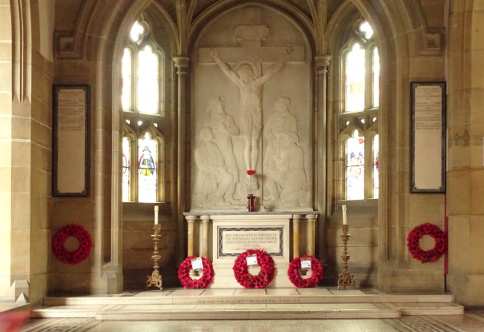
They shall grow not old,
as we that are left grow old;
age shall not weary them,
nor the years condemn.
At the going down of the sun and in the morning, we will remember them.
We will remember them.
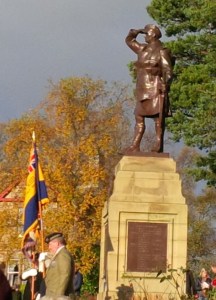
They shall grow not old,
as we that are left grow old;
age shall not weary them,
nor the years condemn.
At the going down of the sun and in the morning, we will remember them.
We will remember them.

Not to the work of sordid selfish saving
Of our own souls to dwell with Him on high,
But to the soldier’s splendid selfless braving,
Eager to fight for Righteousness and die.
Peace does not mean the end of all our striving,
Joy does not mean the drying of our tears;
Peace is the power that comes to souls arriving
Up to the light where God Himself appears.
Joy is the wine that God is ever pouring
Into the hearts of those who strive with Him,
Light’ning their eyes to vision and adoring,
Strength’ning their arms to warfare glad and grim.
So would I live and not in idle resting,
Stupid as swine that wallow in the mire;
Fain would I fight, and be for ever breasting
Danger and death for ever under fire.
Bread of Thy Body give me for my fighting,
Give me to drink Thy Sacred Blood for wine,
While there are wrongs that need me for the righting,
While there is warfare splendid and divine.
Give me, for light, the sunshine of Thy sorrow,
Give me, for shelter, shadow of Thy Cross;
Give me to share the glory of Thy morrow,
Gone from my heart the bitterness of Loss.
Part of “The Suffering God” by Geoffrey Anketell Studdert Kennedy (otherwise known as Woodbine Willie)
The weather has definitely announced the start of Autumn in the last week or so, and we are now entering the last few weeks of the Church year, with the Season of Remembrance. There are three key days in this season, each one quite special but with a different focus.
On All Saints’ day this Sunday (1st November) we remember all those Christian people who have gone before us and shaped our understanding of what it means to live a Christian life and our approach to faith, worship and prayer. As part of that we should remember all those who have influenced our own journeys’ of faith, those who have guided and taught us, those who have nurtured us and those who have encouraged us when we were struggling with grief, doubt and disappointment. Our Services in St Finnbarr’s, St Andrew’s and St Columba’s will focus on the Saints this Sunday and we will have the opportunity to hum some well known tunes and we celebrate the Saints.
Grant us your light, O Lord,
so that the darkness of our hearts may wholly pass away,
and we may come at last to the light of Christ.
For Christ is the morning star,
who when the night of this world is passed,
brings to His saints the promised light of life,
and opens to them everlasting day. Amen.
On All Souls’ day, this Monday (2nd November) we remember those that we love but see no more, our parents and grand-parents, siblings and other family members, our friends and all those that we have held dear. As we remember, we give thanks for all that they have meant to us and for the specific ways that they have touched our lives and our lives have been formed and enriched by them. Traditionally a list of those that we love but see no more is read at a special Requiem on All Souls day and Simon and I will be reading lists of names at services in Tain and Brora on Monday. We have lists from previous years for all the Churches in the DLBTT group, but in you wish to add any additional names please let me know as soon as possible.
God our redeemer,
you know the secrets of our hearts.
You bear our pain and our anger.
You bear our tears and our loneliness.
You bear the questions that have no answers.
Comfort us and come close to us
whether or not we call you by name.
And in the darkest places give us hope and love. Amen.
On Remembrance Day (11th November) and/or Remembrance Sunday (this year on 8th November) we remember and give thanks for the lives of those who have died in the service of their country and all those who have served their county and suffered life-changing effects as a result. Usually, there are well attended Services at War Memorials up and down the country, but this year such gatherings will not be taking place in that form, but we can still mark this day. We will hold Acts of Remembrance in St Finnbarr’s, St Andrew’s and St Columba’s as part of our usual Sunday Services. Perhaps we should also light candles in our windows as we reflect on all that war means and why we need to work to reduce conflict so that war will not claim the lives of so many in future.
Almighty God,
from whom all thoughts of truth and peace proceed:
kindle, we pray, in the hearts of all, the true love of peace
and guide with your pure and peaceable wisdom
those who take counsel for the nations of the earth
that in tranquillity your kingdom may go forward,
till the earth is filled with the knowledge of your love;
through Jesus Christ your Son our Lord. Amen.
Blessings
James
The current Sunday evening drama on BBC1 called “Us” is about a couple who have arrived at that stage in life when their son is about to go to University and they are wondering about their future together. Douglas (the husband) has organised a ‘Grand Tour’ of Europe for the three of them … and then Connie (his wife) tells him that she wants to leave him. Douglas plans every aspect of what he does with meticulous precision and Connie leaving is definitely not part of his plan.
It set me reflecting on just how much control we have in our lives. Whatever the answer was at the beginning of the year, for most of us it has decreased in the last six months and for those who had the least control before the pandemic it has probably decreased the most.
Much of the time, what we see as our freedom to control what happens in our lives is illusory. We can, like Douglas, make plans but any plans that we make are only provisional, just ask anyone who’s tried to organise a holiday abroad this summer. Weather, illness, company failures, unemployment and so many other things can interrupt he ‘smooth running’ of our lives and throw our plans into disarray. “Us” was written and made before the pandemic, but given Douglas’s reaction to setbacks, I can only imagine how the present COVID-19 outbreak would have affected him, as his carefully laid plans crumbled before his eyes.
Not having complete control over our lives, doesn’t mean that there’s no point in having plans, just that we have to be prepared to accept that changes will likely be required. Everyone experiences twists and turns in their life, from everyday challenges to traumatic events with lasting impact, like the death of a loved one, a life-altering accident, or a serious illness. Each change affects people differently, bringing with it a unique mix of thoughts, emotions and uncertainty.
Adversities like these are sadly part of life and trying to live our lives in the illusion that we can control all aspects of our existence, only leads to pain and anxiety. However we shouldn’t make the mistake of thinking that what we do doesn’t have any effect on the lives of others. For instance my failure to take appropriate steps to limit the spread of COVID could quickly result in the spread of infection to people that I come into contact with and move from one end of the country to the other very fast. On the way, it could well have serious and lasting consequences for many people who I’ve never even met.
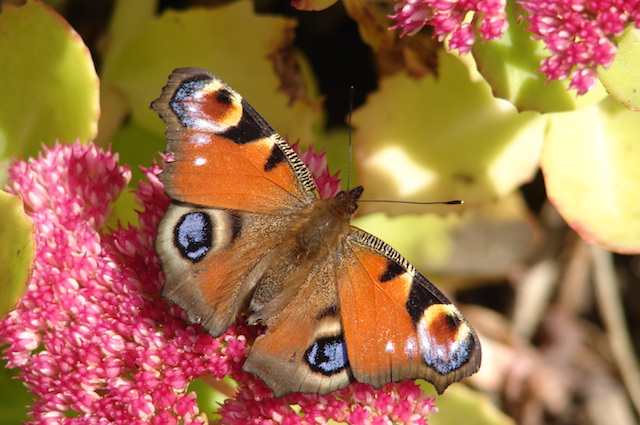
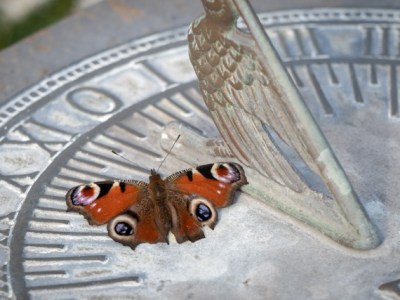
The smallest of actions can ultimately have huge consequences. This idea is sometimes known as the “butterfly effect”, after the American mathematician Edward Lorenz who suggested that the flap of a butterfly’s wings in the Amazon might ultimately cause a tornado in Texas. A bit far-fetched perhaps, but Lorenz’s illustration helped him explain why forecasting the future is so difficult.
In the Bible we meet many groups of people who face adversities of all kinds and who come through by placing their faith in a loving God. For instance, in trying to encourage the people of Israel in exile in Babylon, the prophet Isaiah writes:
“Fear not, for I am with you; be not dismayed, for I am your God; I will strengthen you, I will help you, I will uphold you with my righteous right hand.”
We may not know what lies ahead but we can all be strengthened and supported by each other and by God.
“Le Quattro Volte” is an idiosyncratic film by Michelangelo Frammartino. It lasts for an hour and a half, following cycles of life in the hills of Calabria. In four chapters the film successively chronicles a year in the life of an old man, a young goat, a tree and a batch of charcoal. There’s no dialogue, you do hear murmurs of human speech, but they’re unintelligible and there are no subtitles. There’s also the barking of a dog, the bleating of goats and clanging of their bells and the wind sighing in the branches of the gigantic pine that’s felled for a village celebration.
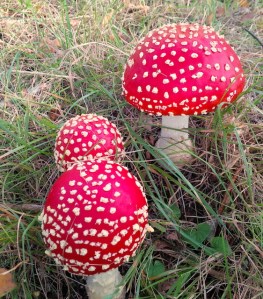
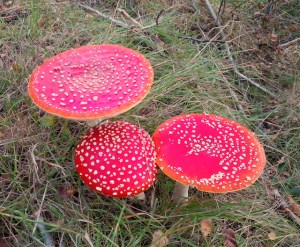
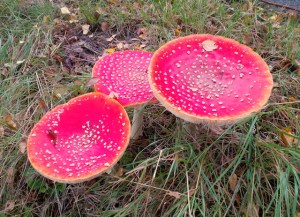
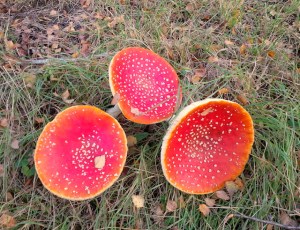
Perhaps watching such a film doesn’t sound like a particularly entertaining way to spend 90 minutes, but when I saw it in 2011, I found it captivating. In the same way I found watching a small cluster of fly agarics (Amanita muscaria) last week. They emerged, looking for all the world like iconic toadstools in a Walt Disney cartoon, but by the following day they looked more like plates, then like shallow bowls, after which they fell over and started to disintegrate.
They say that the one certainty in life is change and, as in both the film and the toadstools, change often occurs in cycles. The cycles may be over years, months, weeks or days, but there’s an inevitability to them, whatever the cycle length. Most of us find change unsettling, even when it is part of what one might call gentle cycles, as illustrated in my examples.
However over the last seven months we have had a great deal of a much more disruptive change thrust upon us. One of the more difficult aspects of change is the grief that we feel for what has been taken away. We recognise grief when someone that we love dies or suffers from a life-changing accident or disease. We may also recognise grief when we lose something that has been a familiar part of our life, or that hold precious memories for us. But we may also grieve for our way of life, the things that we are used to doing, the people that we are used to meeting or gathering with.
Grieving isn’t a well defined process with clearly delineated stages as is often written about in self-help books. Grief is individual and if there are stages, one may bounce backwards and forwards dealing with denial, isolation, anger, bargaining, depression before accommodating and accepting a ‘new normal’.
Over the past few months, I have found the cycles of nature very helpful in adapting to the changes that have happened and that may be what appealed to me about “Le Quattro Volte”. I have also found the psalms to be of great comfort, because the psalmist frequently found change and the circumstances in which he found himself troubling and God was always there at his side to comfort him.
The Lord is my shepherd, I shall not want.
He makes me lie down in green pastures;
he leads me beside still waters;
he restores my soul.
He leads me in right paths
for his name’s sake.
Even though I walk through the darkest valley,
I fear no evil;
for you are with me;
your rod and your staff—
they comfort me.
Blessings
James
I have been sent a book for review entitled “Rewilding the Church”. In it Steve Aisthorpe sees the Church as having slipped out of kilter with its head – Jesus. He uses the metaphor of the rewilding used to restore a balance between nature and its environment, to suggest the corrective that we need to get back on track. He writes: “The New Testament’s vision of Church is not a herd of people with common beliefs or shared behaviours. Rather, it is a community centred on Jesus [which] draws them together in a shared quest of Christward transformation.”
The last six months have had a profound effect on all our lives. Gone are a lot of the certainties that we’ve come to rely on. One of those certainties was that there would be services of worship, according to a regular pattern, in eight locations around Sutherland and Tain.
For much of that time, there’ve been no services and, even though there has been a resumption in Dornoch and Tain and also three church buildings open for Individual Prayer, there are a number of places where we can’t yet meet and people who for many reasons can’t be present even though they would like to be.
We’ve all spent much of more time on our own with God these last few months and the gatherings online, the broadcast services and now the hygienic, distanced and masked services aren’t the same as the familiar experiences we were used to and it can all seem very strange indeed.
Increasingly in our society, there are people who used to go to church who now describe themselves as Christians who do not go to church. What does our experience of the last six months say about such a position? Have we not all been Christians who do not go to church? Overwhelmingly the people that I talk to in our congregations speak about missing the fellowship of worshipping and praying together. They’ve come to realise just how important community is in being followers of Jesus. We seem to be very keen to get back to meeting up for prayer and praise, rather than only engaging with God on our own. Far from being the end of the Church, lockdown seems to have made us all appreciate the time that we spend together as the Body of Christ, the Community of Faith.
The balance between being with God on our own and being together with God is described by Dietrich Bonhoeffer, always the one to express things neatly in just a few words: “Let him [or her] who cannot be alone beware of community … Let him [or her] who is not in community beware of being alone.”
Steve Aisthorpe concludes that “Rewilding the Church is not about implementing our best ideas with unusual passion; it requires stopping or slowing down, a conscious setting aside of preconceptions and a determination to discern what God is doing and our role in that.” Now is probably an ideal time to do just that.
Blessings
James

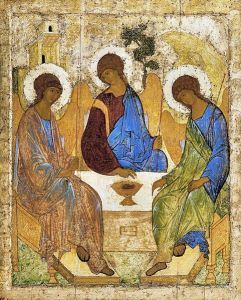
Churches across the land are struggling with the question: “should we open or should we not?” One line of argument is: “You don’t need special words, a special place, special objects or special people to talk to God. God loves you and is listening. So just do it. The church buildings may be shut, but the ears of Heaven aren’t.” All of that is of course true, however, the spirituality that we’ve inherited in the Episcopal Tradition isn’t simply about an individual, personal, relationship with God. Our tradition is centred around a Community relationship with God and with each other, culminating in our sharing in the Eucharist together; entering into the Community of the Trinity which lies at the very heart of our faith.
Much of St Paul’s writing is to and about Community. For Paul Salvation is the work of God that brings people into a right relationship with both God and with one another. In brief, we’re being saved from the broken relationships with God and each other that can and do unleash the forces of sin and death in the world.
At times, Christians have sometimes reduced Paul’s message of salvation to something like: “Believe in Jesus, have a personal relationship with Him and you’ll go to heaven when you die.” This is true, as far as it goes, but … in his letters, Paul never stops talking about relationships among people and between people and the rest of God’s creation, as he wrote in his letter to the Colossians:
“Bear with one another and, if anyone has a complaint against another, forgive each other; just as the Lord has forgiven you, so you also must forgive. Above all, clothe yourselves with love, which binds everything together in perfect harmony. And let the peace of Christ rule in your hearts, to which indeed you were called in the one body.” Col 3:13-15
Paul emphasises the multiplicity of gifts in the Body of Christ, the Community of Faith, and that one part of a body can’t operate alone but all parts need to work harmoniously together, no part being superior to any other.
“Now there are varieties of gifts, but the same Spirit; and there are varieties of services, but the same Lord; and there are varieties of activities, but it is the same God who activates all of them in everyone. … For just as the body is one and has many members, and all the members of the body, though many, are one body, so it is with Christ. For in the one Spirit we were all baptized into one body—Jews or Greeks, slaves or free—and we were all made to drink of one Spirit.” 1 Cor 12
A couple of weeks back, St Finnbarr’s and St Andrew’s started opening for what the Scottish Government calls ‘Individual Prayer’, however our opening shouldn’t be viewed through the lens of ‘privatised prayer’. In order to be able to open, the members of those two Communities have had to work hard together to put in place plans and prepare the buildings, so that those using them can do so safely. People from within and beyond our Church Communities have appreciated our hospitality in opening them and several people have felt able to take their first steps outside their homes in four months, into the sanctuary of well prepared spaces, where prayer has been offered by the Community for well over a century.
In the coming weeks, some of our congregations will be able to meet again for services of worship and for that we should give thanks, but there’s still much to do to create the environment needed. So as we look towards opening buildings for worship, we do so as a Community working together. The challenge is, as it was in opening for Individual Prayer, to provide a prayerful, safe environment. Unless we can achieve that we’ll remain closed. Finding God in Prayer and Worship is surely more likely at home, than in an environment that looks like a combination of a crime scene, a shop and a hospital.
What we need to keep uppermost in our minds, is that all that we do should be grounded in prayer and guided by the desire to provide spaces and communities where people can be present to God and God to them and where people feel able to pray and worship together. In this, we all have our part to play.
Blessings
James
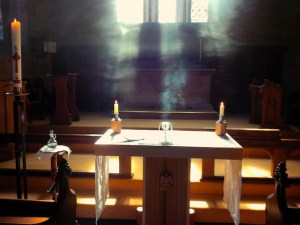
God of heaven and earth,
in these times of isolation, apart from loved ones
distant from friends, away from neighbours
we thank you that there is nothing in all of creation,
that is able to separate us from your love.
And may that love which never fails continue to be shared
through the kindness of strangers looking out for each other,
for neighbours near and far all recognising our shared vulnerability, grateful for every breath, and desiring a full and healthy life for all.
Enfold all your children in your loving embrace.
We ask this through Jesus Christ your Son, our Lord. Amen.
A Christian Community gathering for worship, prayer and fellowship is as old as Christianity itself and something we all cherish and value. The Corona Virus pandemic has had many effects on our lives and the way we interact with each other. We’ve yet to see the full implications of the direct effects in relation to health and the indirect effects in relation to different groups in our society. One thing is certain, that how we meet and how we use our Church buildings and other places of worship needs to be carefully reviewed in order to ensure that we don’t put one another at risk.
Our Liturgies quote Matthew’s Gospel (22:37-40) in saying
“Our Lord Jesus Christ said: The first commandment is this: ‘Hear, O Israel, the Lord our God is the only Lord. You shall love the Lord your God with all your heart, with all your soul, with all your mind and with all Your strength.’ The second is this: “Love your neighbour as yourself.“
An oft quoted Covid prayer draws on this when it says: “We are not people who protect our own safety: we are people who protect our neighbours’ safety.” However, as our Governments have made clear, an important part of how we protect our neighbour, is through our own behaviour. As our Bishops also pointed out in relation to closing our churches, “we do this not out of fear but out of love”.
Many of the precautions that we need to take as a result of the Covid-19 Pandemic, are ones that we should have been taking in the past to protect each other from Seasonal Flu, the Common Cold and the other respiratory infections that can have such a devastating effect on the elderly, the vulnerable and those in poor health.
What we need to keep uppermost in our minds, is that all that we do must be grounded in prayer and guided by the desire to provide spaces and communities where people can be present to God and God to them, where people feel able to pray and where we can all learn to pray that little bit better.
As part of our love of neighbour and love of God, each one of us has a duty to:
God give me the serenity
to accept the things I cannot change,
the courage to change the things I can
and the wisdom to know the difference.
Living one day at a time, enjoying one moment at a time,
Taking, as Jesus did, this sinful world as it is, not as I would have it be,
Trusting that You will make all things right. Amen.
“Awe came upon everyone, because many wonders and signs were being done by the apostles. All who believed were together and had all things in common; they would sell their possessions and goods and distribute the proceeds to all, as any had need. Day by day, as they spent much time together in the temple, they broke bread at home and ate their food with glad and generous hearts, praising God and having the goodwill of all the people. And day by day the Lord added to their number those who were being saved.” (Acts 2:45-47)
As Christian Churches Clergy, Vestries and people we have a responsibility to people who meet in our buildings and join us in the other places where we meet. That responsibility is a core part of our Mission and Ministry and times of crisis provide opportunities for a reconnection with our wider communities.
In our Churches we have a duty to make it as easy as possible for individuals (Church members or not) to exercise their duty to protect one another, we should:
Keep us, good Lord, under the shadow of your mercy
in times of uncertainty and distress.
Sustain and support the anxious and fearful,
and lift up all who are brought low;
that we may rejoice in your comfort
knowing that nothing can separate us
from your love in Christ Jesus our Lord. Amen.
The other day I was sorting through some booklets about a range of subjects and two particularly attracted my attention. The titles of these two were: ‘From Loneliness to Solitude’ and ‘The Gift of Joy’; seemingly quite unrelated, until I started reading them.
For the last thirteen weeks things have been rather different for all of us. We can’t meet up in the way that we could and can’t meet others in work or social activities in the usual way. I know that lots of us have found that really hard. In some sense we feel we’re no longer the people that we were. Sadly, the loneliness that’s long been a problem in our society has also increased markedly with ‘lock-down’ and ‘social distancing’.
The author of ‘From Loneliness to Solitude’, Roland Walls, was Priest-in-Charge of the Rosslyn Chapel in the 1960s and subsequently went on to found a Monastic Community in an old miners welfare hall in Roslin, just around the corner. He writes in 1976:
“Loneliness is the biggest, most extensive personal problem of our cities and while ‘telly’ and radio help to keep you in touch with the world, the daily screenful of busy, exiting, active people is in such strange contrast to the armchair, the biscuit on the plate and a mug full of coffee; it makes it worse to be alone in view of so much happening.”
If he were writing today, he would doubtless have included social media and all the other digital ‘communication’ tools that serve to keep our daily screens full. He goes on to say that we’re lonely because we’re made for ‘infinite possibility’ and at times we experience the painfulness of emptiness, because there’s a void ‘aching to be filled’. Whatever we may think and whatever we may try, that void can only be filled by God. It’s a God-shaped hole if you like. However the response of most of us to that void is to try to fill it up with busyness, but that doesn’t work, it just covers it up, but it’s still there just as empty as ever.
At this point, we shift our attention to ‘The Gift of Joy’. Curtis Almquist, its author, tells us that “Joy is something of a rare commodity” and the primary reason, he says, is that “Joy takes time”. He talks about an old ‘monastic insight’ that to find joy you need to do one thing at a time. When you’re walking, just walk; when looking, just look; when listening, just listen. Whatever you’re doing, having a cuppa, watering the plants, stroking the cat, just do that and savour it. Quite the reverse of busyness.
Be present in the current moment, don’t dwell on what has or has not happened in the past or worry about what’s to come, just savour the smell of the flower, or the sound the birdsong, or the taste of your lunch. Whatever happens next can wait whilst you enjoy the present moment. Joy also requires us to accept what is and not grieve for what is not. To experience joy we have to accept how little of what happens in our lives we have real control over and be comfortable with that.
That lack of control is glaringly apparent to anyone who had any plans prior to March this year. As one version of the Serenity Prayer goes:
God, give me grace to accept with serenity
the things that cannot be changed,
Courage to change the things which should be changed,
and the Wisdom to distinguish the one from the other.
Living one day at a time, enjoying one moment at a time,
Taking, as Jesus did, this sinful world as it is, not as I would have it be,
Trusting that You will make all things right. Amen.
Blessings
James
 Scottish Episcopal Church - Dornoch, Lairg, Brora, Tain & Tongue