Lent Study Groups 2021

In our Lent Study this year we will look at Lament and the Psalms.

A quick search in dictionaries for a definition of lament reveals that it’s: to express sorrow, regret or unhappiness about something, or it’s a formal expression of sorrow or mourning. But Biblical Lament is actually much more than this. It’s not just a formal expression of sorrow.
When we experience loss, grief is inevitable. In St. Augustine’s terms, we’re each a collection of loves that bind us to people, places, and practices. Whenever these bonds of love are severed, we grieve. Grief isn’t a choice; we’re subject to it whether we like it or not.

Lament, by contrast, is the exercise of spiritual agency in the face of loss. As a spiritual practice lament seeks to incorporate the experience of loss into the broader story of our lives before God. Where grief threatens to shatter the coherence of our story, lament re-opens our hearts to the possibility of a recovered sense of wholeness. Lament doesn’t internalise our pain, sorrow or loss, but helps us to call out to God. So it’s not just an expression of deep emotion resulting from loss, it calls to God for action and ends in praise to God. To lament is to join a long line of those who have wrestled with God in the midst of their sorrow.

We find lament throughout the Old Testament. Most clearly we find lament in the Psalms and these are referred to extensively throughout the New Testament. The Psalms are the Prayer Book of the Bible. As such they encompass the full range of human experiences—and in particular make room for experiences of suffering through Psalms of Lament.

The sessions will be centred around the following headings:

  1. The Need for Lament
  2. The Power of Lament
  3. Lament and the Suffering of Others
  4. Collective Grief
  5. Lament as an Act of Love

There will be a group meeting on Zoom
Wednesday Evenings from 7:30-9:00pm
(24th February and 3rd, 10th, 17th and 24th March)

Zoom details have been circulated by email

The material will also be available on paper, by email and on the Web Site at:

https://episcopaldornochtain.org/study-group-resources/

For more details or to receive paper or emailed copies of the materials speak to James (contact details).

Statement from the Primus

Following media reports that church leaders have threatened legal action if the Scottish Government does not reverse its recent decision to close places of worship during the current phase of the Covid pandemic, the Primus would like to make clear that the Scottish Episcopal Church is not part of the group seeking change.

Having worked closely with the Scottish Government during the pandemic, alongside the Church of Scotland and many other denominations in a bid to protect the vulnerable by stemming the spread of the virus, I would like to reiterate that we have no part in the move to take legal action against the Government,

Most Rev Mark Strange16 January at 19:07

said the Most Rev Mark Strange, Bishop of Moray, Ross & Caithness and Primus of the SEC.

A group of 500 church leaders – 200 from Scotland and 300 from elsewhere in the UK – have written to the First Minister calling for her to lift the ban on communal worship. They have given the Scottish Government until 5pm on Thursday (21st January) to respond, and the group has said it will seek judicial review if the closure of churches is not dropped from lockdown restrictions.

No SEC churches have signed the letter.

The Church of Scotland has also distanced itself from the call for legal action.

Christian Belief and Everyday Habit

Mike Hull

Can we Christians align our beliefs and everyday habits in the twenty-first century? Christians have been formulating ‘rules of life’ at least as far back as the fourth century. The sixth-century Rule of St Benedict is probably the most widely known Christian rule of life, but a lot has changed since then! Is there scope for a Christian rule of life in the twenty- first century?

Advances in technology and communication, particularly social media, enrich our present-day lives whilst at the same time driving us to distraction. A cacophony of voices vies for our attention: how do we hear the Gospel above them all?

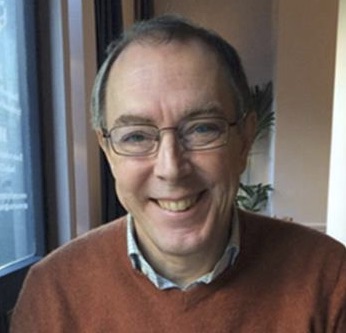
The Revd Dr Michael Hull, SEI’s Director of Studies (above), will facilitate an online discussion of issues about belief and habit, faith and practice, with insights from Justin Whitmel Earley’s “The Common Rule: Habits of Purpose for an Age of Distraction” (Downers Grove, IL: IVP Books, 2019) available via: https://www.thecommonrule.org

The discussion will be held on Wednesday 20 January 2021 from 7pm to 8pm and delivered via Zoom. The link and password will be emailed on the morning of Wednesday 20 January. To register, please visit this link.

Dressember 2020

We have spent this year living in a state of uncertainty, fear and for some people virtual “imprisonment”. For most this was an unusual situation – but sadly for many in our world, imprisonment is their daily reality. A conservative estimate is that there are around 40 million slaves in the world today and the current pandemic has seen those numbers grow day by day.

Our call as Christians is, as the Prophet Isaiah put it, “proclaim liberty to captives” and we are reminded that whatever we do to the lowest and the least of God’s children, we do to Christ Himself.

In 1943, whilst imprisoned at Tegel penitentiary, Dietrich Bonhoeffer wrote an essay entitled “After Ten Years,” reflecting on his beliefs and experiences in the ten years since Hitler’s meteoric rise, in it he wrote the following appeal:

“We are not Christ, but if we want to be Christians, we must have some share in Christ’s large-heartedness by acting with responsibility and in freedom when the hour of danger comes, and by showing real sympathy that springs, not from fear, but from the liberating and redeeming love of Christ for all who suffer.”

Dietrich Bonhoeffer “After Ten Years”

The “freedom” Bonhoeffer speaks of is the freedom we have in the God who has liberated us from our slavery to sin. “For I received from the Lord what I hand on to you.”

Every year a group of students at the University of Aberdeen join a global movement started by a student called Blythe Hill in California in 2013. She committed herself to wearing a dress every day for the month of December and it slowly snowballed from there and became an international campaign against modern day slavery and human trafficking.

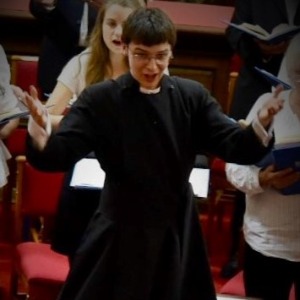
The Aberdream Team, as the Aberdeen students are called, including Jamie Campbell, our long-time organist in Tain, are mostly members of a society called JustLove which is dedicated to calling Christians to social justice.

The rules for Dressember are simple – wear a dress (or in Jamie’s case a cassock) every day the whole of December and use social media to educate themselves and others about the slavery and trafficking that affect so many people today. This is not only something that happens far away, but it is going on in every neighbourhood in our country – even in our own communities.

The Aberdream Team target for this year is $6300 (USD because it’s an American fund) – which is the cost of liberating just one person from slavery. The Dressember Foundation acts as a fund that then distributes to 12 approved charities who meet a very strict set of criteria and deal with very specific parts of the freedom process. This goes from the initial multi-agency operation involved in getting the individual out of a trafficking situation, to helping with clothing and accommodation to paying for therapy and other medical support.

To see a breakdown of this, or to meet the Aberdream Team, or to read more about the horrific reality, or to donate you can visit their website at: https://dressember2020.funraise.org/team/aberdream-team
Carol Service – 20th Dec 2020

Christmas Carols

and Lessons

SUNDAY 20th December

7:00 pm

On Zoom
(Zoom details will be circulated by email)

Join in the singing of old favourites
from the comfort of your armchair

you will each have to supply your own
seasonal refreshments afterwards

all are WELCOME

Advent Study Groups 2020

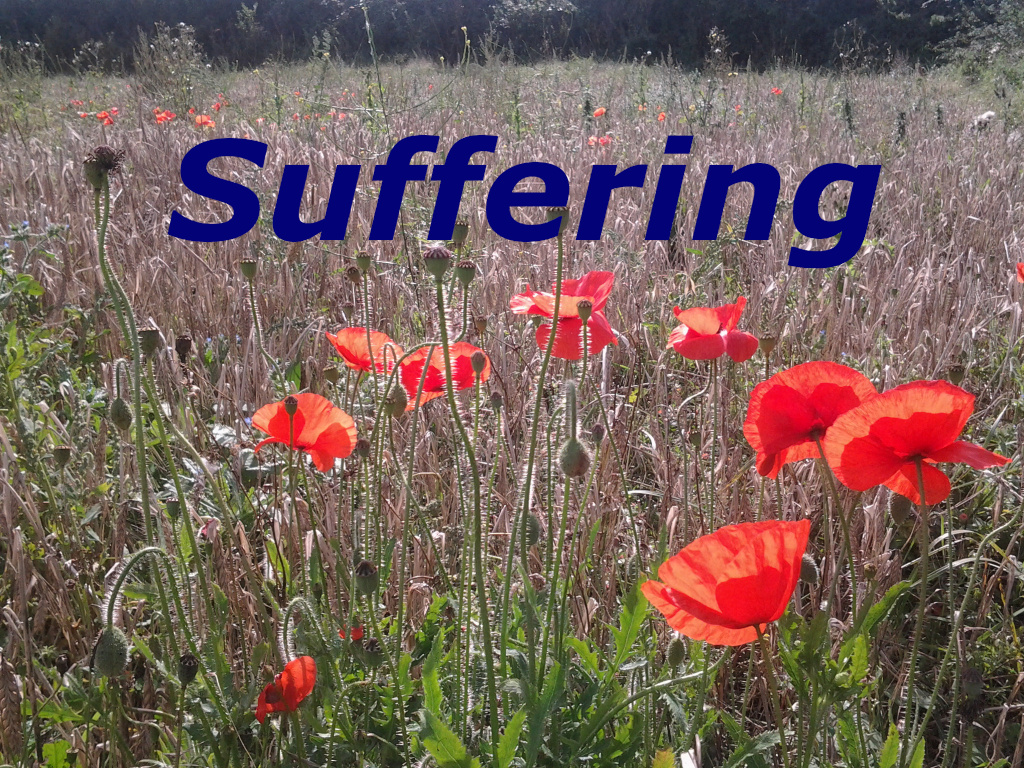
In our Advent Study this year we will look at suffering.


“The more I think about the human suffering in our world and my desire to offer a healing response, the more I realize how crucial it is not to allow myself to become paralysed by feelings of helplessness and guilt. More important than ever is to be very faithful to my vocation to do well the few things I am called to do and hold on to the joy and peace they bring me. I must resist the temptation to let the forces of darkness pull me into despair and make me one more of their many victims.”

“Suffering invites us to place our hurts in larger hands. In Christ we see God suffering – for us. And calling us to share in God’s suffering love for a hurting world. The small and even overpowering pains of our lives are intimately connected with the greater pains of Christ. Our daily sorrows are anchored in a greater sorrow and therefore a larger hope.”

Henri Nouwen

The sessions will be centred around the following headings:

  1. The Suffering of Job
  2. The Suffering of Christ
  3. Our own Suffering

There will be two groups meeting on Zoom
Wednesday Afternoons at 2pm and
Thursday Evenings at 7pm
(2nd/3rd, 9th/10th and 16th/17th December)

The material will also be available on paper and on the Web Site at:

https://episcopaldornochtain.org/study-group-resources/

For more details or to receive paper copies of the materials speak to James (contact details)..

Christmas Foodbank Collection – 3rd December

Christmas
Foodbank Collection

Thursday 3rd December 2020

St Finnbarr’s Church

10:30am-12:00pm

There will be a Christmas Foodbank collection for the Highland Foodbank outside in St Finnbarr’s grounds.

Every day people in the Highlands are struggling to put food on the table. Even under normal circumstances people struggle as a result of a variety of causes from redundancy to receiving an unexpected bill on a low income. This year however COVID has made the situation much worse for many people.

The Highland Foodbank is part of the work of Blythswood Care and provides a minimum of three days emergency food and support to local adults and children in crisis.

Below is a list of items that they are currently running low on, including essential non-food items such as toiletries and hygiene products, helping people in crisis to maintain dignity and feel human again.

  • Tins of ham/corned beef
  • Tins of potatoes
  • Tins of mince/stew
  • Sugar
  • Small packets of washing powder/gel
  • Small bottles of washing up liquid
  • Male/female deodorant
  • Shampoo
  • Shaving foam/razors
  • Toothpaste/individually wrapped brushes
  • Shower gel

They currently have an overabundance of

  • PASTA,
  • SOUP AND
  • ALL FORMS OF TINNED BEANS

… so these items are best avoided.

Given the time of year, they are very keen to receive special seasonal treats for all the family.