Gethsemane

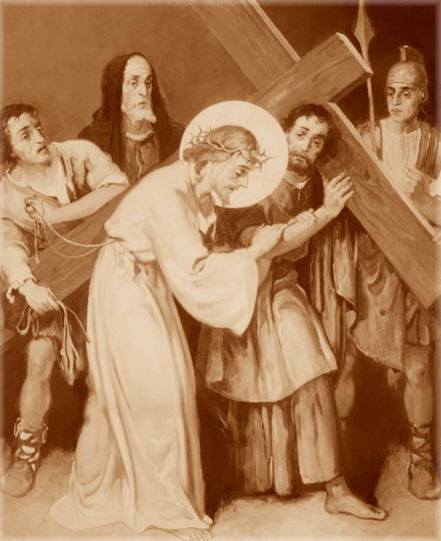
Then Jesus went with them to a place called Gethsemane; and he said to his disciples, ‘Sit here while I go over there and pray.’  … Then he came to the disciples and found them sleeping; and he said to Peter, ‘So, could you not stay awake with me one hour? Stay awake and pray that you may not come into the time of trial; the spirit indeed is willing, but the flesh is weak.” (Matthew 26:36, 40-41)


Watch and Wait and Pray

The Watch in the Garden

Today is Maundy Thursday, when Jesus met with His Disciples and shared a Last Supper with them.  Normally on Maundy Thursday, we meet for a very moving service in one of our Churches and we do a number of things that commemorate that last evening together:

Washing the Disciples’ Feet:

During supper Jesus, knowing that the Father had given all things into his hands, and that he had come from God and was going to God, got up from the table, took off his outer robe, and tied a towel around himself. Then he poured water into a basin and began to wash the disciples’ feet and to wipe them with the towel that was tied around him.” (John 13:3-5)

Sharing the Last Supper:

While they were eating, Jesus took a loaf of bread, and after blessing it he broke it, gave it to the disciples, and said, ‘Take, eat; this is my body.’ Then he took a cup, and after giving thanks he gave it to them, saying, ‘Drink from it, all of you; for this is my blood of the covenant, which is poured out for many for the forgiveness of sins.” (Matthew 26:26-28)

Watching, Waiting and Praying at Gethsemane:

Then Jesus went with them to a place called Gethsemane; and he said to his disciples, ‘Sit here while I go over there and pray.’  … Then he came to the disciples and found them sleeping; and he said to Peter, ‘So, could you not stay awake with me one hour? Stay awake and pray that you may not come into the time of trial; the spirit indeed is willing, but the flesh is weak.” (Matthew 26:36, 40-41)

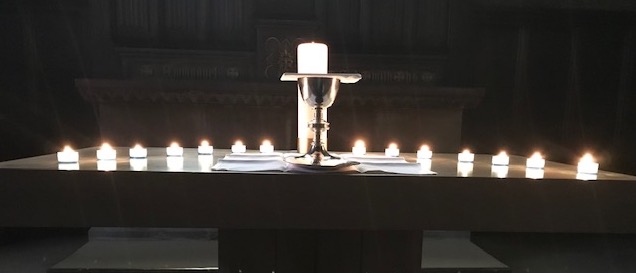
The first two of these we can only do when we can be together, but the third is something that we can all do at home – watch and wait and pray with Jesus in His anguish.  Normally some of the congregation would gather in St Andrew’s Hall and pray silently in front of the small altar on which the Sacrament is placed, surrounded by greenery and candles.

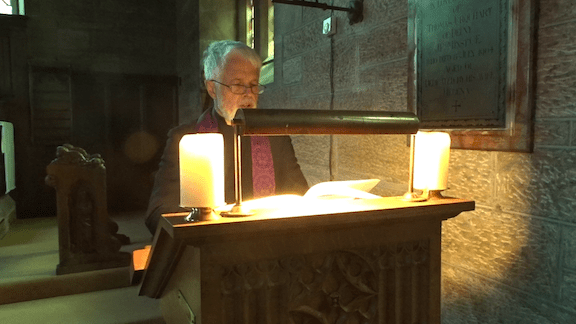
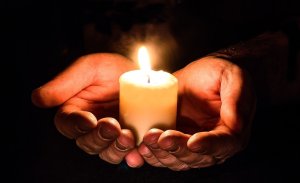
Tonight, Simon and I will both celebrate the Last Supper alone in one of our Churches, “with the people on our hearts”, but at 9pm, we invite each of you to join us sitting in a suitably prepared space with greenery and candles, to pray quietly for one hour.  Praying for our families, our friends, our neighbours, our governments, those who work in the NHS and in other essential services and particularly those in our land and far away who are anxious, unwell or grieving. Pray also for yourselves.

Adapting to self-isolation

Advice from Trisha Waugh, a retired probation officer:

Back in NZ when I was a Probation Officer, I was a Home Detention specialist – managing offenders ‘tagged’ to stay at home, (up to 12 months) who would otherwise have received a prison sentence. I managed a wide variety of people, but they all went through distinct stages of their sentence, that I monitored closely.

Since we are all now effectively on Home Detention – I thought it worth sharing these stages so you are aware of the very real impact this sort of confinement will have – I know I’m feeling it & have a genuine appreciation for what my ‘offenders’ went through.

  • First two weeks – bit of a novelty, settling in & doing lots of odd jobs round the house – becoming aware of the domestic relationship dynamic (at least other household members were able to come & go) – getting used to the ‘territory’ restrictions – some were accepting – others really resisted & argued & pounded the ‘fence line’.
  • Week Three (this is key! & happened pretty much like clockwork) – a real malaise hit (acute confinement depression) – this was the week I really had to watch as people would all cope with it differently- a real despair & feeling like a loss of their entire world – defeat would set in.
  • Week Four onwards (this is also very key!) Adapting – The penny would drop about all the new opportunities that presented themselves from this new way of living – I saw creative minds start mapping out a more productive future- studying – business ideas – self improvement- relationship challenges – finally addressing the internal issues that got them where they were etc. etc. This was when the ‘good work’ started & their nearest & dearest really started to notice significant change.

The planet has been given a ‘wake up call’ – we’ve all got the opportunity to dig deep & examine the issues that got us here & how we can expand more as individuals- lets all make it count.

Just watch out for Week Three people, & look after & support one another.

Strew His Way on Palm Sunday

Image may contain: plant

This idea comes from the Missionaries of the Holy Spirit in Oregon.

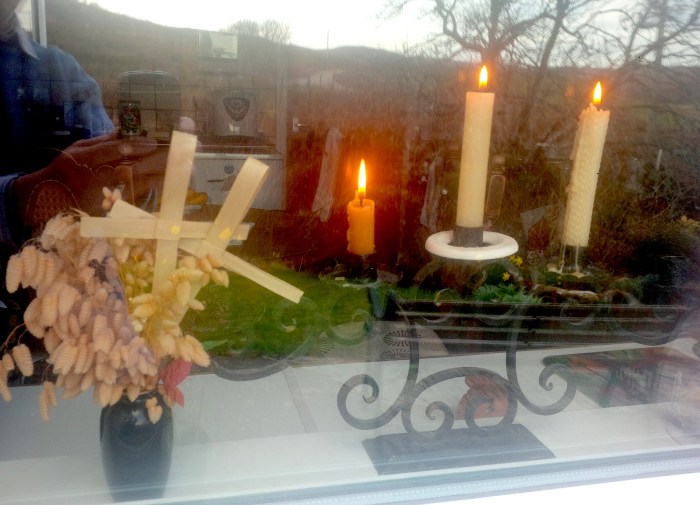
What if everyone on Sunday April 5 in the morning, puts a branch on the door of their house or on the window, to celebrate Palm Sunday.

It could be any green branch you can get. This would help, despite the social distancing, to be connected as we enter into the Holiest of Weeks.

We may be physically isolated, but not separated. We are united as the members of the body of Christ. We are the Church.

Light a Candle on Sundays

Scottish Christians* are encouraged to light a candle and place it in their window at 7pm** each Sunday in response to the Covid-19 pandemic.

We are urged to “join in prayerful solidarity with this witness”, describing the candle as “a visible symbol of the light of life, Jesus Christ, the source of hope in this life.

The following prayer can be used when lighting the candle:

For all that is good in life, thank you,
For the love of family and friends, thank you,
For the kindness of good neighbour and Samaritan stranger, thank you.

May those who are vulnerable, hungry or homeless, experience support,
May those who are sick, know healing,
May those who are anxious or bereaved, sense comfort.

Bless and guide political leaders and decision-makers, with wisdom,
Bless and guide health workers and key workers, with strength and well-being,
Bless and guide each one of us, as we adapt to a new way of living.

And may the light shining from our windows,
across road and wynd, glen and ben, kyle and isle,
be reflected in our hearts and hands and hopes.

Through Jesus Christ our Lord, Amen.

* These include the Scottish Episcopal Church, the Roman Catholic Church, the Church of Scotland, the United Free Church, the United Reformed Church, the Baptist Union of Scotland, the Methodist Church, the Society of Friends (Quakers), Congregational Federation in Scotland, the Salvation Army, the Church of the Nazarene, and Redeemed Christian Church of God.

** Please take all necessary fire precautions when using a lit candle. Ensure you remain with the lit candle at all times, and do not leave it to burn if you leave the room. Ensure there are no fabrics or materials such as curtains near the candle.

With the people on his heart

During this time of crisis, Simon and James are separately celebrating the Eucharist each week, each “standing before God with the people on his heart“.  It’s difficult for both us and you not being able to share the Eucharist together.  However we should be clear as to role of the priest in the Eucharist as (in some sense) representing Christ to the people, and also as representing the people to God (“standing before God with the people on his/her heart“).

No priest does this because of inherent goodness or other qualities they possess or because of any dignity or status.  Priests who preside at the Eucharist do so in the full knowledge of their own unworthiness and as participants in the sinfulness of the world. In the Liturgy, the priest represents the incarnate Christ in His identification with the people, not as someone standing over them, but as belonging to them, and they to him/her.

Michael Ramsey, who was Archbishop of Canterbury from 1961-1974, wrote in his book “The Christian Priest Today“, that “Being with God with the people on your heart is the meaning of the daily office, of the Eucharist and of every part of your prayer and service of people.”  Sound advice, which is why the book, first published in 1972, is still on the recommended reading list of those in training for ministry in the Church.

As we celebrate the sacrifice of our Lord and Saviour in this ‘socially distanced’ way, it’s instructive to read the rubrics in the service for “Communion of the sick” in the Scottish Prayer Book, dealing with the situation where someone is unable to “receive the Sacrament with his mouth“:

“If a man, either by reason of extremity of sickness, or for want of warning in due time to the Priest, or by any other just impediment, do not receive the Sacrament of Christ’s Body and Blood: the Priest shall instruct him that if he do truly repent him of his sins, and stedfastly believe that Jesus Christ hath suffered death upon the cross for him, and shed his Blood for his redemption, earnestly remembering the benefits he hath thereby, and giving him hearty thanks therefor; he doth eat and drink the Body and Bread of our Saviour Christ profitably to his soul’s health, although he do not receive the Sacrament with his mouth.”

Rubrics in Communion of the sick” in the Scottish Prayer Book 1929.

Blessings
James