Scarves and Cards

On Saturday Carol took the charity stall outside the Tain Service Point and sold Scarves and Cards. The cards were donated and the scarves were lovingly knitted by Renata who until her death in 2020 was a member of St Andrew’s congregation.

Having been homeless herself at one time, Renata was very keen to alleviate homelessness in others and so the money raised will go to assist in that cause.

If anyone didn’t get the opportunity to buy on Saturday, both cards and scarves are available in St Andrew’s on Sunday mornings.

Well done Carol and thanks to everyone who contributed.

Introduction to the Season of Creation

The Season

The Season of Creation is a time to renew our relationship with our Creator and all creation through celebration, conversation, and commitment together. During the Season of Creation, we join our sisters and brothers in the ecumenical family in prayer and action for our common home.

Ecumenical Patriarch of the Orthodox Churches, Dimitrios I declared 1st September as a day of prayer for creation for the Orthodox in 1989. The Orthodox church year starts on that day with a commemoration of how God created the world. On 4th October, Roman Catholics and other churches from the Western traditions commemorate Francis of Assisi, known to many as the author of the Canticle of the Creatures. The beginning and the end date of Season of Creation are therefore linked with the concern for creation in the Eastern and the Western traditions respectively.

Since then Christians worldwide have progressively embraced the season as part of their annual calendar. Pope Francis made the Roman Catholic Church’s adoption of the season official in 2015 and in 2020 he said:

This is the season for letting our prayer be inspired anew by closeness to nature…to reflect on our lifestyles…for undertaking prophetic actions…directing the planet towards life, not death.”

Pope Francis

This Season is now observed in most of the mainline denominations worldwide, including several Provinces of the Anglican Communion, and forms a focus for Christian reflection on the environment. Over the years, it has evolved to include justice for the poor as well as justice for the environment and in fact there is a close relationship between these ‘two cries of St Francis.’

In the Episcopal Church

In the SEC, the Faith and Order Board and College of Bishops have now approved the introduction of a Season of Creation to our liturgical calendar, running from the first Sunday of September for four weeks, concluding with Thanksgiving for Harvest on the fifth Sunday.

This reflects the commitment of the Scottish Episcopal Church to responding to the global environmental and climate crisis, which has drawn attention to what has perhaps become a neglected aspect of our faith: that God created the world, that it is good, and that we, as human beings created in God’s image, have a particular responsibility for the care of God’s creation. It is right that this be reflected in our worship.

Introduction on Zoom

The Liturgy Committee will be offering an introduction to the recently published experimental liturgies for the Season of Creation (https://www.scotland.anglican.org/who-we-are/publications/liturgies/season-of-creation-worship-material-for-experimental-use/) and to the on-line forms for feedback.

This introduction will be offered on the morning of Friday, 13 August at 10am, and the evening of Wednesday, 18 August at 7:30pm.

It is necessary to register in advance for these events. If you would like to join either of these Zoom sessions, please email Sandra Brindley at office@anglican.org to register, and you will be supplied with the necessary log-in information.

Canticle of the Creatures

Most High, All-powerful, All-Good, Lord! 
All praise is Yours, 
all glory, all honour 
And all blessing. 

To You alone, Most High, do they belong. 
No mortal lips are worthy 
To pronounce your name. 

All praise be Yours, my Lord, through all that You have made, 
And first my lord Brother Sun, 
Who brings the day; and light you give to us through him. 
How beautiful is he, how radiant in all his splendour! 
Of You, Most High, he bears the likeness. 

All praise be Yours, my Lord, through Sister Moon and Stars; 
In the heavens You have made them, bright 
And precious and fair. 

All praise be Yours, my Lord, through Brothers Wind and Air, 
And fair and stormy, all the weather’s moods, 
By which You cherish all that You have made. 

All praise be Yours, my Lord, through Sister Water, 
So useful, lowly, 
precious, and pure. 

All praise be Yours, my Lord, through Brother Fire, 
Through whom You brighten up the night. 
How beautiful he is, how gay! 
Full of power and strength. 

All praise be Yours, my Lord, through Sister Earth, our mother, 
Who feeds us in her sovereignty and produces 
Various fruits and coloured flowers and herbs. 

All praise be Yours, my Lord, 
through those who grant pardon 
For love of You; 
through those who endure 
Sickness and trial.

Happy those who endure in peace, 
By You, Most High, 
they will be crowned. 

All praise be Yours, my Lord, 
through Sister Death-of-the-Body, 
From whose embrace 
no mortal can escape. 
Woe to those who die 
in mortal sin, 
Happy those She finds 
doing Your holy will! 
The second death can do 
no harm to them. 

Praise and bless my Lord, 
and give Him thanks, 
And serve Him with great humility. 

Amen.

Attributed to Saint Francis of Assisi

Bread for Lammas

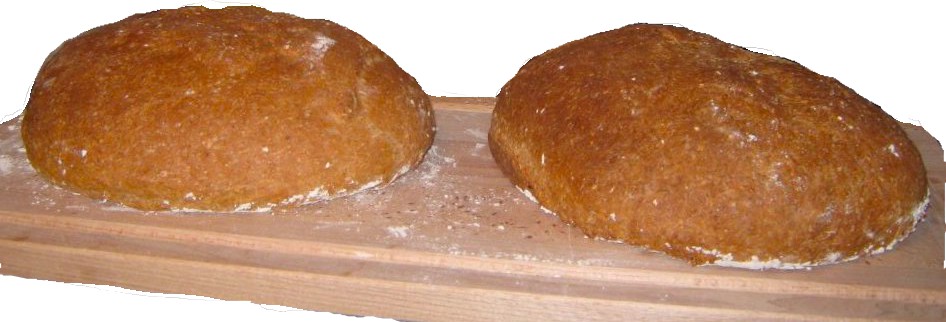
Greetings to you dear sisters and brothers in Christ. The month of August is upon us and in some quarters the very first day of this month is celebrated as Lammas Day (or Loaf Mass Day) – when a loaf baked with flour from newly harvested corn is brought into church and blessed. To be honest this tradition is not so commonplace as it used to be in the past. Lammas Day was one of the oldest points of contact between the agricultural world and the Church and the introduction of the Harvest Festival in the Victorian era has kind of replaced many of such agricultural celebrations.

A couple of weeks ago we were on holiday visiting old friends and neighbours in Yorkshire. One of the people we met up with was Anita (Our next door neighbour). Now Anita is a world class specialist in Food Education and has been instrumental in a number of national food education initiatives. One of her greatest challenges though was to teach me to make bread. Those of you who have any idea of my skills in the kitchen will realise just what a challenge this was! Anita persevered and I have to say I did find the hands on process of bread making very satisfying.

One of the fascinating things about it is the yeast: that unprepossessing lump of putty-like substance, or even more unlikely looking granules of dried yeast. Give yeast warmth and sugar and liquid, and miraculously it grows before your very eyes. And then it makes the dough rise and double its size. It seems irrepressible. Knock the dough down and leave it to its own devices, and it will double its size again. 

In the Middle Ages, one of the names for yeast was ‘goddisgoode’ – written as one word as though it were God’s email address. No one understood its chemistry and it was seen as gift from God. A pure gift. God is Good – that’s what lies at the heart of bread.

Jesus said that he is the Bread of Life, embodied for us now in the Eucharist. He offers himself as a gift that is fundamental to meeting our inner needs as bread is to meeting our physical needs. Through feeding on him, God gives us himself, and that is what we need.

When Jesus gave himself as bread, he said it was for the life of the world. At Lammastide let’s remember that when we come to the altar we share God’s life so that we can be the truth that God is good. Our task is to share the news of God’s goodness and invite others to share the Bread of Life too!

Blessings
Fr Simon

St Columba’s, Brora Services

The Church

From the beginning of August (this coming Sunday), there will be a service in St Columba’s, Brora each Sunday.

The services will be as follows:

1st Sunday – Meditative Service

2nd Sunday – Service of Eucharist

3rd Sunday – Service of Prayer and Healing

4th Sunday – Service of Eucharist

5th Sunday – Service of the Word

All services start at 4pm and everyone is welcome.

There’s a moose loose aboot God’s hoose

A mouse at the Communion rail?

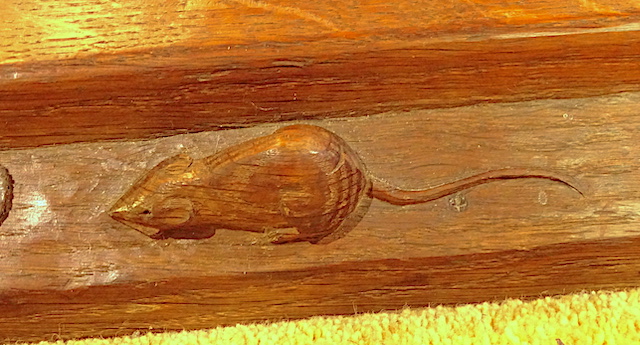
In the July 1981 edition of the ‘Scots Magazine’ there was a feature on the ecclesiastical work of Robert Thompson to be found in Scotland. Robert was the ‘Mouseman’ from Kilburn in Yorkshire who made exquisite oak furnishings complete with his trademark mouse crawling over it. It was Robert and his descendants who made many of the oak furnishings and fittings in St Andrew’s Tain. The article has a short piece about St Andrews and our thanks to Campbell for digging the article out for us. The bit about St Andrew’s follows:

We now return to the mainland, and cross Easter Ross to the ancient Royal Burgh of Tain on the Dornoch Firth. Here is the church of St Andrew, a lovely little building dating from Victorian times and adorned with more than one mouse.

In 1936 Robert [Thompson] installed the reredos, and his work on these is always worth examining closely. At the same time he fitted the altar rails, and what better tribute to him can be found than that from a Kent lady who tells me that she never passes through Tain without popping into St Andrew’s Church to see ‘the neat little mouse carved under a rail.” A lengthy enough mouse-hunting journey for anyone!

The congregation of the church must have been satisfied, too, because in 1967 they commissioned the grandsons Cartwright1 to carve a lectern and later to fashion a pulpit.

  • 1 The sons of Percy and Elsie Cartwright (Robert Thompson’s daughter), John and Robert, joined the family business when they left school at 15 and worked under the supervision of their grandfather Robert Thompson until his death in December 1955 when they took over.