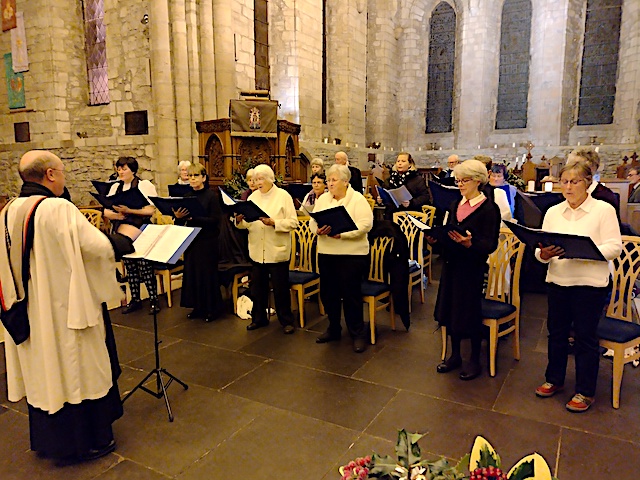
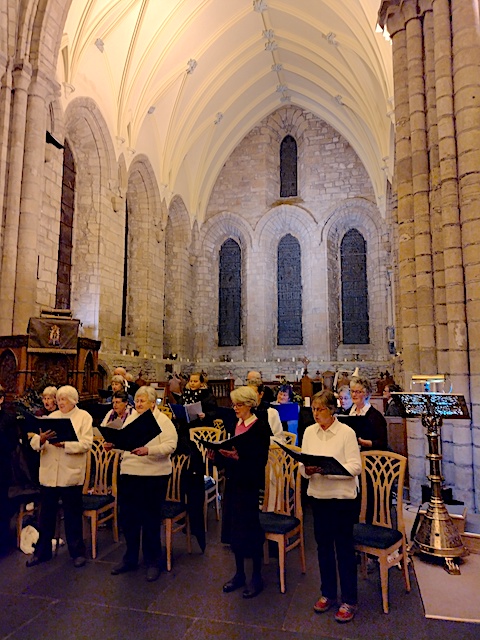
This evening in Dornoch Cathedral, we ushered in Advent with a gloriously uplifting Advent Carol Service organised by Fr Simon.
A choir of nearly 30 voices and Roddy on the organ, helped the congregation of about 60, sing a number of well-known Advent Carols and they also sang a number of pieces on their own.
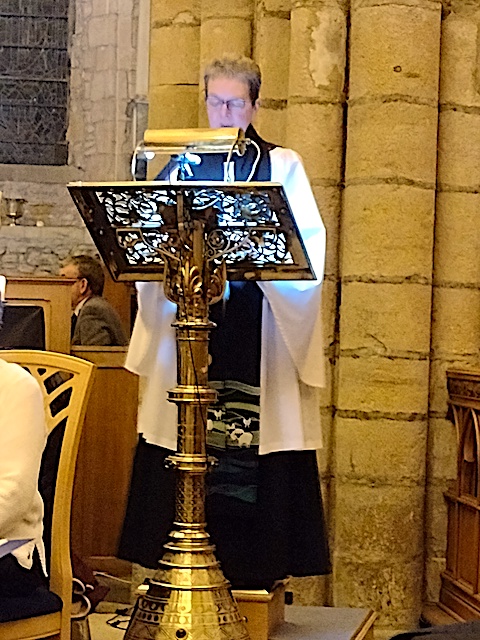
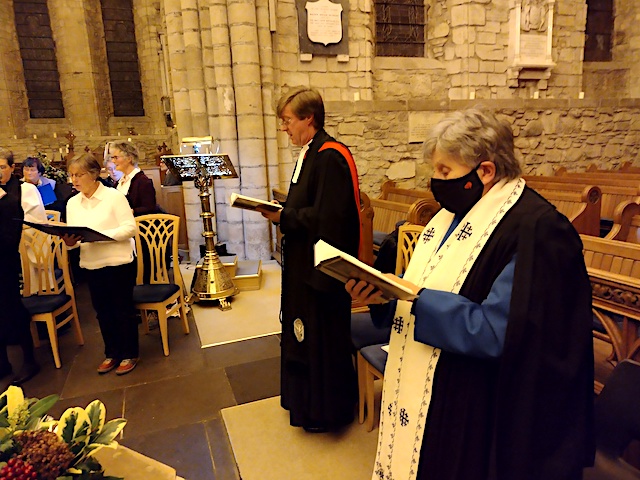
Interspersed between the Carols were Advent readings given by five different clergy from the Scottish Episcopal Church and the Church of Scotland, ranging from Genesis to the Gospel of John.
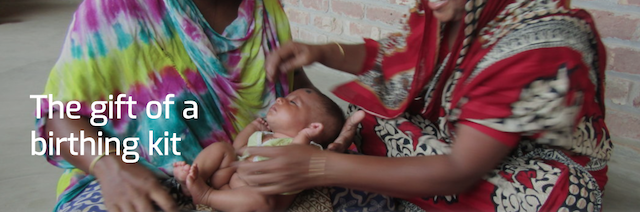
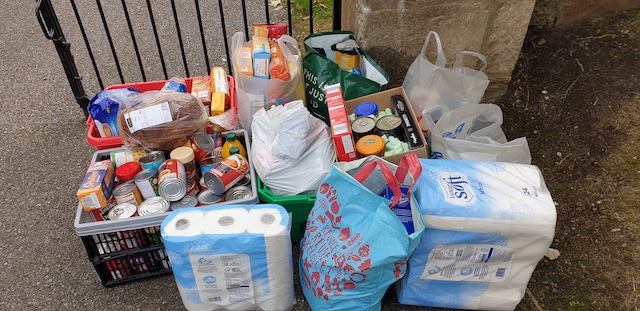
The service gave Glory to God and at the same time raised money for Clean Birthing Kits for parts of the world where many women die in childbirth, as a result of infections contracted whilst giving birth.
This fund-raising is part of a wider effort coordinated by the Rotary Club of East Sutherland and the retiring collection in aid of the charity ImpACT raised over £250 – a huge thank you to everyone who contributed.
Bishop Mark looks at the hopes and expectations around COP26 as we seek to care for God’s creation
As I write this, I’m sitting watching the leaves changing colour outside my office window. There’s a tree which is just at the corner of the churchyard at Arpafeelie which always begins to turn first, its leaves slowly, then quickly, becoming golden before plunging to a striking mix of reds then browns.
As I have watched the autumn begin, the plants begin to bed down for the winter in this changing of the season; I remember that once the bare winter is over then the cycle will come round again. We will have the cool, clear spring and then the joyful warmth of summer. So it has been for much of my life. Yet as we have stayed at home over these past months because of the pandemic, I have appreciated the slow but ever-moving changing of the seasons in a new way.
But just as I can anticipate the leaves coming back on that tree, it is becoming clear that in other places around the world many others no longer know what their seasons will hold. People can’t be confident that the rains will come, or know if their land will flood. People can no longer be confident that their crops will grow, or know if they will have the time and energy to harvest. People and places are struggling and dying now because of the twin crises of climate change and biodiversity loss. People are increasingly anxious and increasingly fearful, and there is growing anger and concern for the future.
In Scotland we have a stable climate. As is so often the case, the worst affects of climate crisis will be felt that much more strongly in places where their climate is not so stable. So the changes that I can see, and the emotions which flow through me as I know they flow through many in our Church, are much more pressing in other parts of our world.
I’ve been thinking about those emotions and reactions as we all prepare for COP26 in Glasgow. The hopes and expectations of so many people are that political leaders will listen to the voices of people around the world who are simply frightened for the very ground they stand on and the lives around them. The Scottish Episcopal Church has put in place and will continue to develop processes which enable us to have a much lighter footprint on the ground, and will enable us to make a better use of the resource we have so that we don’t contribute to stripping the environment of those things which produce the very air that we breathe.
There will be moments of tears, moments of anger, and moments of laughter in Glasgow, but I hope there will be moments of prayer. Why are we going? Why is our Anglican Communion delegation gathering? It is because as a church, and as people of faith, that’s what we do: we pray. Our prayers are to God who created this beautiful little planet we all live on. Our prayers are that God will help us to do everything in our power to protect the environment we live in.
With prayer, with conversation and simply by being visibly present, we can use the time to push home the point to political leaders that this crisis is real and that people of the world, especially those with the least ability to affect change, are being impacted by our continual drive for greater consumption, greater profits, and greater power.
We will try and insist that they listen to the quiet voices, voices that might not be physically present, and we will pray again that world leaders make the right decisions for our planet.
The Scottish Episcopal Church will be there along with old friends and hopefully new friends. We will spend our time carefully encouraging, noisily supporting and – I suspect – sometimes loudly reacting to what is happening because to honour God means caring for God’s creation, not simply for what it gives us but so that we can pass it on, healing and restoring, to those who will come after us.
Please pray for all who will gather in Glasgow, for the leaders of the nations and those of us who will bring hope and prayer.
Hallowe’en marks the start of the Season of Remembrance. The word Hallowe’en is a contraction of ‘the eve of all Hallows’, and All Hallows is the Feast of All Saints, or All Saints Day’. This year we are celebrating All Saints Sunday on Hallowe’en, a day when we think particularly of those who even in this life, kindled a light for us in ours. Although it might be more accurate to say that what they actually did was to reflect for us, the light of Christ.
All Saints Day (November 1st) is followed on November 2nd by All Souls Day, the day that we remember all the ‘souls’ of those that we have known and loved who have gone before us into the light of Heaven. Our celebration of All Saints and All Souls’ stems from a belief that there is a powerful spiritual bond between those in heaven (the ‘Church triumphant’), and the living (the ‘Church militant’).
In Arthur C Clarke’s classic book, “2001: A Space Odyssey” he makes the assertion: “Behind every man now alive stand 30 ghosts, for that is the ratio by which the dead outnumber the living.” Currently there are about 7.7 billion people alive and it is estimated that there have been 117 billion people born since 190,000 BCE, so we are among 7% of the people that have ever lived 14 ghosts each. However Arthur C Clarke was making his statement in 1968 when there were about 3.5 billion people living on earth so that would be one living person for each 29.
It’s therefore right and fitting that we should have a season of the year for remembrance when we recognise the connection between the living and the dead. I always feel that this is a time when perhaps the veil between time and eternity is thinner and get a sense of the greater and wider communion of saints to which we belong and who I feel a connection with every time I come into a church building.
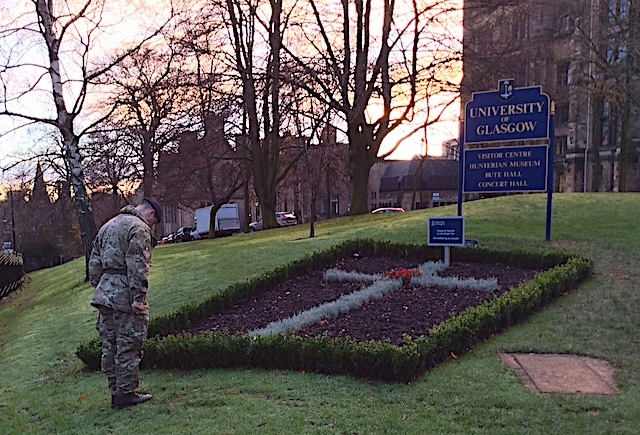
Of course we also remember, on the Sunday closest to 11th November, those who have lost their lives in wars and conflicts around the world. In gatherings at war memorials and in church services we unite across faiths, cultures and backgrounds to remember their service and sacrifice.
It seems appropriate that the Church celebrates these things as the days shorten at the turning of the year . This is of course also the time when the pre-Christian Celtic religions were accustomed to think of and make offerings for the dead.
As Christians, we recognise that the greatest and only offering, to redeem both the living and the dead, has been made by Jesus Christ our Lord and Saviour.
In February there was a lively and very moving funeral for a lovely member of the St Andrew’s congregation – Renate Krueger.
Renate was born in the very north of Germany in 1950 and was adopted by a very loving couple, Dr.Heinz Krueger and his wife Annemarie. They gave her everything they could and loved her dearly. After a career in psychotherapy, Renate moved to the Highlands in 1997 with her husband. She had many very challenging times during her marriage and a particular problem that she had to confront. After several years struggling and facing her shadows she was saved by God s grace and the fellowship of Christian people.
Looking back at her life, a couple of years ago she said that
“everything seemed so much clearer, an intricately woven blanket, with patterns and colours not always matching, but still making a beautiful picture … there might even be holes in it, ragged edges, unfinished rows, different patterns and material of wool … but somehow it all fitted together and made sense.“
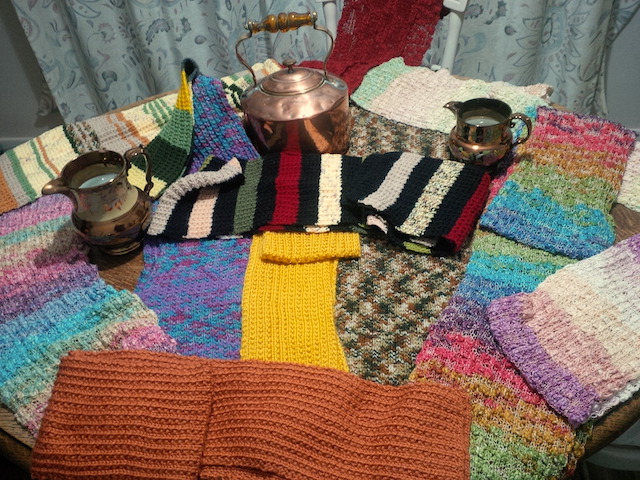
That metaphor seems particularly apt since Renate was a compulsive knitter and as someone who for a time had been homeless, she knitted scarves that she sold to raise money for homelessness charities.
When Renate died she left a stock of knitted scarves “with patterns and colours not always matching, but still making a beautiful picture”.
We are offering these scarves for sale for a suggested donation of £10 which will be passed on for the purpose of making life better for those that were so close to Renate’s heart – the homeless.
Scarves will be available in St Finnbarr’s and St Andrew’s for the next few weeks so just speak to Caroline Barnes or Beatrice Somers if you would like to look at a selection either for yourself or for a Christmas present. If you are in our Lairg, Brora or Tongue congregations get in contact with James or Anna and we will arrange to find you something to meet your requirements.
This, we feel, is a fitting way to remember Renate and honour her commitment to those less fortunate than herself but let us give the last word to Renate:
I needed God for advice, guidance, courage, strength, help and love – He needed me to tell him of my passions, desires, aims in life and together, in co-operation, HE gave me what I needed, not what I wanted. He knows me best, even before I did and I listened to Him, more and more and the more I listened, the better my life began to unfold… He had plans for me – and they were not always my plans, but my deepest desires came true. THANK YOU GOD 🙂
For beautiful times of joy, love and happiness… for meeting wonderful people on my journey… for special moments in awe of Your creation… for tender moments with my beloved animals and peaceful times in my garden and at the sea, for beautiful music, swimming and dancing… those were the things I loved… and much more… for all of my life and the friends who were at my side – and those who taught me important lessons, also for pain and sorrow and finding blessing in the most challenging times, but most of all, for you, God and Your unconditional love and never giving up on me 🙂
We have some services of Morning and Evening Prayer on Zoom, from this week these are as follows:
Morning Prayer – Mondays and Tuesdays at 10:00am
Evening Prayer – Thursdays and Fridays at 5:00pm (previously these were at 5:30pm)
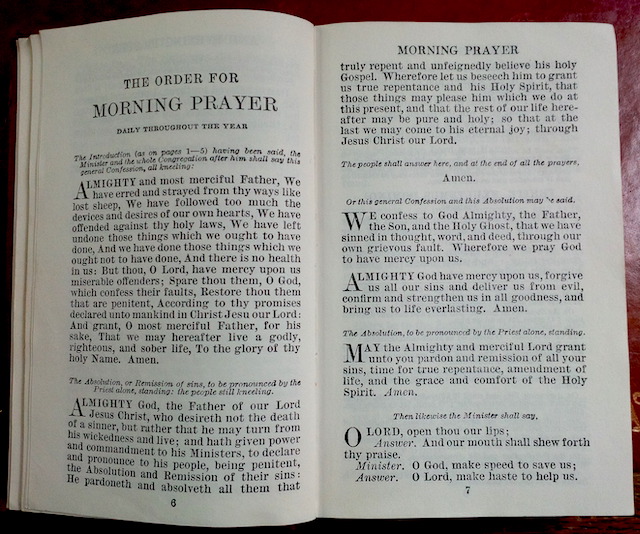
All are welcome to join in these services, which will be led by a number of different (mostly lay) people. If you wish to follow them and join in with the responses, etc. then you would find it helpful to have a copy of the Scottish Prayer book.
Outside the Church
Midweek in Tain
The MIdweek Service in St Andrew’s, Tain changes from Wednesday at 6pm to Thursday at 6pm from this week. These services are generally in the hall at the back of the church and all are welcome.
Yesterday in Inverness Cathedral, Philip Schonken (who is Chaplain at Gordonstoun School) was ordained Deacon by Bishop Mark.
Philip brought with him the school choir who sang the Eucharist, led the hymns and also gave us this wonderful short piece to honour the fact that Philip comes from South Africa.
A joyous occasion finished off with cake and fizz.
“For we know the one who said, ‘Vengeance is mine, I will repay.’ And again, ‘The Lord will judge his people.’ It is a fearful thing to fall into the hands of the living God.”
Hebrews 10:30-31
The concept of ‘the wrath of God’, is one which we find many times especially in the Old Testament, but also as the quote above suggests, in the New Testament. My reflections on matters relating to climate change and climate injustice during the Season of Creation have led me to think that we need to revisit the concept and reframe it for the 21st century and the ‘scientific’ age.
The the whole of creation works according to what we sometimes refer to as the Laws of Nature and the Laws of Physics, etc. These are how things are and how the world works and we cannot change them. We can of course work within them to achieve particular goals. The trouble is that if we change something, then because these laws continue to operate, something else unexpected might change as a result.
There is a complex interconnectedness between things, which we cannot hope to fully understand, even if we build very sophisticated computer models of what is going on and continue to increase our knowledge across a wide range of disciplines. For example, over the years, the computer models used for weather forecasting have grown ever larger and more complex,as computing power has grown. However the accuracy of the predictions still often isn’t particularly good.
You may recall King Canute (or Cnut), who was king of Denmark, Norway and England in the 10th and 11th centuries. The well known story of King Canute trying to hold back the tide to show how powerful he was is an apocryphal anecdote, recorded in the 12th century by Henry of Huntingdon. In the story, Canute actually demonstrates to his courtiers that he has no control over the incoming tide, he actually explains that secular power is vain compared to the supreme power of God.
The episode is frequently alluded to in contexts where the futility of trying to “hold back the tide” of an inexorable event is pointed out, but often misrepresents Canute as believing he has supernatural powers, when Huntingdon’s story in fact indicates the opposite, illustrating the piety and humility of King Canute.
There is no doubt that humanity has invented and discovered many things and that we all benefit for a myriad of scientific and technological advances, however, we have to recognise that what we actually know is a mere fraction of the way that creation is and we all need to have Canute’s humility in all that we do to avoid being caught out by unexpected consequences.
If we act as though we are masters of the universe then we should not be surprised if the laws of physics or nature produce those unexpected consequences. We might see this as unfortunate or being unlucky and that we just need to be a bit cleverer to fix it.
Alternatively in humility, we could accept that because we fail to fully understand what we are doing, then when we are caught out by physics and nature ‘reacting’ and ‘re-balancing’ things, this might reasonably be described as the wrath of God.
We are not God, we cannot control everything and we are not masters of everything around us – that role belongs to the creator of the universe who set the laws of physics and nature in motion and gave us the wonderful world that we live in and which in some form we will hand on to our children and grandchildren.





 Scottish Episcopal Church - Dornoch, Lairg, Brora, Tain & Tongue