On Ritual

In our tradition, we are very used to ritual. Our services of course contain many familiar ritual elements, but there’s considerably more to ritual than just elaborate religious ceremonies. In our lives rituals play a number of roles: rituals in the face of loss can help us with grief and dealing with the loss, rituals in our families can make us feel closer, and rituals with a partner or friend can reinforce the relationship. In short rituals can help us to express things that can’t easily be expressed in other ways and that is why we find them so useful in relation to God.

Recently it’s been brought home to just how important rituals are. For the most part the Sunday morning rituals that are a feature of our worship are very familiar, because they’re how things have been done for a long time. However that isn’t true for all rituals. For instance, the past couple of years have made a lot of what we took for granted and that was once familiar newly unfamiliar. We’ve made changes to the way that we meet in Church, how we greet each other and how we share the Eucharist. The purpose is still much the same, but the manner has changed in both small and in larger ways, the rituals subtly different. In the same way we’ve adapted the rituals to reflect changes in our congregations and the circumstances of our gatherings.

Many of us have found some of these changes unsettling and struggled a bit in the face of it.  However what’s really started me thinking more broadly about ritual, is not those ‘internal’ rituals of our weekly gatherings for prayer, praise and the breaking of bread, but the outward-facing rituals in which we help the wider community to find ways of engaging with events in the wider world. These are really important in our world right now, when we are all facing both actual and anticipated grief, joy, sadness, fear – virtually any emotion. In this rituals can help to restore our sense of control over our lives, however illusory this may be.

When we hear about war, the climate crisis, covid and almost any other change, we canexperience loss – we didn’t want it to happen, but there was nothing that we could do aboutit. That’s not a very unpleasant feeling, that sense that you’re not in charge of your life or most of what’s happening in the world around you. As Christians, it’s at times like this, when we can’t do anything ourselves that we turn to God, but what about those for whom ‘God’ has little obvious meaning?

Over the last few months, we’ve tried to offer a number of rituals to our wider communities, to help with expressing ‘difficult to express’ emotions (both negative and positive ones) in relation to climate, the war in Ukraine, world peace, the Queen’s Platinum Jubilee and the marking of the Centenary of war memorials in our communities. We’ve marked these in planting trees, reading out names, placing small wooden crosses in flowerbeds, in singing and prayer, in music, in silence, with shells, with candles, with stones and in simply being there.

In all these circumstances people need some sort of ceremony and ritual to bring them together, so that they can share the emotions that they, and others around them, are feeling with each other. The numbers taking part in these events are frequently much higher than they are in our church services, but where’s the surprise in that?  That’s mission in action, just what Jesus urged us to do!

Ritual’s part of the rich heritage of our Church and something that we understand the importance of. People in the wider community recognise the truth of this and that’s why they ask us if we can help them to produce an appropriate response to whatever the situation is. It’s why people still come to us for funerals, weddings and the other occasional offices.  For my money it’s one of the most important parts of what we as the Church are here for – making God possible beyond our walls and in the lives of those in our communities.

Blessings
James
Dornoch War Memorial Centenary

It is now over a century since the Great War, came to an end in 1918. In the period shortly after the war, war memorials were established in most communities to commemorate those who had lost their lives in the war. After the Second World War, additional names were added to those memorials and some have had names added in relation to subsequent conflicts.

Most of the memorials were built and dedicated in the period 1921-1922 although one or two were a little later (Creich – 1923 and Helmsdale – 1924). As a consequence many will be marking their centenaries over the next year or so.

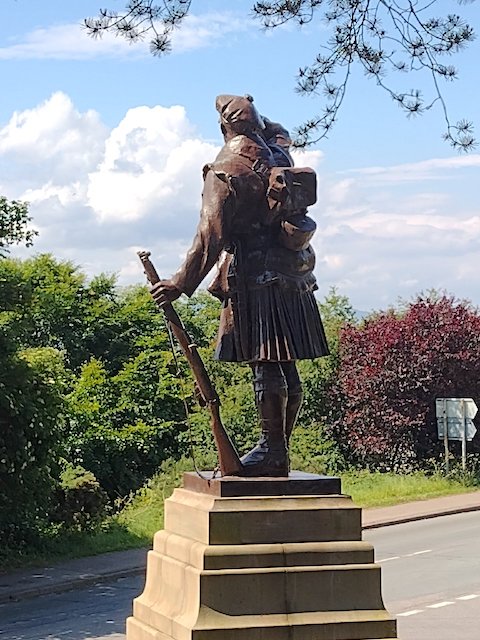
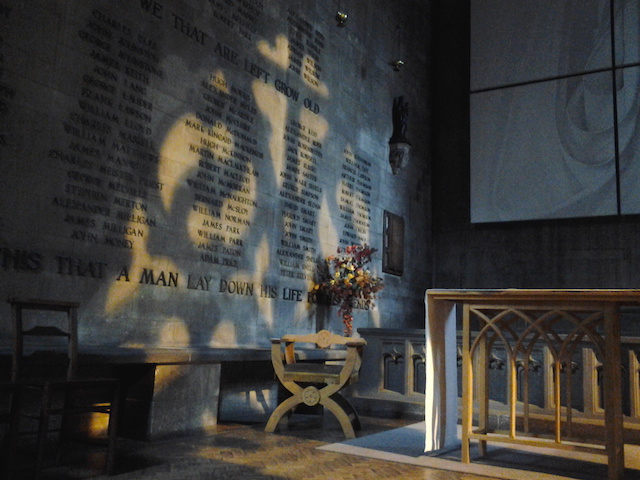
On Friday 24th June, we held a service of Commemoration and Rededication at the Dornoch War Memorial at the foot of Poles Road. On top of this impressive memorial there is a magnificent sculpture of a 5th Seaforth Highlander at Beaumont Hamel in about 1916. It was produced by Alexander Carrick and shows the soldier looking south towards the battlefields. 

At the service, pipes were played, prayers were said, wreaths were laid and we had a two minute silence as we remembered the fallen. Young people planted small wooden crosses one for each of the 100 names on the memorial and the Young Curators group from History Links told a little of the story of the memorial.

This pattern is likely to be repeated across our region over the coming months:

They shall grow not old, as we that are left grow old; 
age shall not weary them, nor the years condemn.
At the going down of the sun and in the morning,
We will remember them. 

photo by Lynne Mahoney

More pictures at the Northern Times.

The Feast of Corpus Christi

The Feast of the Thanksgiving for Holy Communion, commonly called, Corpus Christi was first celebrated in the 14th Century. It began as a local custom to celebrate the Mystery of Christ’s presence in the Eucharist and slowly spread throughout the Church, finally being added to the Kalander in the 15th Century.  In our Kalander we calebrate Corpus Christi on the Thursday after Trinity.

William Harry Turton’s hymn “O thou who at thy Eucharist didst pray” sung to a lovely tune (Song 1) by Orlando Gibbons.

Perhaps the most famous aspect of Corpus Christi (literally the Body of Christ), that people associate with this feast day, is the great processions through cities, towns and villages.  The Blessed Sacrament is held aloft by a priest, in a monstrance, as a public statement that the sacrifice of Christ was for the salvation of the whole world.

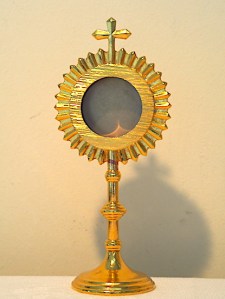
Monstrances are one of those liturgical curios that appear sometimes, but in our tradition not very regularly.

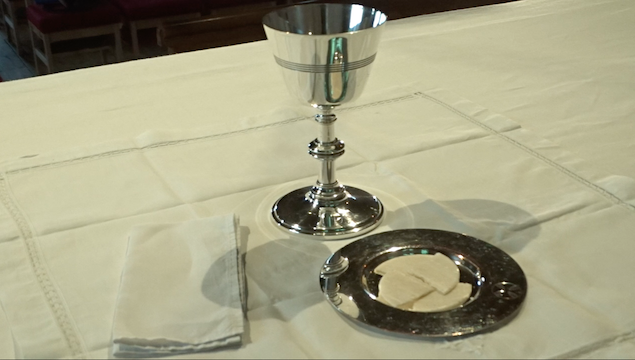
The Host (the consecrated Bread) sits in the glass plate in the centre with ‘rays of glory streaming out from it‘. A reminder of the Glory of Christ, present in the Eucharist, and the glory of the Heavenly Banquet that we join when we take Communion together.

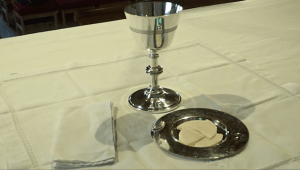
Traditionally, at the end of the Mass on Corpus Christi the Host (the consecrated Bread) is placed in a monstrance and the congregation spend some time reflecting on this Mystery of Christ made present in the bread and wine.

The officiating Priest would then take the monstrance and carry it aloft down through the church and out into the streets – with servers throwing rose petals down in front of it to make a carpet – a bit like confetti at a wedding – with bells ringing out to tell everyone that Christ was walking among them in the Eucharist

Corpus Christi represents more than just the Church giving thanks for the way that Christ remains, with us always – even unto the ends of the Earth. It’s a celebration that we, the Church, are united in and as the Body of Christ.

Trees Duly Planted

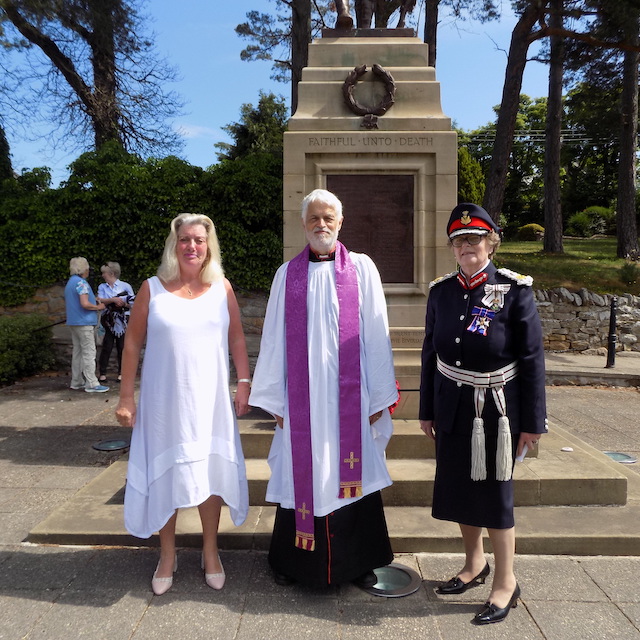
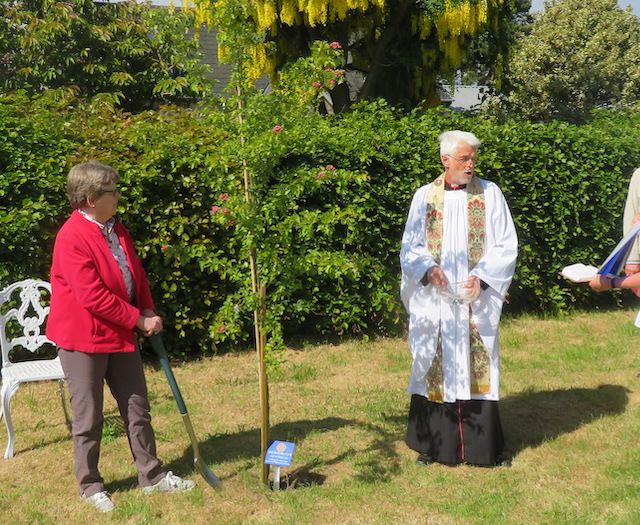
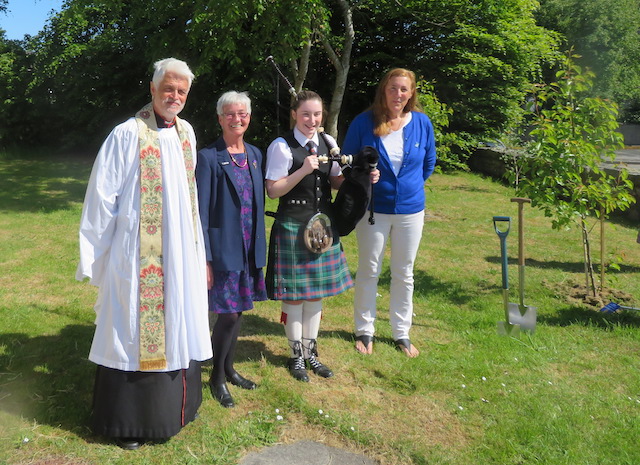
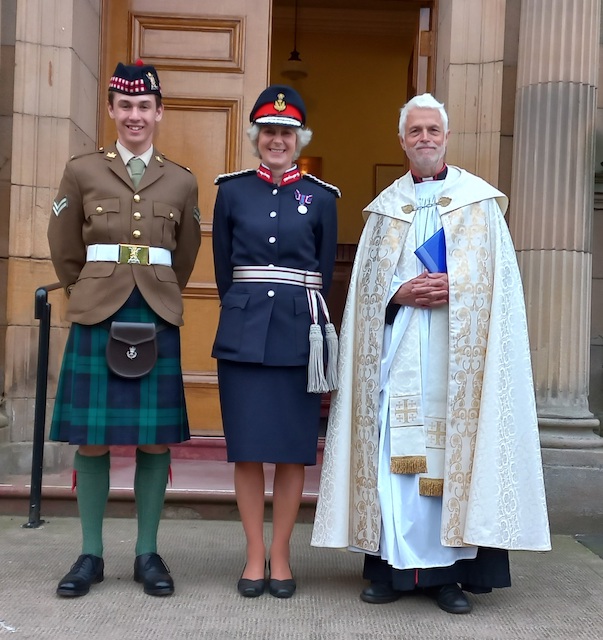
This afternoon at St Columba’s, the outgoing President of East Sutherland Rotary (Linda Graham), in incoming President (Elizabeth Sweetman) and Her Majesty’s Lord Lieutenant for Sutherland (Monica Main) planted trees for Ukraine, World Peace and Her Majesty’s Jubilee respectively.

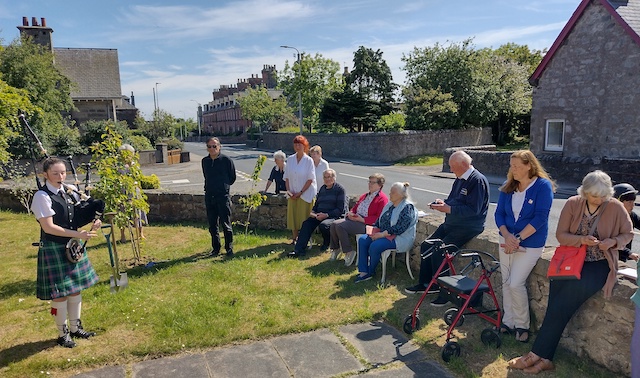
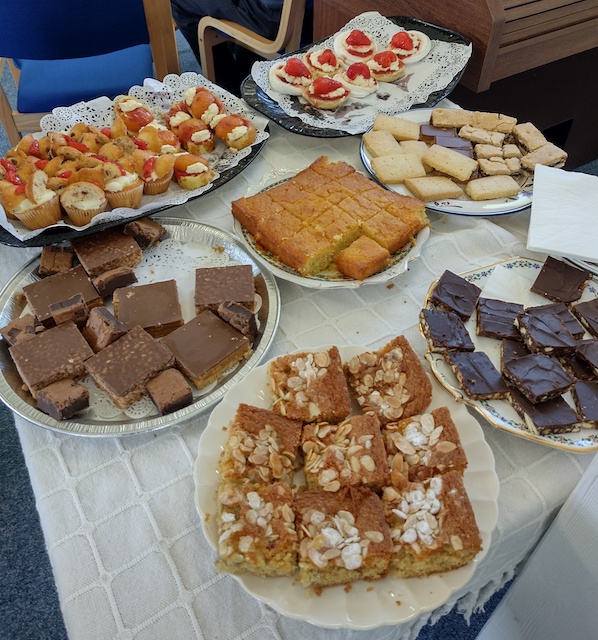
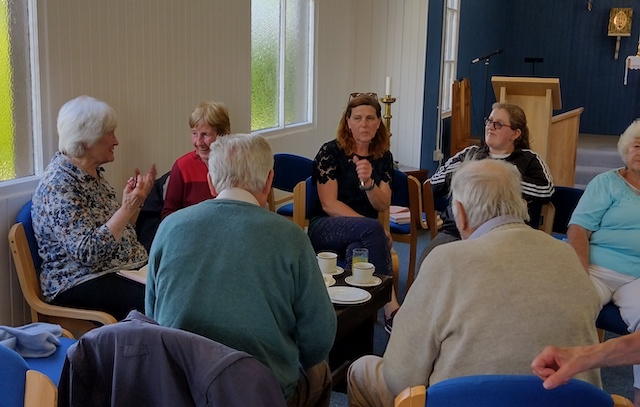
Canon James led a short service of Dedication and Blessing, the large congregation sang out, ably competing with the traffic on the A9, passers by stopped to see what was happening and tea and many delicious cakes and biscuits were enjoyed by all.

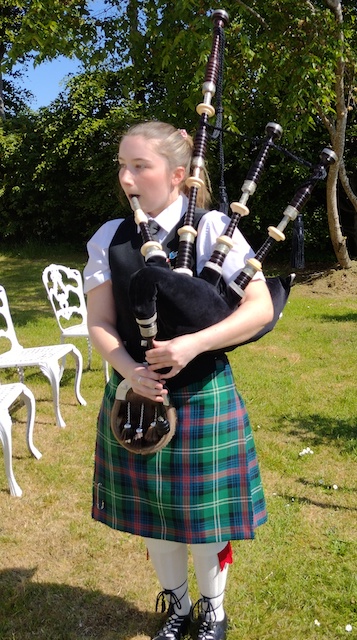
And Piper April Sutherland demonstrated why she has been accepted to study at the Royal Conservatoire for Scotland after the holidays.

Well done to everyone – a huge thank you to all those who helped the Rotary to raise £5000 to send Shelterboxes to help the refugees from Ukraine.

God of Wonder,
as we gather together to bless the earth
and celebrate the potential of the trees before us,
we pray that they may serve as a living witness
to our commitment to heal our common home
through long-lasting, bold changes.
Grant us the courage to continue to take this stand
for the sake of the goodness of your creation,
and the inspiration and delight it provides us.
Through Christ, your Son, our Lord

Amen:

Jubilee Weekend Celebrations

A lovely celebration of the life and work of Her Majesty Queen Elizabeth II in Tain Parish Church to round off the Jubilee weekend. The service was led by Canon James and both Lord Lieutenant Joanie Whiteford and MP Jamie Stone took part.

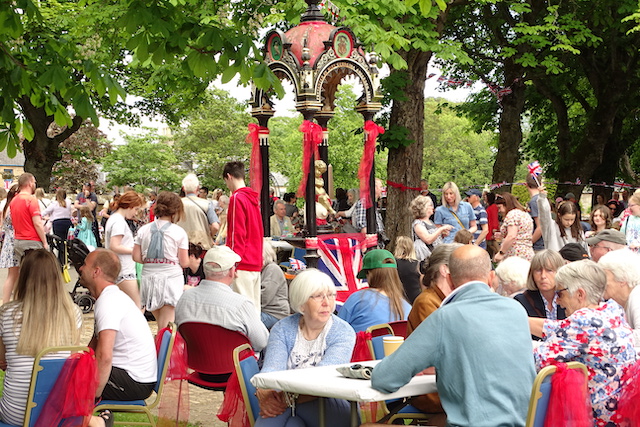
On Saturday there was a splendid street party on Cathedral Green in Dornoch.

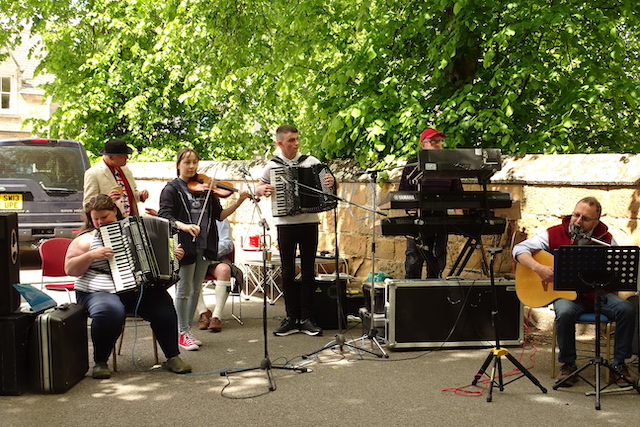
Tea, cakes and music, all in the sunshine.

Prayer for the Queen’s Jubilee

The Queen’ Platinum Jubilee celebrations take place from 2-5 June, marking Her Majesty’s 70 years of service as Monarch.

A prayer has been prepared by the Liturgy Committee to mark the occasion. It has been approved by the College of Bishops for use in their dioceses.

Prayer for the Queen’s Platinum Jubilee

Almighty and eternal God,
you uphold and govern all things 
both in heaven and on earth, 
and by your grace alone kings and queens do reign.
 
We thank you for all the blessings which you have bestowed upon us 
throughout the reign of our sovereign lady, Queen Elizabeth, 
whom you have set over us these threescore years and ten.
 
We thank you for the wisdom of her guidance and her love of peace, 
for the care and devotion with which she has served her people, 
for the example of her gracious life.
 
As we rejoice before you with thankful hearts, 
we pray that we may ever be united in love and service to one another, 
as people called to live according to your will, 
for the good of all the world, 
and the glory of your great name, 
through Jesus Christ our Lord. Amen.

Service of Thanksgiving

There will be a Service of Thanksgiving for Her Majesty’s life and reign at Tain Parish Church on Sunday 5th June at 8pm – all are welcome.

Gather up the fragments that nothing remains

Whilst we were away down south, I took a very full car load of ‘stuff’ to the local ‘recycling centre’. It was very busy and there were categories for every manner of thing and no-one was allowed anywhere near the ‘general waste’ skip until all other options were exhausted.

Whilst we were away I was also reflecting on the Eucharist and what it means in a broader sense than just what happens at the altar whenever we celebrate as Jesus commanded.

“Lord Jesus on the night when he was betrayed took a loaf of bread, and when he had given thanks, he broke it and said, ‘This is my body that is for you. Do this in remembrance of me.’ In the same way he took the cup also, after supper, saying, ‘This cup is the new covenant in my blood. Do this, as often as you drink it, in remembrance of me.’”

1 Corinthians 11:23-25

I was thinking about the way that we handle the communion elements and in particular what we do with the remaining elements if they are not to be reserved for those who aresick or otherwise unable to be in church. In the Communion service of the 1662 Book of Common Prayer, the minister is directed to “reverently eat and drink” what remains of the consecrated elements after the distribution of Communion.

This direction resonates with the passage from John’s Gospel where Jesus gave direction to the Disciples as to what to do with what remained after the Feeding of the Five Thousand: “Gather up the fragments that nothing remains” (John 6:12). 

You know, I think that this has more than a tangential bearing on the meaning of the Eucharist, and one that’s important in relation to how we ought to respond to one of the biggest environmental issues in the affluent West today – waste.  For instance it’s a singular abuse of stewardship to throw away nearly a third of all the food that’s produced.  This is often by the relatively affluent West and is at the expense of the global poor, and producing and distributing more than is required can only lead to depletion of resources and needlessdegradation of soils.

The war in Ukraine is having a huge impact on global food supply as Ukraine produces a significant amount of the wheat and sunflower seed (from which sunflower oil is extracted) that act as components of the staple diet of many around the world. For us in the West that means increased prices, but for many in poorer countries in for example Africa, it means starvation. Even in the West it is showing up the huge gap between rich and poor, with many in our country now struggling to put food on the table.

And so, it is in the light of these considerations that we should be able to see that how we, the worshipping community, handle and care for our spiritual food and drink, particularly in what remains and is left over from the Eucharistic Feast, is indicative of our attitude to the wider social and natural environment and supporting those in need both at home and abroad.

Blessings
James

Tree Planting in Brora

The Rotary club of East Sutherland are very grateful to all the folk of Brora and Sutherland for all the support they have given to the Ukraine/Shelterbox Appeal which had St Columba’s member Alistair Risk camping in the snow in the grounds of the Church and which has raised around £5,000 (enough to buy 8 Shelterboxes).

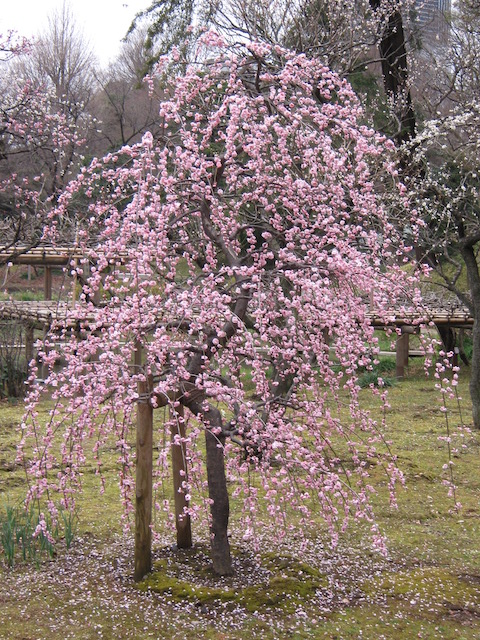
As a thank you to the church three flowering cherry trees will be planted at the church on Tuesday 7th June between 3.30 and 4:30pm. The three trees will be dedicated:

  • For the Queens Platinum Jubilee
  • For World Peace
  • For the people of Ukraine

Canon James will bless the trees which will be laid by outgoing Rotary President Linda Graham, incoming President Elizabeth Sweetman and Polina, Alina and Olha, the three Ukrainian girls currently living in Golspie with St Finnbarr’s members Patrick and Henrietta Marriott. 

Anyone who wishes to join us for this event will be most welcome, tea and biscuits etc will also be provided.

Walking alongside each other

I was comparing some of the hymn books used in our churches and I started to notice a pattern. The later books no longer had as many of the hymns that contain war, battle, fight or armour imagery. So no “When a knight won his spurs” or “Mine Eyes Have Seen the Glory” and you should see what liberties have been taken changing “Onward Christian soldiers” into “Onward Christian pilgrims”.

Well that all started me thinking about the wars in various parts of the world: Ukraine, Yemen, Sudan, Myanmar, Syria and Afghanistan, to name but a few.

When he was Archbishop of Canterbury, Rowan Williams said that the whole weight human failure couldn’t extinguish the creative love of God. In an Easter sermon he said that conflict and failure are part of the human condition, but that Jesus’ death and Resurrection turns that on its head: 

We share one human story in which we are all caught up in one sad tangle of selfishness and fear and so on. But God has entered that human story; he has lived a life of divine and unconditional life in a human life of flesh and blood.”

Rowan Williams

The lesson to be learnt from pain and conflict is that when people walk alongside each other and learn to really listen to other people’s stories and what drives them:

to learn an openness to discovering things about themselves they didn’t know, seeing themselves through the eyes of someone else. What they see may be fair or unfair, but it’s a reality that has been driving someone’s reactions and decisions. It may well be based on misconceptions, on prejudice on ignorance of the situation that someone, or perhaps a whole community is facing. We all need to listen better to each other’s stories, however painful or humiliating that experience may be”

Rowan Williams

The Resurrection doesn’t take away the reality of threat or risk or suffering; it’s just there and that’s one of the hardest things to accept. How can you or I feel ‘happy’ in a world so full of atrocity, aggression and injustice? How can you or I know ‘joy’ when we’re aware of our own failings, our own shabbiness, our own depression, in short the whole mess that our lives can sometimes seem to be?

There are no easy answers to these questions, but in reflecting on war and conflict I quickly came to the realisation that the conflict in places like Ukraine aren’t something entirely detached from what you and I do and feel in our own lives. It’s not just about a few places where bad people do terrible things to other (good) people.

I suspect that few of us aren’t involved, to some extent, in conflict in our homes and families, our work places, our neighbourhoods and communities and dare I say it, our churches. Yes churches are very good at conflict and schism.

So perhaps this Easter season as we pray for the people of Ukraine and other war-torn places, we might also do well to reflect on where we’re complicit in conflict in our lives and the lives of those around us. We might all be the better for it and our world can’t help but be a better place as a result.

Blessings
James