Author: Simon Scott
Reflection for The Annunciation of the Lord – 25.03.25
On the ‘Feast of the Annunciation’, we of course mark the date nine months exactly before the date of Christmas – when we celebrate the birth of Jesus. It’s customary, even in the middle of the solemnities of Lent to take a break from our acts of penance and celebrate the cause of our joy – the fact that Mary, when faced with a terrifying and awesome task said, ‘Yes’.
But what if Mary had said, ‘No? Indeed, could Mary have said No?
Most of us believe that we all have free will – the power to decide for ourselves. We are not robots or puppets on a string. God does not play with us or dangle us for his pleasure or amusement. We have the freedom to choose.
It’s true that there may be determining features in our genetic make-up, or our circumstances or up-bringing that do constrain us and limit us. But, unless we are undergoing extreme constraint or torture, we have at least some room for manoeuvre – the power to choose. With that power comes responsibility. We must accept responsibility for our own actions. We cannot blame God or our make-up or our parents or our circumstances for the choices we make.
So, surely, Mary was entirely free to say No. It’s almost impossible for us to imagine that she would. So the Church has tried over the centuries to explain why Mary had to say Yes. The Bible tells us nothing of her parentage or upbringing, but long ago the Church identified her mother as Anne and her father as Joachim and decided that they must themselves have been saints. And then some Christians began to believe and teach that God, in order to be sure of Mary’s response, had protected her from the first moment of her conception, protected her from original sin. In 1854, Pope Pius IX declared it as a dogma, something to be believed by all those who acknowledged the authority of the Roman Catholic Church, that Mary was immaculately conceived.
Despite all this, it is important that Mary could have said No. It certainly is important to us, when we think about ourselves and our own relationship with God. How often do we say No to God? And I wonder are we even conscious that we do?
God does not impose himself on us or force us to follow him or to do his will. God prompts us, leads us, even cajoles us to greater love for God and for our neighbour.
God uses the Church, the Word and Sacraments, our friends and families, our experiences, even our environment, and of course the promptings of the Holy Spirit, in gentle and subtle ways, and sometimes in more startling and obvious ways. And how often we say No to him! We see it as our right, our freedom. We are human beings. We have the power to choose.
But, as ever, there is a complication. There is something of a paradox.
I’m sure that you will remember that Jesus said to his disciples in the Upper Room. ‘You did not choose me, but I chose you. And I appointed you to go and bear fruit, fruit that will last.’ Jesus also said, ‘Many are called but few are chosen.’
St Paul, at the beginning of his letter to the Ephesians, wrote ‘Blessed be the God and Father of our Lord Jesus Christ, who … chose us in Christ before the foundation of the world to be holy and blameless before him in love. He destined us for adoption as his children through Jesus Christ, according to the good pleasure of his will.’
How are we to understand this idea that God has chosen us from the beginning, pre-destined us to be his people? Does this mean that we do not really have the power to choose at all, that all the power, all the choice is with God and that our freedom to choose, which we regard as one of the particular characteristics of a human being, is an illusion?
It’s not easy. From our human perspective it is impossible to see clearly or to understand. We cannot see it from God’s point of view.
We do believe that God chose Mary to be the Mother of his only Son, to be the Mother of the Church.
The Church uses the language of vocation, of being called, and many of us have a strong sense of having been called to the life and work we do in and beyond the Church.
But can we be chosen and yet still be free to choose?
Let’s take a wider perspective. We know that our lives are governed by seemingly inflexible rules of time and space. We cannot be in two places at once. And we might be able to think of ourselves in a different time frame from our own. We can look backwards and at least imagine forwards, often with more fear than excitement. But in truth, we are utterly bound by time. Although time can drag and time can speed up in our imaginations, the clock ticks on and will one day take us away. Time and space limit us, rule us. Even though films we see and stories we read present us with notions of time travel and speeding through unlimited space, we cannot at all imagine what life outside time or space would be like.
But God is not limited by time or space. Life beyond this life, eternal life with God, is outside time and space.
God holds all time in the palm of his hand. Just as the last two generations have been privileged as never before to see the earth from a camera on a satellite, so that we can see the world and the galaxy and at least part of the universe from an utterly different perspective from that of earlier generations, with the earth like a small ball in the sky, so God can see the whole of time, the whole of eternity, as one, and knows absolutely what free choices we shall all make. God surely can see the entire spectrum of time and every detail within it.
God does not control us, does not impose himself. But he does already know how in our freedom we shall respond to him. Even so, he still loves us, still persists with us – in the gentlest possible way.
We believe that no one is beyond the power of God’s love. Jesus, born of Mary, Son of God, our human brother, our divine Master, died that all might live, even those who have turned away from God, rejected him and live in despite of him. We have the potential to turn towards God, or to turn away from him, to choose good or evil, or, come to that, to choose neither, simply to bumble along in our own self-satisfaction, turning away from the cries of the poor and the marginalised.
Today we do mark the Annunciation, we do rejoice in Mary’s ‘Yes’, in her humble obedience to God’s will. But tomorrow we step back into the journey to the cross.
Over the next two weeks, as we move closer to Holy week, we remember that in Jesus, God weeps at the terrible and destructive choices human beings make, the choices that cause mothers and their children to flee and leave behind their ‘men’ to fight. But God also weeps at the damaging and sad choices each one of us as individuals makes every day.
In Jesus surely God weeps at the indifference of those who blow neither hot nor cold, who simply pass by.
Indifference
by Geoffrey Studdert Kennedy (amended)
When Jesus came to Golgotha
They hanged Him on a tree,
They drove great nails through hands and feet,
And made a Calvary.
They crowned Him with a crown of thorns;
Red were His wounds and deep,
For those were crude and cruel days,
And human flesh was cheap.
When Jesus came to Inverness,
They simply passed Him by;
They never hurt a hair of Him,
They only let Him die.
For men had grown more tender,
And they would not give Him pain;
They only just passed down the street,
And left Him in the rain.
Still Jesus cried, “Forgive them,
For they know not what they do.”
And still it rained the winter rain
That drenched Him through and through.
The crowds went home and left the streets
Without a soul to see;
And Jesus crouched against a wall
And cried for Calvary.
The Annunciation of the Lord – 25.03.25
On Tuesday 25th March we celebrate the solemnity of the Annunciation.

This special day celebrates the appearance of the angel Gabriel to the Virgin Mary to announce the incarnation.
Come along to a special Eucharist at 7pm in St Finnbarr’s Dornoch to find out what’s going on and why this day is so important!
Installation of new Canons!

(Pictured: Provost Sarah Murray, Canon Tembu Rongong, Bishop Mark Strange, Canon Simon Scott and Dean Alison Simpson)
Along with the Reverend Tembu Rongong (Holy Trinity, Elgin and St Margaret’s, Lossiemouth), Fr Simon was installed as a Canon of the Chapter of the Cathedral Church of St Andrew, Inverness during a service of Choral Evensong yesterday evening. Thank you to all who made the long journey south to attend, to all who watched online and to all who held us all in prayer. Cathedral Canons play an important part in the life of our diocese, supporting the Bishop, Provost and Dean in their work to build God’s kingdom in our part of the world. God bless us and watch over us!
“I am not capable of doing big things, but I want to do everything, even the smallest things, for the greater glory of God.”
– St Dominic Savio
Sermon for the third Sunday in Lent – 23.03.25
* Isaiah 55:1-9 * Psalm 63:1-8 * 1 Corinthians 10:1-13 * Luke 13:1-9
I’m sure like me, there will be times in your life when you have heard about someone, maybe even a member of your family or a close friend, who has been struck down with a sudden serious illness or who have been injured in some kind of accident. In the past few months, I’ve met with a twenty six year old young mother who has received a diagnosis of kidney cancer, I’ve shared tears with another mother whose thirteen year old son has lost the sight in one eye following a freak sporting accident and in the last week I’ve prayed for a friend whose brother was killed in a night club shooting.
More often than not, when faced with these sudden and unexpected happenings in our lives, we ask this question.
What did they do to deserve that?
Jesus knew that questions like this were on people’s minds whenever they came to tell him sad or alarming news. The Roman Governor, Pilate (yes, the same Pontius Pilate who oversaw the crucifixion of Jesus) had ordered that some Galilean Jews be slaughtered. And what’s more, making Pilate’s appalling action even more offensive is that he did this terrible thing while they were offering their sacrifices in Jerusalem.
It’s Jesus who asks the questions on everyone’s minds: Is it because those Galileans were worse sinners than other Galileans that this happened to them? Did they do something to deserve such an awful death?
And it’s Jesus who gives the answer: No.
Or what about when the tower of Siloam fell and eighteen people were killed, crushed because they were standing in the wrong place at the wrong time, is that because they were sinners?
Jesus says no.
Behind all this is a deeper question.
Is God keeping track in some gold-leafed book about who’s been naughty and who’s been nice and whether to respond with earthly punishments or rewards?
The answer is no.
Does God allow tyrants to kill people or tsunamis to drown people because they’ve done something to deserve it?
No.
You might remember the time when some people ask Jesus, “Rabbi, who sinned, this man or his parents, that he was born blind?” “Neither.” says Jesus, and he cures the man of his blindness.
Jesus flatly denies any correlation between the man’s problem and someone’s sins.
Yet, it’s a persistent question. And it goes with a persistent assumption, that somehow what people get in life is what they deserve – we’re tempted to think that there must be a connection between the sorts of people they are and the bad or good things that come their way in life.
We’ve heard people say, “I wonder what he did to deserve that?” or make pronouncements, “this plague/natural disaster/fill in the blank is God’s punishment for how they have behaved.”
Jesus clearly tells us that this is not how it works.
Sometimes of course, we do suffer as a direct result of something wrong that we have done, some bad decision, some action we’ve neglected to take and we suffer the consequences. Mistreat your body, and you will get hurt. Mistreat a friend, and you may damage your friendship. The negative consequences of our actions can be clear.
But sometimes we’re confused, not when we can see how a mistake or bad action has led to suffering, but when we’ve been good, when we’ve done the right thing, we’ve tried so hard, and still, nevertheless, we suffer.
As Christians, we really shouldn’t be so surprised when this happens. The idea that only good things happen to good people should have been put to rest when Jesus was nailed to the cross.
Christian faith is no magic protection against tragedy. After all, the cross is our central symbol – the cross, where an innocent man died the death of a criminal.
Nonetheless, Christians have long since wondered why bad things happen to people, even good people. In his book The City of God, St. Augustine considered the great suffering that occurred when the barbarians sacked Rome, and he noted that when the barbarians raped and pillaged, Christians suffered just as much as non-Christians. Faith in Christ did not make them immune to pain and tragedy. Augustine wrote,
“Christians differ from Pagans, not in the ills which befall them, but in what they do with the ills that befall them.”
The Christian faith does not give us a way around tragedy. Our faith gives us a way through tragedy.
So, no, we cannot and must not ever look at tragedy and assume that someone did something to deserve it.
“But,” Jesus says, “unless you repent, you will all perish as they did.”
What kind of a statement is that?
Jesus is not saying that questions are bad or that ‘why’ isn’t a vital human question. Jesus is saying, don’t be distracted by the wrong question. To Jesus, the ‘why’ isn’t important. God made us in love and gave us free will, freedom to choose how to respond, how to act.
In freedom, humans have written symphonies, others have started wars. God made a dynamic world in which natural things change and evolve into beautiful new forms of life, but they also mutate into cancerous cells.
A good question to ask, according to Jesus, isn’t: what did she do to deserve that suffering? The much more important question is: how is your relationship with God? Jesus says that we shouldn’t be distracted by looking at what happened to someone else. We shouldn’t spend our time wondering what someone must have done to deserve what they are going through. Instead, we should look at ourselves – while we still have time.
Jesus refuses to get caught up in the question of whether or not someone else deserves to suffer, and instead asks another question: What in your life needs acknowledging and turning around? What needs to be turned over to God? What needs to be forgiven?
Things will happen. And while the gift of earthly life is still ours, we need to ask ourselves, how is our relationship with God? Do we love our neighbours as ourselves? Are we relieving the suffering of others or just pointing our finger at them and trying to connect the dots between their suffering and the things we consider to be their wrong-doing?
The scandal at the heart of our faith is this – God already loves us; God doesn’t need a record or tally sheet because we don’t do anything to deserve God’s love. We have no favour to earn, because God already sees us as God’s beloved ones. All we have to do is live and explore the amazing mystery of our acceptance. We can’t lose God’s favour and make bad things happen to us because we don’t earn God’s favour in the first place.
Life is short. Don’t be distracted by the wrong questions. And don’t be disappointed if Jesus asks you to love God more than you love answers. Because Jesus will do that!
Installation of Rev Simon Scott as a Canon to the Cathedral Chapter

Many of you will already know that Rev Simon is to be installed as a Canon to the Cathedral Chapter on Sunday 23rd March at 5.30pm in Inverness Cathedral. It would be so good to get as many people from our churches as possible to support this event. If you would like to go, but need help with transport, please do ask in church this Sunday. Choral Evensong is such a beautiful part of our worship tradition and the Cathedral Choir sound just heavenly!
Service at St Trolla, The Crask Inn – Thursday 20th March 2025 – 12 noon
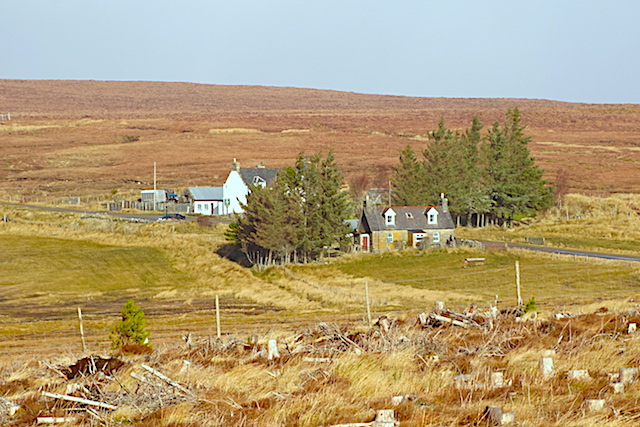
A reminder that our monthly Thursday Eucharist at St Trolla’s at The Crask is this Thursday (20th March 2025) at 12 noon. The Reverend David Balfour will be presiding and it would be great to see a good gathering.
Let us always meet each other with a smile, for the smile is the beginning of love! – Mother Teresa
Sermon for Second Sunday in Lent – 16.03.25
* Genesis 15:1-12, 17-18 * Psalm 27 * Philippians 3:17-4:1 * Luke 13:31-35
I wonder if at some time in your life you have every had anyone try to put you off from doing something? Has anyone ever tried to discourage you from continuing on a particular path, or from carrying out your plan or vision for something?
Maybe they warned you that it wouldn’t end well, or perhaps they told you that you were just not capable or good enough?
Or maybe they felt threatened by your presence and abilities and tried to run you down before you got in their way?
I remember, as a teacher in my mid-twenties, signing up to a professional development course for those aspiring to be Head Teachers. One of my colleagues, who I trusted and thought of as a friend and who had encouraged me to apply for the training, went to see my Head Teacher at the time and told her that she thought I didn’t have enough experience to begin the course. This friend of mine had applied for the course a year earlier and had not been accepted. Fortunately for me, my Head Teacher disagreed with her and gave me the reference I needed to get on to the training programme.
I didn’t realise it at the time, but there had in fact been a fox right within my own camp.
In our gospel reading this morning, Jesus also comes up against a fox.
He’s making his way to Jerusalem, stopping along the way in villages and towns to teach people and to heal the sick and just before the part of the gospel that we have read today, Jesus compared the kingdom of God to entering through a narrow door.
And in that hour, as Jesus calls the people to change and struggle to get through that door, the Pharisees approach.
And this next bit might sound rather strange to us.
The Pharisees come to warn Jesus to flee because Herod is looking to kill him – now doesn’t this seem like odd behaviour for them? After all, the pharisees have already set themselves up as Jesus’ adversaries, constantly questioning his practices and beliefs.
They’re usually found looking to trip him up and reveal to others that he is breaking their religious laws. So why would they come to warn him? If Jesus is posing a threat to their religion, why do they appear to be wanting to help him?
And do you know, there is another little problem with this scene. We don’t actually have any indication elsewhere that Herod even wanted to kill Jesus. The biblical text does tell us that he wants to meet Jesus and see him perform one of his signs, but there is no indication that he wants to kill him.
It seems then that these Pharisees that have approached Jesus are either lying about Herod’s intent, or have somehow been misinformed.
Perhaps they were hoping their warning would be enough to move Jesus out of the land – that he would be scared off and no longer be a thorn in their sides.
There is also the possibility that these Pharisees didn’t have such a harsh view of Jesus. Perhaps these men didn’t have as much of a problem with him as some of the other Pharisees. Maybe they disagreed with him, but were still sympathetic enough to not wish death upon him.
It’s a puzzling little interaction which leaves lots of questions unanswered, but whatever their intent, they surely weren’t expecting the response which Jesus fired back.
They might have thought they could deter Jesus, discourage him from continuing on, but he casts their warning aside and calls out, “Go and tell that fox for me, ‘Listen, I am casting out demons and performing cures today and tomorrow, and on the third day I finish my work’”
Herod the fox – Jesus was being rather feisty in his insult.
Foxes were pests. They came into the fields and vineyards and ruined the crops. They’d scavenge through cities that had fallen into ruin. They may have been cunning animals, but they were also destructive nuisances.
A king like Herod would want to be compared to a powerful animal, like a lion that showed strength and prowess. To call him a fox was surely a great insult. But if Herod (or the Pharisees if they’re the ones behind this rumour), think that the threat of death would deter Jesus, then they are all a bunch of foxes, relying on their deceitful and scheming ways to rid their city of this troublemaker.
Their threats of course, wouldn’t stop Jesus. He was going to finish what he came to do and no amount of intimidation or threats would hold him back from continuing on.
Jesus’ harsh and determined response to the Pharisees stresses his confidence in God’s plan and call upon his life.
As the Son of God, he has a mission before him, one which he knows God will carry him through. And along the way to that goal, that completion of his mission upon the cross, there is still work to be done; Jesus still has people to teach and others to heal.
Herod and the Pharisees may think they can bully him in to stopping, but Jesus knows that what he is doing is more important than anything they could throw at him.
Then comes that great prophetic moment when Jesus mourns over Jerusalem for a rejection that is still to come. They haven’t condemned Jesus yet, but they will, and he knows it. They will have a choice to make, to stand by their wicked ways or to come to Jesus.
It’s a city that stands as the centre of worship, the sacred home for Yahweh, and yet again and again they reject the voice of the Lord that comes to them through the prophets of the past – it is a city that kills prophets and it is a city that would do the same with Jesus.
And he understands that future rejection as a present reality as he calls out, condemning and mourning Jerusalem in his prophetic voice.
Jesus doesn’t just rebuke Jerusalem for her rejection of truth, he laments over her wayward ways.
We see that in the description he offers of himself as an animal (or rather a bird).
Herod may be a fox, but Jesus is a hen. He longs to gather the people under his wings as a hen would her chicks, but the people are unwilling to come to him.
The choice of a hen to describe Jesus is a peculiar one and in the face of a fox, it doesn’t seem like a hen would be able to hold up very well.
But let me tell you a true story that I learned when we lived in Yorkshire. Old Eleanor had kept chickens all her life and one day when she was doing the washing up and looking out of the kitchen window, she saw a fox attacking one of her hens in the back garden. Eleanor ran out to the scene, banging a pan with a wooden spoon and scared the fox away. But as she approached the hen that had been attacked, she realised she was too late and it lay lifeless with its wings outstretched. But as Eleanor drew closer to pick it up, she suddenly saw movement in the wings. What had actually happened was that facing a fierce attack, the hen had laid down on top of two little chicks, trying to fend off the fox – and that she did, but of course, the hen herself had paid the ultimate price.
Like the hen protecting her chicks with her body, Jesus too offers up his own body, his life, to protect the world. He shares with the hen in the story a willingness to offer himself, even to the point of death, to care for the ones that have been entrusted to him.
Today’s gospel draws us deeper into Lent, leading us closer to the cross and those final days when Jesus’ mission would reach completion.
And we are reminded by the text of two important things, of two animals we encounter in life, one a fox and the other a hen.
Like Jesus we will face a fox or two in our lives. Whether our fox comes in the form of a person or circumstance or system, we may encounter opposition in life.
It may try to deter us from pushing forward, from continuing on with God’s work in the world. We see this within our own lives and sometimes, regrettably, within the life of the church.
But the foxes, like Herod and the Pharisees, are never in as much control as they think, if we are standing with the hen.
They only have that power and control if we give it to them by succumbing to their sly ways and retreating from the mission before us. It is better to stand beneath the wings of the hen.
Jerusalem had a choice, just as we do, and Christ is waiting to enfold us in his wings and care for us. And while we are beneath those wings, we must grow together in the ways of the Lord; we must come to know the care and commitment, the courage and devotion of the hen that we are to model.
As we are encircled in God’s protective wings of grace and salvation we must come to understand the ways of Christ as we mature, so that when those foxes do appear – sometimes right in the midst of us, we also have the courage to face the challenges before us, to forgive and press onwards as Jesus did.
Together, as a loving christian family, supporting one another on the way, we must be able to continue to love and care for people as Jesus did, sheltering those that come looking for care beneath the wings of our Saviour.
So, this Lent, stay close to Jesus the hen, offering yourself in the same way to others as he did, be part of the new Jerusalem over which there is no lament, as we work together for His kingdom right here, in our own families and in our wider community.
Amen.
Sermon for the First Sunday of Lent – 09.03.25
Sermon Luke 4.1-13
Four priests were spending a couple of days on retreat preparing for Lent. On the first evening they decided to tell each other their biggest temptations.
The first priest said, “Well, I am so very embarrassed to confess that but my big temptation is racy pictures. Once, instead of the Church Times, I bought a copy of Sports Illustrated Swimsuit Edition.”
“My temptation is worse,” said the second priest. “I’m afraid it’s gambling. One Saturday instead of preparing my sermon, I went to the races to bet on the horses, and I lost all the previous week’s Sunday collection.”
“Mine is worse still,” said the third priest. “I sometimes can’t control the urge to have a drink. Just last week, finding not one bottle left in the rectory, I actually broke into the sacramental wine.”
The fourth priest who was usually very talkative indeed, was suddenly very, very quiet. “Sisters and brothers, I hate to say this,” she said, “but my temptation is worst of all. I love to gossip – and if you will all excuse me, there’s a few phone calls I’d like to make!”
Oscar Wilde famously said “I can resist anything but temptation” . A line I think many of us could probably relate to (at least sometimes)!
The very nature of temptation is that it is so hard to resist – it‟s designed to make you give in.
Temptation is linked with the ides of doing something that we shouldn’t- something forbidden or banned, something dangerously elicit.
Rarely do we think of someone tempting us to do good! Can you imagine – “Go on ! Why don‟t you give away your best coat to that poor, cold homeless person on the street, go on – you know you want to!”
No, the little whispers in our ears are more likely to be encouraging us to think that we can get away with a tiny white lie or with “borrowing something‟ that isn’t ours without asking permission, maybe eating that tiny chocolate bar or drinking just that one glass of sherry that we gave up for Lent.
“It won‟t do any harm” the little voice says.
Well, of course that‟s what the serpent told Eve about eating the forbidden fruit in the garden of Eden and look what that led to!
I’m sure you will have seen the comic book portrayal of a person being tempted – the one with an angel hovering on one side of them and a little red demon on the other side.
The battle ensues with the demon tempting the individual to do something bad and the angel reminding them of the consequences and trying to convince them to do right.
It’s portrayed as a battle between good and evil as are many of the stories in books, films and television dramas – an all too familiar tale.
In biblical thought ‘to tempt’ means to test something or someone to determine or demonstrate their worth or faithfulness. Or it can mean an attempt by Satan to invite a person to sin, like in our comic book example.
The gospel passage we read today was about Jesus being led into the desert by the Holy Spirit in preparation for his ministry. Luke places this event after Jesus’ baptism – the event where he was acknowledged as God’s son and God’s love and acceptance of him was publicly proclaimed ‘You are my son, whom I love, with you I am well pleased’.
Luke also lists Jesus’ lineage here as if to emphasise his credentials to us, the reader.
We are told Jesus fasted for forty days and nights – and that number, the number forty, is a significant number in other parts of the Bible too – remember Noah and the flood when it rained for forty days, what about Moses who was up the mountain for forty days, Nineveh was given forty days to repent and Israel spent forty years in the wilderness being ‘tested’.
It’s at this time, when he is hungry, that the devil comes to tempt Jesus. Bible commentators often see Jesus essentially being challenged about three things in these temptations: his identity, his means of obtaining the kingdom and his use of power. They are all temptations to doubt Gods will and intention for Jesus’ life and ministry.
The first temptation is about his identity and his use of power. He is being asked to prove who he is by using his God-given power and authority to turn the stones into bread – to meet his own physical need, but also to use miracles to prove his identity. It’s as if the devil is saying “Come on, use what you’ve got to get what you want”, but Jesus responds with words taken from scripture – he doesn‟t enter into an argument or discussion : declaring “It is written: Man does not live on bread alone’. In Matthew these words are added “but on every word that comes from the mouth of God”.
Jesus’ need to eat is not a sin, but how he obtains what he needs is important.
Jesus recognises that God will provide and he needs to trust him to provide what is necessary and Jesus understands that he doesn’t need to prove who he is by miracle working – that is the wrong way to establish his identity. Jesus is willing to wait – to do his father’s will is his bread.
In the second temptation Jesus is taken to the mountain top –traditionally, a place of prayer and of God‟s presence.
A shortcut is offered to him – that he can have all the kingdoms of this world if he worships Satan. Jesus sought to establish a kingdom –God’s kingdom on this earth.
Many of his parables illustrated what this kingdom was like. Jesus wasn’t seeking to be king of the kind of kingdom he was being offered by Satan.
Jesus answered again with a sentence from Deuteronomy. It is written ‘worship the Lord your God and serve him only’.
The same sentiment echoed in the Lord’s Prayer that Jesus taught his disciples – Our father who art in heaven, your kingdom come, your will be done on earth as it is in heaven.’
What Jesus taught and modelled to his disciples was servant leadership – that the Son of Man came not to be served but to serve and offer his life as a ransom for many. Obedience to his Father was his ministry.
In the third temptation Jesus is led to the highest point of the temple in Jerusalem – the place where his earthly ministry would end. The devil questions his identity again “If you are the son of God…” and using scripture, tempts Jesus to put God’s word to the test by throwing himself from the rooftop.
What a sensational event it would have been – a dramatic sky jump without a parachute and God sending his angels to the rescue. Another shortcut being offered – a sign to prove he is the Messiah and God‟sGod’s son– – what a fantastic way that would be to launch his ministry.
But Jesus responds again with the word of God “Do not put the lord your God to the test”.
Not only is Jesus not prepared to ‘prove himself’ in the wrong way, he is not going to ask God, his father, to prove himself either.
On the cross, once again Jesus is challenged by bystanders with the same temptation – “If he is the son of God, let him ask God to come and rescue him – to prove he is who he says he is”.
He resists right to the end continuing to obey and trust God – not demanding to be rescued from the cross.
Luke ends the passage by telling us that when the devil had finished all this tempting, he left him until an opportune time.
This suggests that he will be back. That Jesus will continue to face temptation to take the easy way, the shortcut, to doubt who he is and use his power to prove his identity.
Satan is tempting him from taking the way of the cross, he is tempting him to abandon his true mission and ministry – but Jesus resists – there is no shortcut to salvation. He will be challenged time and time again, particularly by the Pharisees, about his identity, his teaching, his authority and his use of power.
He will also face the cross and that will require all these temptations to have been overcome before the ultimate testing of all – he will have to trust he is doing his fathers will, even when he no longer feels his father’s presence.
Why have you forsaken me? he cries out on the cross, before commending his spirit to his Father in trust at the last breath. He was tempted but he never gave in, he never sinned, he proved his faithfulness and was worthy to win our salvation for us.
We are eternally grateful he did it God’s way, not his way, not the way Satan was tempting him to go.
It’s no accident that the gospel reading for today is the temptation of Christ – we wouldn‟t be looking forward to Easter today, there would be no Lent if Jesus had yielded to those temptations.
We are in the days of Lent – forty days – they are a time of preparation for us – to recount all the suffering, but also to have one eye on the glory of the resurrection.
We are invited to ‘walk with Jesus’ through this time – as disciples we too are called to the way of the cross.
There are no shortcuts for us – no easy life just because we are Christians. We are loved, we are children of God but our trust in God – who he is and who we are will be tested.
In difficult times – we may be tempted to do things our way – to doubt our identity as children of God, to put God to the test, to find another God to worship who doesn’t make demands of us.
But there is always an opportunity to choose the right pathway – to trust our heavenly Father. There is no shortcut to the victory and glory of Easter without passing through the pain and sorrow of Lent.
Lent gives us time to discover our identity afresh as children of God, to re-establish our trust in Him for our needs to be met, to reaffirm our trust in Him for our salvation. Committing ourselves anew to obedience and living the kingdom life are ways we can respond to the call to be his disciples.
I pray you have a blessed and holy Lent and that you are drawn closer to Him who is our saviour and our redeemer – Amen.
 Scottish Episcopal Church - Dornoch, Lairg, Brora, Tain & Tongue