THIS IS HOLY WEEK
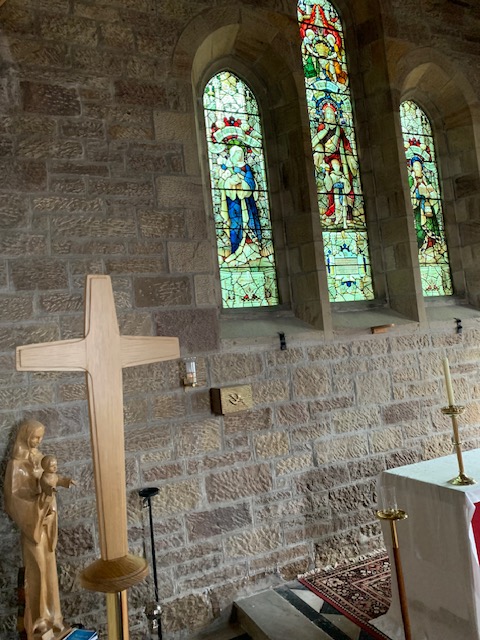
Come along and join our Holy Eucharist this morning at 11am in St Finnbarr’s, Dornoch.
THIS IS HOLY WEEK
Come along and join our Holy Eucharist this morning at 11am in St Finnbarr’s, Dornoch.
THIS IS HOLY WEEK
Come along and spend some time in reflection at Stations of the Cross this evening at 7pm in St Andrew’s, Tain.
THIS IS HOLY WEEK
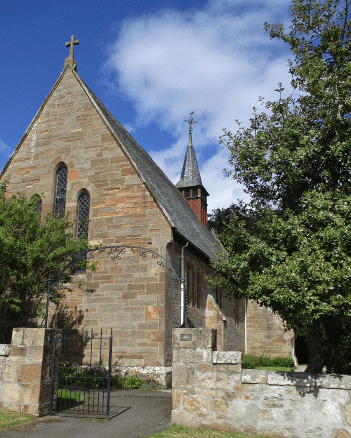
Come along and spend some time in reflection at Stations of the Cross this evening at 7pm in St Columba’s, Brora.

THIS IS HOLY WEEK
Come along and spend some time in reflection at Stations of the Cross this evening at 7pm in St Finnbarr’s, Dornoch.
Over the past couple of weeks, I have had occasion to travel down to Inverness a number of times and it brought a smile to my face when I saw that the donkey’s at the Donkey Sanctuary were out in the fields enjoying the warmer weather. Seeing donkeys always makes me think of the significant roles that these beautiful animals play in various stories in the bible. There’s the donkey that carried the heavily pregnant Mary all the way to Bethlehem for example. But did you know about the donkey who spoke? Balaam’s ass. You can read all about her in Numbers 22 – 24. She saw exactly what was going on – more than her boss did, in fact, and eventually spoke to draw his attention to the presence of an angel.

Another donkey, one which we hear about as we step into Holy Week, carried Jesus publicly into Jerusalem. It is well known that nearly all donkey’s bear the mark of a cross on their backs and like them Christians carry the mark of the cross too, given to us at our baptism. Donkeys teach us a lot about Christian discipleship. They remind us that we always carry Jesus invisibly, like Mary’s donkey, wherever we go. Every day Christ is carried into our world by us. As St Theresa said, ‘Christ has no body now on earth but ours, no hands but ours, no feet but ours. Ours are the feet on which he is to go about doing good, ours the eyes through which he is to look with compassion on the world, ours the hands with which he is to bless us now’. So, on the days when we feel we’re carrying the world on our shoulders, we need to remember that we are also bearing Christ to meet the world’s pain and give people life.
There are times when, like Balaam’s ass, we shall see things that others can’t or won’t see. Then we have to do something about it. Balaam’s ass tried first of all to draw the boss’ attention to the demands of God (the angel standing in the way) and she got pretty rough treatment for her trouble. But then God gave her words to say and Balaam began to take God seriously.
Being a Christian, being outspoken for God, isn’t always going to be easy or pleasant. Balaam was trying to maintain his reputation and wasn’t keen on anything standing in his way. We can sometimes find ourselves challenging important people and vested interests – that can be very hard, like crucifixion.
The Palm Sunday donkey reminds us that when we go with Christ, there are no promises about easy rides. We know, however, that at the end of the suffering, after the death, there was resurrection. We know that Christ has promised to keep us company, but as we carry him with us in the world, he won’t avoid confrontation, or allow us to. ‘In the world’, he said, ‘you will have tribulation’. We know that, from personal experience, and from sharing in the pain of the word as people starve, exploit and kill each other. We shall have to hang on with some of the donkey’s stubbornness to the belief that Christ really has overcome the evil in the world and that we shall share that victory.
Today Christians across our country will be entering into the journey of Holy Week, armed with their crosses, ready to ride out again with Jesus, to be his donkeys as he goes the way of his cross. And we believe that as we faithfully accompany him to the cross, we may also know in ourselves the power of his resurrection.
Ride on, ride on in majesty!
* Isaiah 43:16-21 * Psalm 126 * Philippians 3:4b-14 * John 12:1-8
I’m wondering this morning if any of you have planned your holidays for this coming year?
Maybe you are off for a week or two to some beautiful spot here in the UK, or maybe you’ve booked a guided tour somewhere on the continent?
I’m sure it will come as no surprise to some of you that we are absolutely shocking at forward planning and its only in the last few weeks that we have started to think about possible holidays for the coming year.
Amongst the variety of options, I came across a sailing experience recommended by Leonardo De Caprio (ironically the actor most famous for his lead role in the film Titanic). Did you know that for just £306,000 a week you can hire a private yacht with all the latest amenities – but no crew – you have to sail it yourself! Very tempting but having no sailing experience, I wasn’t sure we would manage and besides it sounds like a rather expensive and extravagant amount of money for a week’s holiday. Having said that, Leonardo De Caprio’s assets are worth about £170 million, so I guess to him, it wouldn’t seem all that much.
I did consider a week at the Hotel President Wilson in Geneva. Only £62,000 a night – again, a little extravagant for us perhaps. Bill Gates (developer of Microsoft) has stayed there. But then, his net worth is more than £60 billion – so a stay at the President Wilson Geneva probably doesn’t seem all that extravagant to him.
Extravagance is in the eye of the beholder. The extravagance of what we spend might appear to be relative to what amount is coming in through our salaries or benefits or pensions.
The amount that premier league footballers spend on cars and clothes might seem ridiculously extravagant to us, but then I’m guessing that their income vastly exceeds that of most of us here this morning.
So imagine then, what the disciples and followers of Jesus, most of whom had left their jobs and homes and were living through a common purse, imagine what they thought when they saw Mary pour an expensive jar of perfume over his feet.
Not just expensive, but very expensive. A pound of Nard cost about 300 denarii at the time (nearly a year’s wages for the average worker) – estimates put that to be equivalent to about £30,000 in today’s money.
Just think, what could you do with £30,000?
‘Extravagant’ is the word that many preachers use to describe this. They talk about Mary’s “extravagant” love and her “extravagant” gift. And the word extravagant seems entirely appropriate when we are talking about pouring £30,000 worth of perfume onto someone’s feet and it’s certainly how the disciples looked at it as we heard in the gospel reading.
We also heard that Mary really pushed the accepted social boundaries in this story. It was not acceptable for a woman to let down her hair in public, let alone wipe a single man’s feet with it.
What a scandal this was! What did she think she was doing?
Well don’t forget that just before what we have read this morning, Mary had witnessed her own brother Lazarus rising from the dead at Jesus command. I think Mary must have had a pretty clear understanding of just who Jesus was and how close he was to God. Her faith in him must have been sure and certain having witnessed such a miracle involving a member of her own family.
The faith that Mary models to Judas and the rest of the disciples, to her family, and even to us this morning is a faith marked by an extravagant act. It is a faith that is always seeking “more.”
In contrast to Mary, sometimes our faith can be a part of our lives that often gets shortchanged by our own personal quests for “more”.
We want more sleep, so we hit the snooze button on a Sunday morning. We want more time for our hobbies or recreation, so we put off reading our Bibles or saying our prayers for another day when we “have more time.”
We want more money so that we can buy the latest gadget or take that holiday, so we adjust our giving just a bit. In short, if we are not careful, we can let our need for “more” take priority over our faith.
We spend more time worrying about the challenges and issues in our lives, more time trying to figure out our relationships and daily schedules, more energy and resources on material things, and, because something has to give, we end up spending less time on our relationship with God.
But, you know, imagine if instead of letting our faith take a backseat, we somehow reframed our understanding of “more,” and, like Mary, we begain to live with extravagant faith.
As with Mary’s actions this morning, such a faith may seem quite ridiculous to others, wasteful even. But we rest assured that our Lord encourages us to keep going at it, even in the face of adversity, for we have a Saviour who believes in extravagant, over-the-top actions. That, of course, is one of the messages of the cross, the overabundance of love that God has for the world.
Having faith that is extravagant means being willing to truly love God with all that we have: with all our mind, all our body, and with all our heart. It means making that first “more” in our lives our relationship with God. Going above and beyond into something deeper still, and trusting that there is always something more to be learned, more to be experienced, about the one who first loved us.
This “more” is not about a transaction or monetary value. And it’s not about how many events we attend, or committees on which we serve. Extravagant faith is about giving God all that we have, not just settling for the bare minimum. When we are overwhelmed by our love for God, we are apt to do wild and radical things, the kind of things that truly label us as Christ’s disciples.
It is such love that leads us to speak out where there is injustice – to stand up to the bullies of the world and proclaim that all deserve to be treated with love and respect. It is love that helps remind us to spend a few extra minutes checking in with someone who we know is having a tough time. God’s love leads us to extravagant faith.
Some moments of extravagant faith, much like the perfume Mary poured, might seem temporary or fleeting. After all, lots of extravagant gifts are simply put out there into the ether, where they soon evaporate. A choir rehearses an intricate anthem, and three minutes later it is gone. A teacher prepares the lesson, stands to deliver, and then the school day is over. Mourners provide large arrangements of flowers to honour those whom they grieve. Individuals donate large sums of money for their congregations to spend. Why do they do this? Well, love has its reasons.
But perhaps these aren’t as short-lived as we might think, because once we break open the jars of extravagant faith, the fragrance of love’s actions is carried on the wind to places we never see. Acts of love and extravagant faith have the potential to grow into more, as generosity inspires generosity. Imagine how extravagantly-filled our lives could be if we all lived with a little more love, a little more faith.
Imagine if we were to live and to love a little more – with God the possibilities are endless. No act of faith is too small, and no act of faith is too large, when inspired by our love for him.
So let go of whatever holds you back from giving all that you have, all that you are. Let God’s love wash over you and carry you to something new. Seek to be “more” of a disciple, and prepare for the overwhelming fragrance that comes when we live with a faith that is extravagant, worshiping a God whose grace and love is indeed always “more” than we could ever dream. Amen.
* Joshua 5:9-12 * Psalm 32 * 2 Corinthians 5:16-21 * Luke 15:1-3, 11b-32
Drill Sergeant Morrison was frustrated in her efforts to make a soldier out of a certain new recruit.
The trainee soldier lagged behind on marches.
He used any excuse to go to the sick bay at any opportunity, grumbled constantly about the food, and never made his bed properly.
But one day, a noticeable change took place in the young man’s attitude.
When asked to what she attributed the soldiers change in attitude, the drill sergeant explained,
“Threats and punishment did not work, bribery did not work …. so I had to resort to the ultimate weapon: I called his mother!”
Today is of course Mother’s Day – or to give it the more traditional title Mothering Sunday.
Telephone companies around the world record Mother’s Day as the busiest day of the year – that text or Instagram message just won’t do – many children everywhere (of varying ages) feel the need to actually hear their mother’s voice on this day.
I wonder if you can identify these famous mothers from the names of their children –
I wonder if we were to ask any of these four famous mothers to explain the joy of motherhood what they might say?
One extremely wise mother when asked that very question gave this explanation:
“The joy of motherhood ….. is what a woman experiences (Slow) when all the children are finally in bed”.
So why – on this Mothering Sunday – did we have a story about a father and his two sons in our gospel?
Well, of course the story is about a parents love – though it may be a father in this instance, rather than a mother.
Unconditional, forgiving, welcoming us despite all our faults and failings.
Now most of us from our own experience, understand that real parents are human – just like their children – and sometimes our relationships are not quite all ‘wine and roses’.
Sometimes we have experienced better relationships with people who are not our birth parents, and the love and guidance we have received from them has been more significant in building and shaping our character and sense of identity.
But today, the father of the prodigal son reminds us of the love that God has for each of us. A love that really is unconditional, forgiving, and welcomes us with open arms despite our many failings.
A love that is so strong that he gave his only son so that, just like the prodigal son in today’s gospel, we too will be welcomed home with great rejoicing when our time comes.
Today is a day for greetings …. A day for expressions of love.
And it is also a day for remembering.
There are some of us whose mothers or other significant figures in our lives have already been welcomed home as we will one day be – and maybe that was a long time ago for some of us – maybe more recently for others and I’d like us to take a moment now to remember them.
Just take a minute or two and call to mind your mother and those who have loved you – those who guided you, provided for you and cared for you.
Almighty God,
We thank you for those who have cared for us. For those who have shaped our character and those who brought us to know love and acceptance for who we are. We give thanks for those who we love but who we see no more. Rest eternal grant into them and let light perpetual shine upon them.
Amen.
ANSWERS TO FAMOUS MOTHERS

Don’t forget to put your clocks forward tonight or you will sleep in like our dog Ben (above) and miss our service for Mothering Sunday!!!!!!
The Funeral of the late Audrey Marsh will take place in St Finnbarr’s Church, Dornoch on Monday 31st March at 11am. Rev Lizzie Campbell will be leading the service.
Almighty God who is Father, Son and Holy Spirit,
by your power Christ conquered death
and entered into glory.
Confident of His victory
and claiming His promises,
we entrust Audrey to your mercy,
may she rest in peace and rise in glory.
Amen
 Scottish Episcopal Church - Dornoch, Lairg, Brora, Tain & Tongue