Luke 9.28-36
“Mirror, mirror on the wall, who is the fairest of them all?”
I’m sure you will remember this question from the fairytale Snow White – the question that the wicked and vain Queen puts to her magic mirror, expecting the mirror to proclaim that she, the Queen herself, is the fairest in all the land.
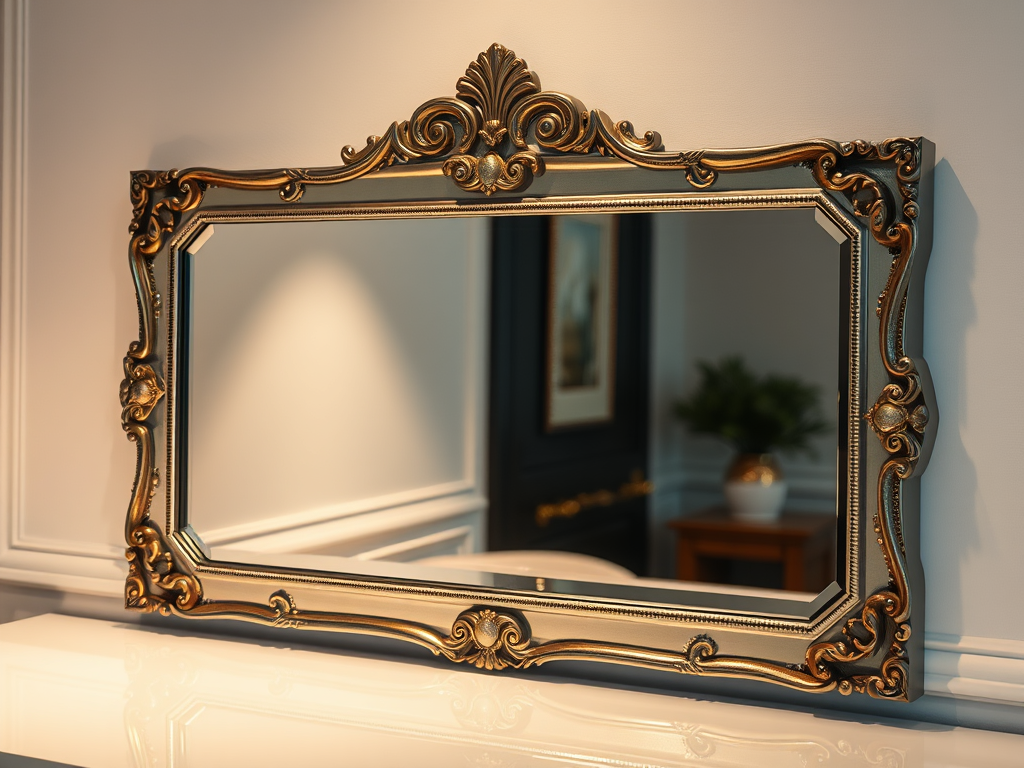
I wonder who you think is the fairest in the land?
According to a popular survey, women such as Audrey Hepburn, Raquel Welch and Grace Kelly would stand a good chance at such a title.
And on the men’s side, what about Marlon Brando, Clint Eastwood or James Dean?
Of course, the make-up artists, personal trainers, and designer outfits gave them all a helping hand, as did the glamourous lights of Hollywood.
But were any of these really the fairest in the land?
We’ve heard this morning the story of the Transfiguration. And I wonder, when Jesus was transfigured before his disciples, was he truly the fairest? Was his, in that fleeting yet indelible moment, the most beautiful of all bodies?
For many of us, steeped in the artistic images and songs of the western church tradition, the intuitive answer would seem to be, “yes, of course, He must be.” Jesus is God Incarnate, after all. Surely his glorious body, infused with blazing light on the mountaintop, is the loveliest of all imaginable sights.
Or is it?
Beauty is a complex thing, and we, in our time are challenged to consider how we talk about the aesthetic dimensions of the holy.
Sometimes, the way we speak about the worth and dignity of certain bodies over others reveals the pervasive influence of our unspoken assumptions about what is beautiful and what is not. It might even be said that in the west, we live in a society burdened by the tyranny of beauty—a worldview that equates physical perfection with being the best that a human being can be.
And we don’t have to look far to find evidence of this. Open up the pages of a glossy magazine or scroll through the airbrushed cavalcade of images on social media, each one showing a person claiming to be just a little bit more accomplished or happy or appealing than you are. Note all of the promises of modern marketing that you will be satisfied, that you will be whole, if only you will buy this thing, achieve this status or correct this physical flaw.
All around us, in ways subtle and not-so-subtle, value is focussed on certain physical standards of “beauty.” Some of these are personal, about our own physical bodies: skin colour, body shape and size, ability, age, gender identity, nationality. Others, though, are institutional: membership numbers, average Sunday attendance, followers, financial accounts, cultural influence, political power etc etc.
And of course, the church is not immune from these tendencies. Indeed, the main stream church denominations longing for their former wealth and prestige is but one manifestation of this servitude to the aesthetic, a single-minded fixation on the mighty Jesus of the mountaintop rather than the humbler manifestations of his day-to-day existence in the valleys and backstreets where he was most often found.
In all of this, there is the tacit acceptance of a certain standard of perfection that is wielded against the different, the marginal, and the vulnerable.
That which is beautiful is seen as more “real” and thus as having more value than the squalid and the broken realities of our lives. In the personal and the corporate experiences of this tyranny of the beautiful, there is an underlying assumption that up there, enshrouded in the clouds, a perfected version of our presently imperfect, unacceptable body is tantalisingly within grasp, if only we would reach a little higher.
And so, if we say yes, in the Transfiguration, Jesus was indeed “fairest,” we unwittingly subjugate ourselves and others to the idea that Christ’s glory is the same as an imaginary physical perfection—a body that is bright and pure and unmarred by the messiness of life. But then, when we look at our own scars; at our own tender, hidden, mottled places; at our own sometimes intolerably plain reflections in the mirror, we can see only insufficiency. And we begin to believe that God is as far from us as the bright lights of a city we will never visit. And so God’s beauty becomes our despair.
But thankfully, this is not the Jesus we are actually given in the good news, even if it is the one we’ve spent centuries imagining.
If we listen carefully, we will notice that, in fact, “beautiful” is not a word any of the gospel writers use to describe the Transfiguration. “The appearance of his face changed,” Luke simply tells us in today’s passage, “and his clothes became dazzling white.” If anything, it is brightness, not beauty, that characterises the nature of the Transfiguration, and it is terror and confusion, not pleasure or jubilation, that characterises the reactions of those present. So however we might describe Jesus at that moment, imagining a sort of physical beauty is not an adequate approach. Thinking of him as overwhelming, or perhaps even frightening, is probably closer to the truth—like a person staring directly into the noonday sun.
Terror in the face of divine glory is, in fact, quite consistent in the Biblical tradition. And we might even go so far as to consider that divine presence is not meant to be experienced directly by the senses. It is not adequate to call it beautiful, because it is not aesthetic—it is beyond our ability to receive or comprehend.
The Transfiguration, important as it is, is an incomplete revealing of God in Christ because ours is also the God of the Crucifixion and Resurrection and Ascension. One cannot understand Christ without all of these facets: Jesus’ nature as Lord of all creation has not, in fact, been fully revealed until he bears the hideous marks of Calvary, until he has inhabited and conquered the stifling tomb, and until he has poured out his Spirit upon all of our bruised, imperfect mortal flesh.
In the strange, inconceivable totality of Divine love, God is shown as the One who embraces ugliness and pain even more closely than majesty or beauty—if only to free us from the delusion that we are ruled by any of it.
And so perhaps it is freedom, more than anything—more than beauty or terror—that we should receive from the account of the Transfiguration: how free God is to be more than we can understand; how free God is to shatter our categories of what is worthy and what is not; how free God desires us to be within the dazzling radiance of all-encompassing love, no matter how broken our bodies and our hearts.
Such freedom is startling, to be sure, and we are still learning how to bear it, how to trust in it. But it is also the gateway to true life—a life not reserved for the fairest and most beautiful alone, but for everything and everyone, reconciled at the last, beyond our imagining, by God’s unfailing mercy.
 Scottish Episcopal Church - Dornoch, Lairg, Brora, Tain & Tongue