Acts 26.9-23
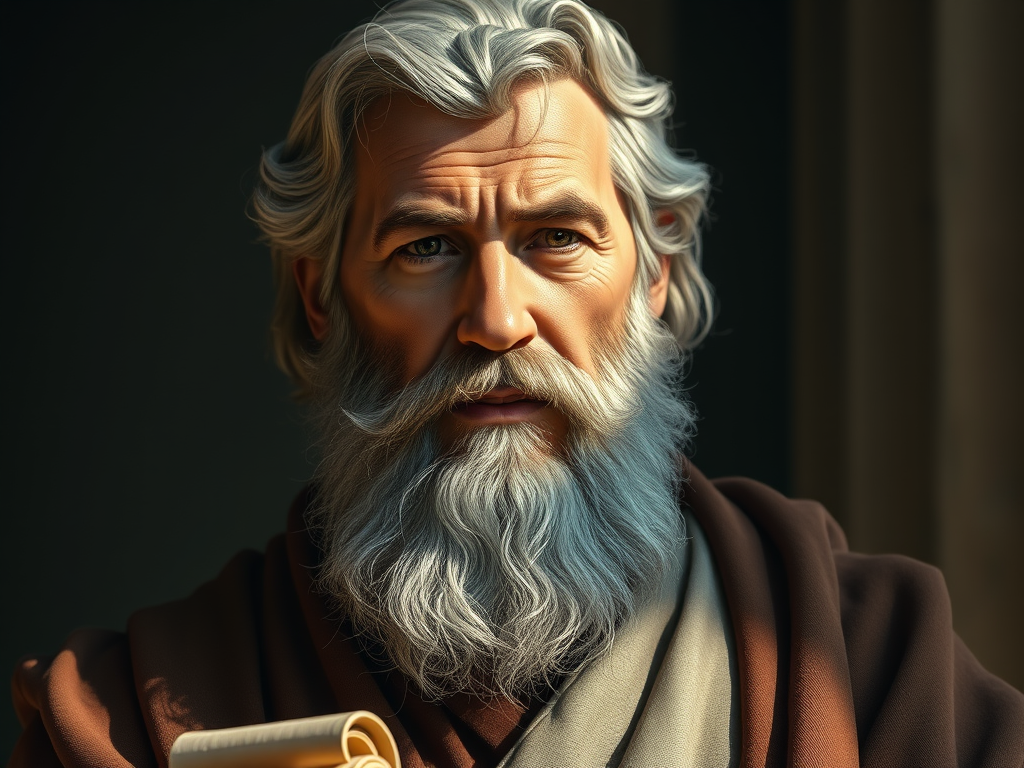
Of the many towering figures among the disciples of Jesus in the New Testament, St Paul stands head and shoulders above them all.
Energetic, bright, well connected and a great communicator it is not surprising that at almost every service worship serice there is a reading from one of his letters – usually the 2nd reading during our Holy Eucharist for us Episcopalians. His finger-prints are to be found in almost every discussion about what Christians believe. Yet despite that, St Paul had one big hang-up: however much he despaired at the qualities and abilities of the other Apostles, at least they could all say they had met Jesus: they been called by him, been transfixed by him; and of course many of them had seen him die before becoming witnesses of his Resurrection.
Paul’s encounter with Jesus took a very different form. So, the story that dominates today’s readings – one of four re-tellings of Paul’s conversion story that we find in the earliest history of the Church (the book of Acts) – starts with this very self-confident Greek educated Pharisee putting himself at the disposal of the Jewish authorities in order to eradicate all trace of this heretical upstart, Jesus.
In our story then, he is on horse-back, on his way from Jerusalem to Damascus, in order to lead a mass round-up of known Jesus sympathisers. Rather like the SS in occupied Europe during the second world war, people would have been genuinely scared to death of him.
And at some point on that journey the horse rears, Saul (to use his pre-Christian name) is thrown to the ground and he hears the voice of the man he had never met saying to him: Saul, Saul, why are you persecuting me?
And so overwhelming was this experience that he finds himself completely incapable of doing anything. In modern parlance he was ‘as weak as a kitten’ – blinded and completely disorientated. And as we know, from then on his life took a completely different course as he used his considerable abilities to carry the Christian Gospel to the far flung corners of the Roman Empire – to Corinth, Thessalonica, Ephesus … all the names we recognise from hearing the readings on Sundays … until he was finally beheaded in Rome during one of Nero’s frequent persecutions, sometime around 60AD.
Today, we concentrate on just those few minutes on the road, those few days of what we call ‘his conversion’.
We can so easily take the mickey out of those who say they can remember the very moment and the place when they ‘gave their lives to Christ.’ That’s because, for most people in Church, the realisation that ‘being a friend of Jesus makes so much more sense than being without him’ takes a little more time before the penny drops. But we do recognise that more dramatic changes of heart do occur and the story of the conversion of a young Canadian by the name of Jean Vanier is one such.
Jean Vanier’s father was Governor General of Canada and the young Vanier found himself in Paris just after the liberation in 1945. There, one morning, he and his mother were taken to meet some of the prisoners returning from various concentration camps in Poland. He wrote later of his amazement that any of them could still walk, so emaciated were they from disease and starvation. He recalls their faces twisted with fear and anguish. It was a life-changing event.
Despite his initial plans for a career in the military, he completed just five years in the Canadian naval service before hearing the strongest imaginable inner spiritual calling “to do something else”.
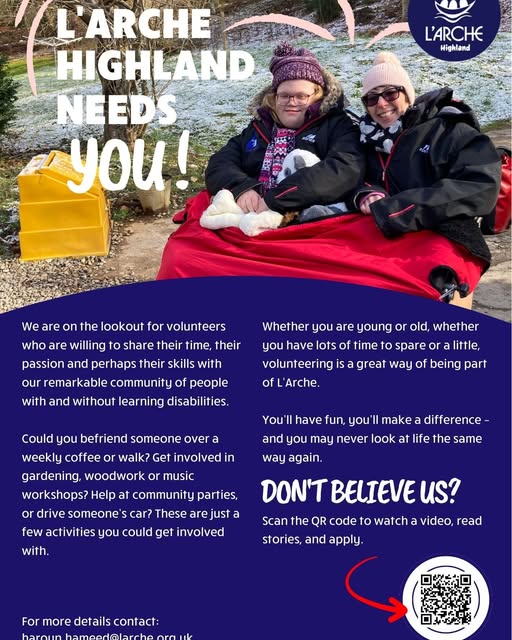
Jean Vanier was the man who went on to set up the first L’Arche house, inviting two men from a local institution, both with quite severe learning difficulties, to share his simple domestic life. I’m sure many of you will have heard of L’Arche communities. There are now something like 1,800 such communities in 80 countries (and we are fortunate to have our own L’Arche Highland community based in Inverness) where the able bodied and the disabled live in community together, learning from one another and caring for one another.
And that might have been a quite remarkable life and a hugely Christian ministry in it’s own right. But it is out of his practical experience that Jean Vanier was able to speak into situations of extreme tension, when the leaders of the nations were simply not able to listen to or accept the point of view of others, resulting in the breakdown of former peaceful friendships between allies.
Here is something Vanier said,
‘I know just how painful it can be to listen to other people as they express their innermost feelings. But to meet people at this level is not to argue with them or tell them what to do. When we are clothed with humility we begin, to our surprise, to find things in the other person of real value. When those with great skills and those with fewer come together in this way, something happens. There is a spark – and both groups change’.
And isn’t this something that some of those in authority over us today need to think about so very carefully.
When we are clothed with humility we begin, to our surprise, to find things in the other person of real value.
Who can say what would have happened if Jean Vanier had not met those emaciated prisoners in Paris in 1945? Certainly, founding the L’Arche community was not how he imagined he would spend his life!
So our keeping this day in honour of the Conversion of St Paul is a response to the truth that God – perhaps more frequently than we give credit for – does knock at the door of our hearts, does throw people off their metaphorical horses, their carefully planned and organised fast tracks … and does offer them an alternative reason for living.
And what we see emerging are new ways of working, new truths – and new forms of happiness. In the lives of St Paul and Jean Vanier, there is also one vital parallel. Of all the passages in the Bible that many of us can quote from memory, is that from St Paul’s letter to the Corinthians, chapter 13, verse 4.
How does it go?
Love is patient, love is kind. It does not envy, it does not boast, it is not proud. It is not rude, it is not self-seeking, it is not easily angered, it keeps no record of wrongs. Love does not delight in evil but rejoices in the truth. It always protects, always trusts, always hopes, always perseveres. Love never fails.
Oh that world leaders would hearken to that voice of love right now!
When Jean Vanier stood at the station in Paris, when St Paul was bundled off his horse on the road to Damascus, they learned the same lesson. And either of them could have written those words – which both stem from the insight that the ways of God and his love for us are rooted … in patience.
Conversion is what happens when we are able to wait for others, wait upon others, wait with others. It is the over-turning of the ego and the openhanded desire to make community out of the bricks that are there – not the bricks we would, ideally, like to have to hand.
I’d like to finish our sermon today by offering two short quotes from Vanier’s wonderful little book Becoming Human.
The first is this –
‘One of the marvelous things about community is that it enables us to welcome and help people in a way we couldn’t as individuals. When we pool our strength and share the work and responsibility, we can welcome many people, even those in deep distress, and perhaps help them find self-confidence and inner healing’.
And the second –
‘Every child, every person needs to know that they are a source of joy; every child, every person, needs to be celebrated. Only when all of our weaknesses are accepted as part of our humanity can our negative, broken selves be transformed’.
That is what Church is about, that is what we are here for: and we must learn to be patient as we edge our way forward, allowing that converting process to be ours also, doing in our context, what Jesus did for St Paul and for Jean Vanier.
Amen
Incidently, if you might be interested in supporting our local L’Arche community, they are looking for volunteers right now! Take a look below –
 Scottish Episcopal Church - Dornoch, Lairg, Brora, Tain & Tongue