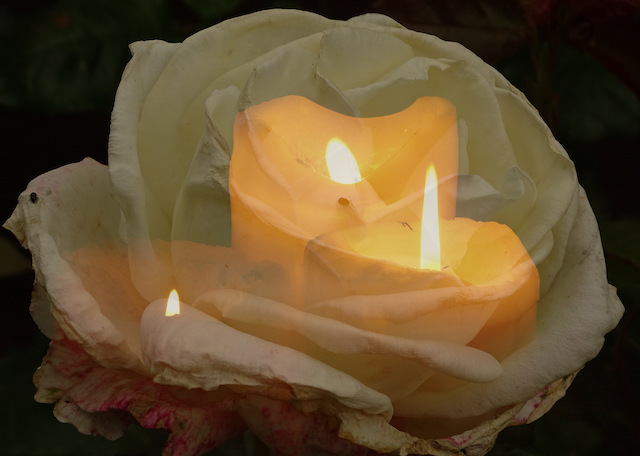
“Nothing” David Hume, enlightenment philosopher, historian, economist, librarian, and essayist, maintained:
“is more dangerous to reason than flights of the imagination.and nothing has been the occasion of more mistakes among philosophers.”
Hume has hardly proved the most popular philosopher in Christian circles. Nevertheless, ever since the era of the Church Fathers many theologians have done their work as if nothing were more dangerous to theological reason than flights of the imagination.
Undoubtedly the imagination can lead us into a mess at times. That happens when we use images in attempts to describe and explain abstract realities as though they were the reality itself. At the same time, was there not value in the view championed by the romantics – that art and the imagination provide an authentic way of reaching reality? The poet Keats put it this way: “What the imagination seizes as beauty must be truth”.
In ‘A Midsummer Night’s Dream’ Shakespeare writes:
“Lovers and madmen have such seething brains, such shaping fantasies, that apprehend more than cool reason ever comprehends. The lunatic, the lover and the poet are of imagination all compact”.
What then has any of this to do with Easter and Christ’s resurrection? Well, I wonder ifsome images help us to understand those mysteries much better than a more literal understanding of what the Gospels are telling us about such matters. If we take things too literally, we might fail to see what the Resurrection actually means and why it’s so important. However a word of caution, in doing so we need to avoid any temptation to try to actually describe what a risen life might look like? So what can we learn from a moreimaginative approach to Christ’s Resurrection and even our own?
Many Christians find it easier (and bizarrely more comforting) to think about the life and death of Jesus rather than His resurrection. Their imagination fails, once they move beyond Good Friday. Amos Wilder, the American poet, minister, and theologian, observed:
“Imagination is a necessary component of all profound knowing and celebration”.
Great artists create ‘symbols’ through which we can share their experience and insights. They invite us to enter in our imaginations, into the work of their imaginations. In imagining the human body, artists as different as El Greco and Rodin go behind the familiar appearance of the human body to re-express it in a new way. They move beyondorganic, material bodies beyond mere replicas, to glimpse hidden splendour and beauty. This is much the same as seeing beyond skin colour, gender, disability or any other observable characteristic, to see the real person within. They discover an inner glory in their subjects and, as it were, propel them into another world. The creative imaginations and hands of the artist liberate new life from within the constraints of ordinary life.
The Apostle Paul repeatedly speaks of God the Father as having “raised Jesus from the dead”. Might we see God the Father as the ultimate artist who sets free Jesus’ real bodily glory? In doing this for his crucified Son he promises to transform each of us into the splendour and beauty of what Paul calls the ‘spiritual body’. Paul encourages such an imaginative leap when he recalls an analogy from his Jewish background. Even dull readers, he expects, can marvel at the growth that transforms a grain into a mature plant ready for the harvest.
“But someone will ask, ‘How are the dead raised? With what kind of body do they come?’ Fool! What you sow does not come to life unless it dies. And as for what you sow, you do not sow the body that is to be, but a bare seed, perhaps of wheat or of some other grain. But God gives it a body as he has chosen, and to each kind of seed its own body.” (1 Cor. 15:35-38).
Here Paul invites us for all our foolishness, to make the leap from the lesser miracle of harvest to the great wonder of the risen life:
“So it is with the resurrection of the dead. What is sown is perishable, what is raised is imperishable. It is sown in dishonour, it is raised in glory. It is sown in weakness, it is raised in power. It is sown a physical body, it is raised a spiritual body. If there is a physical body, there is also a spiritual body.” (1 Cor. 15:42-44).
Over the past 18 months some of us have had to spend quite a bit of time thinking about church buildings, as we work to get St Andrew’s belfry tower repaired. In spite of the fact that once again we’ll celebrate the Resurrection with scaffolding inside the back of the church, Easter urges us to disconnect with the physical world and use our imaginations to see beyond such things as mere buildings.
At Easter, nothing trumps God’s Son being raised from the dead. Without that, Christianity is nothing at all and so as Christians we must never forget that it’s the risen Christ that’s at the heart of our faith and Easter is that time of the year when we try to use our imaginations to enter as fully as we’re able into the mystery of God Incarnate, Resurrected and Ascended and what that means for our lives.
May this Easter be a time of blessing for you and all those that you love.
Blessings
James
 Scottish Episcopal Church - Dornoch, Lairg, Brora, Tain & Tongue